
Argentina's petroleum industry continues to develop with the exploitation of the Vaca Muerta oil field, making the wind disaster risk assessment needs for oil storage tanks in the Patagonia region increasingly prominent. A special study on open-top oil storage tanks in this area was recently published in the Journal of Emergency Management Science and Technology, providing new assessment methods for the safety of petroleum industry infrastructure.
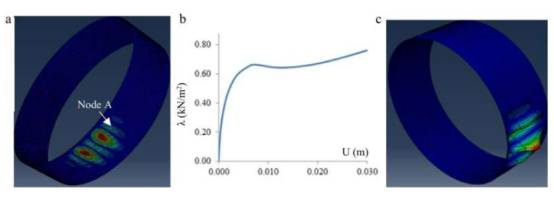
This petroleum industry research systematically evaluates the sensitivity of oil storage tanks in the Patagonian oil-producing area to strong wind disasters. Researchers integrated government data, aerial imagery, and API 650 design standards to establish a detailed tank dimension database. Finite element analysis was conducted in the ABAQUS environment to simulate the structural response of the tanks under wind pressure, identifying potential critical damage states.
The vulnerability curves developed by the research team quantify the probability of tanks reaching different damage states under specific wind loads. The analysis shows that under common wind speeds in Patagonia, oil storage tanks face significant structural and operational risks. These findings provide a technical basis for wind disaster protection in petroleum industry infrastructure, indicating the need to strengthen wind vulnerability assessments in design and maintenance protocols.
The results of this petroleum industry research offer a systematic wind disaster assessment framework for the field of structural engineering, providing reference value for improving design standards for oil storage tanks in strong wind areas. The study recommends incorporating wind risk assessments into the planning stage of petroleum storage facilities, enhancing infrastructure resilience to ensure production continuity, while strengthening safety standards in wind-prone areas such as Patagonia.