
Vanilla spices are widely used in food, pharmaceuticals, and cosmetics, but their primary source, Vanilla planifolia, is highly susceptible to diseases, drought, and heat stress—pressures expected to become more frequent under climate change. Wild vanilla species serve as a vital gene pool for crop wild relatives, making them essential for the future of vanilla crops. Recently, scientists investigated how climate change may cause mismatches between the habitats of wild vanilla and their pollinating insects.
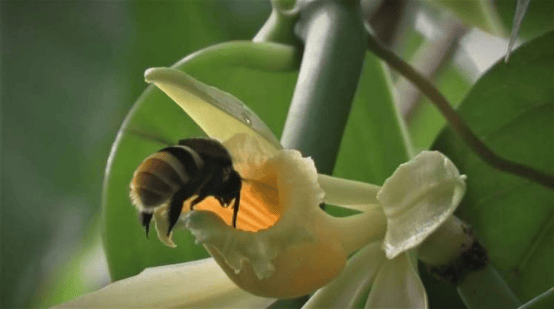
Dr. Charlotte Watteyn, first author of the study published in Frontiers in Plant Science and a researcher at KU Leuven and the Lancaster Plant Conservation Center at the University of Costa Rica, stated that climate change could reduce the overlap between vanilla orchid species and their pollinator habitats, leading to decoupling of plants and pollinators and negatively impacting the survival of wild vanilla populations. Professor Bart Muys from KU Leuven, senior author, emphasized that protecting wild vanilla populations and their genetic diversity is crucial to ensuring the future of vanilla, a major tropical crop for the global food industry.
The research team modeled habitat distribution and overlap for 11 Neotropical vanilla species and 7 previously observed pollinating insects under two climate change scenarios. The “middle-of-the-road” scenario (SSP2-4.5) represents moderate challenges in climate mitigation and adaptation, following a balanced energy development pathway. The “rocky road” scenario (SSP3-7.0) faces numerous challenges, with heavy reliance on fossil fuels and limited global cooperation on climate mitigation.
The study found that for seven vanilla species, climate conditions may become more favorable by 2050 under both scenarios, with suitable habitat potentially expanding by up to 140%. However, for the other four species, suitable habitat area is projected to decrease by up to 53%. The outlook for pollinating insects is even more severe: suitable habitat for all pollinators is expected to decline, with slightly greater negative changes under the SSP3-7.0 scenario. Watteyn explained that although suitable habitat may increase for some vanilla species, their dependence on pollinators could jeopardize the survival of natural populations.
It remains unclear whether other pollinators could replace those that may disappear from wild vanilla habitats. Watteyn noted that the relationship between vanilla species and their pollinators is highly specific and difficult to substitute. However, species not reliant on a single pollinator may have a brighter future, though most vanilla species typically depend on one or a few specific pollinators.
Protecting wild vanilla plants is critical for both biodiversity and agriculture. Commercial vanilla crops have low genetic diversity, affecting yield, quality, and stability, whereas crop diversification enhances agricultural resilience. Professor Muys explained that wild vanilla varieties can mitigate these issues, having co-evolved in the wild to develop traits such as drought tolerance, heat resistance, and pathogen resistance that are beneficial for crop improvement.
However, many vanilla varieties are already threatened. Natural pollination rarely occurs, and forest fragmentation, habitat loss, and extreme temperatures make the survival of the “queen of spices” even more precarious. Dr. Adam Karremans, Director of the Lancaster Plant Conservation Center at the University of California, Riverside and co-author of the paper, stated that if vanilla breeding is to be conducted in the future in an ethical and sustainable manner to meet global demand using local variation, collaborative research on the ecology and genetic diversity of wild vanilla across its natural range is essential.
The authors cautioned that records of wild vanilla species and their pollinators are scarce, so the results should be interpreted with care. When models incorporate ecological interactions such as seed dispersal and microbial associations, or disturbances such as land-use change and illegal logging, habitat overlap patterns may shift. Watteyn concluded that vanilla is a high-value global export crop, and its cultivation is linked to profitability as well as rural development, agricultural innovation, and overall well-being, benefiting smallholder farmers in tropical regions. Therefore, there is an urgent need to enhance the resilience of vanilla cultivation systems.