
In future lunar and Mars exploration missions, astronauts will rely on satellites for critical services such as navigation, weather monitoring, and communication relays. To address the communication delay between Earth and other planetary systems during long-duration space missions, NASA's Ames Research Center-led Distributed Spacecraft Autonomy (DSA) project has been developed. The DSA project aims to test shared autonomy among distributed spacecraft missions, enabling spacecraft swarms to make autonomous decisions and adapt to changes with minimal human intervention, thereby improving mission efficiency.
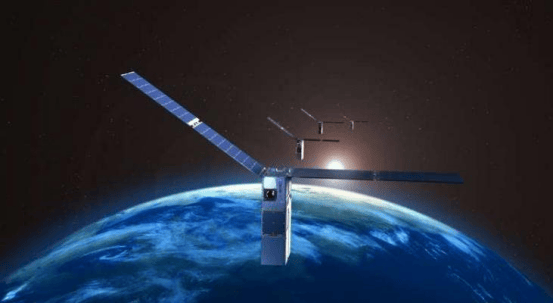
DSA grants satellites autonomy so they can provide services without waiting for ground commands. Multiple satellites operate as a swarm with a “shared brain,” achieving objectives that individual spacecraft cannot accomplish alone. The DSA software developed by NASA provides the swarm with a task list, integrates perspectives from each spacecraft, and formulates the optimal action plan. This plan is supported by decision trees and mathematical models to help the swarm respond to changes and solve problems.
The first space demonstration of DSA was completed by the Starling spacecraft swarm, which has been operating since July 2023 and consists of four small satellites showcasing swarm technology. The Starling mission initially used DSA to optimize scientific observations, autonomously deciding what to observe and obtaining unique measurement data. The DSA software enables the swarm to independently determine research content and allocate workloads, ensuring mission completion. The Starling 1.0 demonstration validated several “firsts” and laid the foundation for the Starling 1.5+ mission.
In the extended Starling mission, DSA continues to test features including the PLEXIL programming language, demonstrating autonomous maintenance capabilities that allow the swarm to manage spacecraft operations, correct issues, or distribute software updates. Enhanced autonomy makes deep-space swarm operations feasible, reducing communication delays, optimizing missions, and lowering workload. To explore the scalability of DSA, the team simulated a virtual small spacecraft swarm on the Moon, conducting nearly 100 tests to demonstrate swarm flight at different scales. A second round of testing will begin in 2026, using flight computers to demonstrate larger-scale swarm flight.
The orbital and simulation tests of DSA provide a launch platform for expanding the application of distributed autonomous spacecraft swarms. The development and validation of these technologies will improve efficiency, reduce costs, and enhance NASA's capabilities, paving the way for autonomous spacecraft swarms to support lunar, Martian, and more distant space missions.