
An international research team has announced the discovery of a potentially habitable super-Earth exoplanet located 20 light-years from Earth. This super-Earth exoplanet, designated GJ 251 c, has a mass approximately four times that of Earth, is likely rocky in composition, and orbits within its star's habitable zone. Researchers from Pennsylvania State University participated in this discovery.
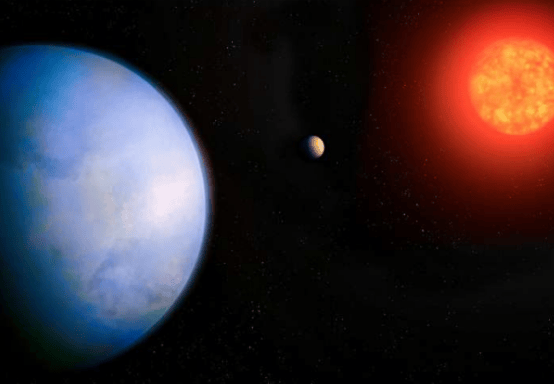
The research team utilized data obtained from the Habitable Zone Planet Finder at McDonald Observatory in Texas, confirming the existence of this super-Earth exoplanet through analysis of the star's periodic motion. Co-author of the paper, Professor Suvrath Mahadevan, stated: "We search for planets of this type because they represent our best chance of finding life elsewhere. This exoplanet lies in the habitable zone, or 'Goldilocks zone,' at just the right distance from its star where, with an appropriate atmosphere, liquid water could exist on its surface."
The discovery integrates twenty years of observational data from telescopes around the world. Using advanced computational models, the researchers distinguished the planetary signal from stellar activity noise, ultimately identifying a clear signal at a 54-day period. Corresponding author Corey Beard noted: "We need next-generation telescopes to directly image this candidate planet, but we also need community investment." The team subsequently validated the observations using the NEID spectrograph at Kitt Peak National Observatory in Arizona.
This super-Earth exoplanet will become an important target for future observational programs. Professor Mahadevan stated that while current instruments are not yet capable of direct imaging, the 30-meter-class telescopes under construction will have the ability to analyze its atmospheric composition. This discovery provides a new research direction for exploring signs of life on exoplanets and demonstrates the value of multidisciplinary collaboration in astronomical detection.