
The University of Illinois at Urbana-Champaign has made significant progress in the field of agricultural remote sensing technology. The drone remote sensing technology they developed can detect, eight days after herbicide application, subtle damage to the soybean canopy caused by dicamba at a concentration as low as one ten-thousandth of the labeled herbicide concentration, providing a scientific tool for accurate detection and reporting of field crop damage, helping to reduce human error and bias.
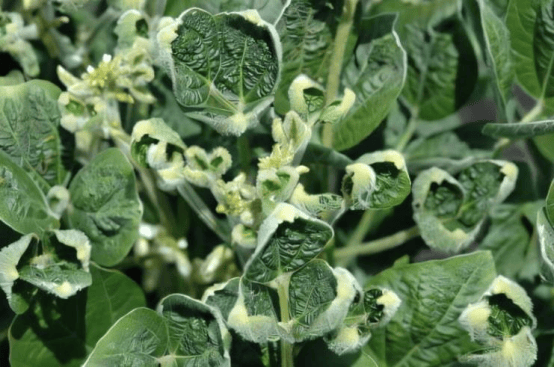
Since the emergence of dicamba-resistant soybeans in 2016, dicamba usage has surged dramatically and off-target damage incidents have occurred frequently. Since then, Aaron Hager, professor in the Department of Crop Sciences and Illinois Extension specialist, has been calling for the use of such detection tools. Hager stated that in previous annual conference calls with the Environmental Protection Agency to inquire about the extent of damage and the effectiveness of label modifications, they had to rely on pesticide misuse complaints. However, complaints are influenced by many factors, so it was never possible to quantify the true severity of the situation. Now this long-standing difficulty has been resolved.
Hager and his colleagues calibrated precision cameras mounted on drones to detect soybean canopy damage. They applied dicamba at concentrations of one ten-thousandth, one-thousandth, one-thousandth, and one percent of the labeled concentration to soybean canopies, simulating exposure levels from dicamba vapor drift (volatilization) and particle drift. After the research team flew drones over the fields to assess the damage, they reported their findings in the journal Pest Management Science.
The first author of the study, crop sciences doctoral student Dylan Kerr, said the research was able to distinguish damage caused by one ten-thousandth concentration volatile dicamba from untreated or dicamba-resistant soybean fields. The research team demonstrated for the first time that even at the lowest concentration, symptoms could be detected eight days after exposure, and symptom severity increased with higher dicamba exposure levels and longer time. Although all exposure levels were insufficient to kill sensitive soybean plants, by day 29, symptoms in all treated plots had worsened.
Hager pointed out that the sensors can detect things invisible to the human eye, allowing people to gain a clearer understanding of dicamba drift exposure situations. Currently, the team has isolated the spectral characteristics of dicamba injury to soybeans and is expanding the study scale to analyze satellite imagery for detecting damage over larger areas in the Midwest. They believe that with slight adjustments, the method can also detect damage in other species.
Kerr said the knowledge gained can be used to develop drone flight and drift detection protocols. In the future, multispectral sensors will be used to understand larger patterns across entire landscapes, and it may even be possible to detect damage to tree and shrub canopies from space.
The researchers believe that drone-based and eventually satellite-based tools can help growers and policymakers better protect sensitive plants. Co-author of the study and adjunct professor in crop sciences Marty Williams stated that many growers feel exhausted after filing complaints with no results, and residents in urban communities often ask about causes of damage to trees or ornamental plants. Public-sector scientists need to use research evidence to determine the true severity of the problem. They are not pushing any particular agenda or taking sides; they simply raise questions, find answers, and share them—this is a good example of public-sector research.