
A new method developed in the United States promises to increase oil production from tightly packed shale formations. Researchers at Pennsylvania State University have created a new oil extraction process that can boost shale oil recovery by an additional 15% while enabling long-term sequestration of carbon dioxide (CO₂) emissions.
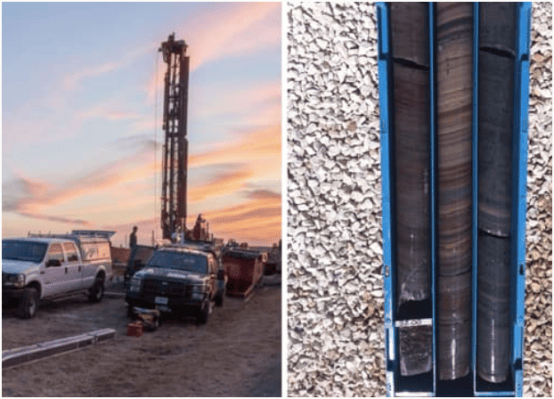
The process has been successfully implemented in the Eagle Ford shale in Texas, demonstrating improved oil extraction rates and scalability to other shale reservoirs. The method focuses on improving cyclic carbon dioxide injection technology — pumping CO₂ into the reservoir to enhance oil production. This decades-old technique, also known as "CO₂ huff-n-puff," enhances the ability to extract oil from natural rock formations.
The researchers discovered that shale rock contains micropores called nanopores, which hold large amounts of hydrocarbons (the main component of petroleum). The related study, published in the journal Fuel, indicates that the larger the volume of injected CO₂, the deeper it penetrates the reservoir, the higher its mixing efficiency with crude oil, and thus the higher the recovery rate. In addition, deep reservoirs containing black oil with a low gas-oil ratio are particularly suitable for cyclic CO₂ huff-n-puff. The injected CO₂ can significantly enhance oil swelling and improve production potential.
The researchers likened the underground shale environment to a sponge, with nanopores acting like tiny openings filled with water that effectively absorb and retain hydrocarbons until the surface is disrupted. Hamid Emami-Meybodi, associate professor at the EMS Energy Institute at Pennsylvania State University and a petroleum and natural gas engineering expert, said: "I think this is one of the best recovery systems in the industry. Using carbon dioxide to enhance oil production can reduce environmental impact, help meet energy demand, and contribute to U.S. energy independence and security."
The lead researcher revealed that during the injection process, carbon dioxide is pumped into the reservoir through the well, after which the well is shut in to allow the injected gas sufficient time to soak. The gas mixes with the crude oil, altering its properties and improving its fluidity and extraction efficiency. Introducing carbon dioxide into the crude oil mixture at different pressures helps push hydrocarbons out of the nanopores and to the surface. However, the press release noted that the effectiveness of the method varies significantly depending on operating conditions, depth, and crude oil type. Emami-Meybodi stated that optimizing the injection process is challenging because numerous variables, including crude oil properties and shale environment composition, can complicate extraction.
The researchers indicated that the workflow has been successfully applied to the optimization and screening of cyclic carbon dioxide injection in the Eagle Ford shale and can be further extended to various unconventional enhanced oil recovery (EOR) projects. Over the past decade, oil produced from shale reservoirs has driven U.S. crude oil production to new highs, but due to low extraction efficiency, up to 90% of the oil is often wasted.