
Researchers at the University of Cambridge have developed a new sustainable chemical production technology that uses sunlight to drive chemical reactions and generate basic chemicals. This technology is expected to provide the chemical industry with a solution to replace traditional fossil-based raw materials and promote the transformation of chemical production processes.
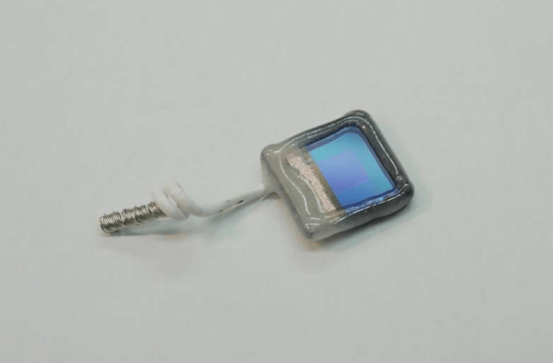
Traditional chemical production processes rely on fossil fuels as raw materials, accounting for approximately 6% of global carbon emissions. The hybrid device designed by the Cambridge team combines light-harvesting organic polymers with bacterial enzymes to convert sunlight, water, and carbon dioxide into formate. Formate can serve as a fuel for further chemical transformations and acts as a key intermediate in sustainable chemical production technology.
This "semi-artificial leaf" device mimics the natural photosynthesis process and can operate continuously without an external power source. Unlike earlier prototypes that used unstable light absorbers, the new design employs non-toxic organic semiconductor materials, significantly extending the device's lifespan. In experiments, the researchers successfully used the device to convert carbon dioxide into formate and further synthesized high-purity pharmaceutical compounds through a "domino" reaction.
Professor Erwin Reisner, leader of the research team at the University of Cambridge, stated: "The chemical industry is a complex system that must be addressed. We must find ways to replace fossil fuels in this sector while continuing to produce the important products society needs." The research results were published in the journal Joule, marking the first time organic semiconductors have been used as light-harvesting components in bio-hybrid devices.
The sustainable chemical production technology uses a bicarbonate solution as the reaction medium, avoiding the use of traditional additives. Co-first author Dr. Celine Yeung noted: "Organic semiconductors offer the advantages of tunability and non-toxicity, while biological catalysts provide high selectivity and efficiency." By precisely designing the materials of each layer in the device, the researchers achieved highly efficient synergistic operation between the components.
Test data show that the new device can operate continuously for more than 24 hours, with excellent performance in current generation and electron transfer efficiency. The research team plans to further optimize the device's lifespan and expand its range of chemical production. Professor Reisner summarized: "We have demonstrated the feasibility of manufacturing efficient, durable, and sustainable solar devices, which lays a foundational platform for future green chemical production."