
Solar power relies on sunlight, hydropower requires water flow, and the energy source of nuclear power is the nuclear fuel assembly. By encapsulating uranium dioxide pellets into zirconium alloy tubes, fuel rods are produced. Hundreds of these rods are then precisely assembled into a robust overall structure, forming the power unit of nuclear power—the fuel assembly.
For a long time, China's nuclear fuel assemblies could only rely on foreign technology transfer, lacking independent intellectual property rights, as if "gripped by the throat." In 2010, the key science and technology project for the CF series nuclear fuel elements of CNNC's Hualong One was launched, marking the start of nearly a decade of independent innovation on the nuclear fuel "core."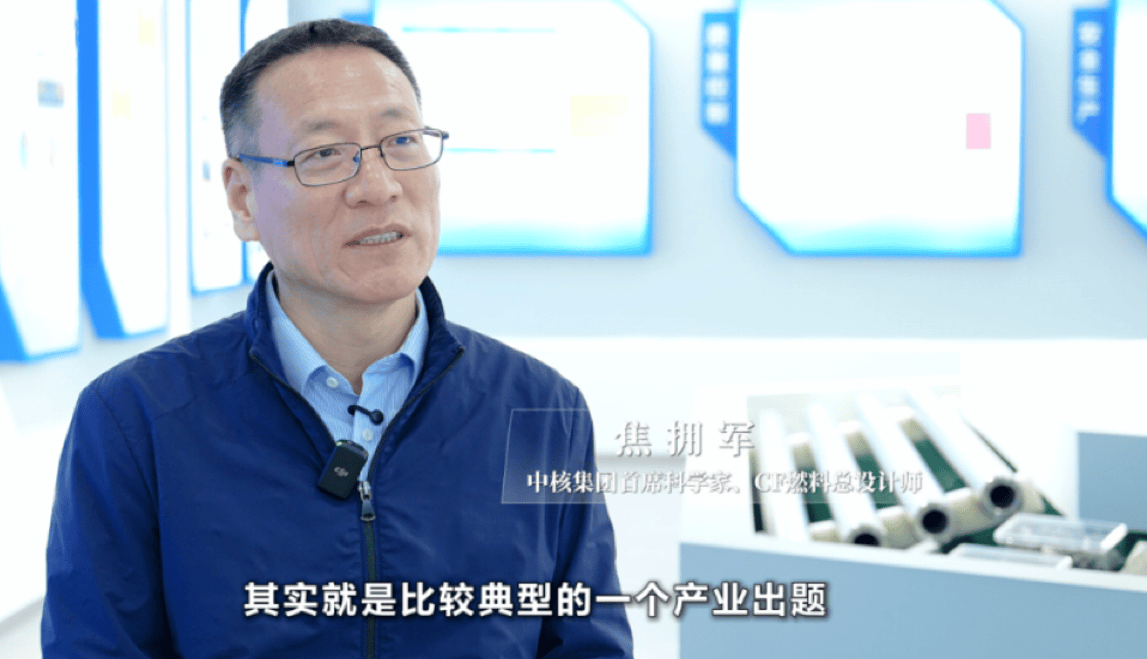
Jiao Yongjun, Chief Scientist of CNNC and Chief Designer of CF Fuel: The development of the CF series fuel is a typical case of "industry setting the questions, science and technology providing the answers." Its R&D background stems from the urgent need for available fuel when exporting the Hualong One nuclear power plant. To this end, we organized a scientific research team of over 500 people. After nearly ten years of arduous efforts, we successfully developed fuel assemblies with independent intellectual property rights, ensuring the timely export of the Hualong One nuclear power plant.
On a specific technical level, the design of the fuel assembly's spacer grids has significantly improved its critical power, becoming one of the landmark achievements of the R&D. Additionally, the successful development of the N36 zirconium alloy material enables deeper burnup in the fuel assemblies. These breakthroughs in key technologies have comprehensively enhanced the safety, reliability, and economic efficiency of the fuel assemblies.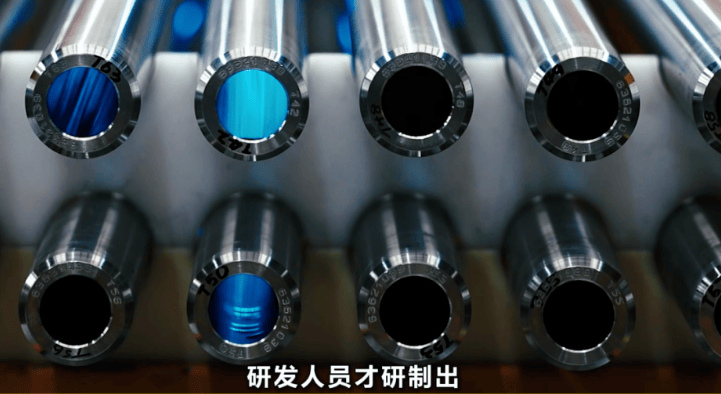
The development of zirconium alloy is the most challenging part of fuel technology. Previously, China could only import foreign technology and process it according to drawings. Since launching the research on the engineering preparation technology of N36 zirconium alloy, CNNC has spent eight years, going through six major stages of technical breakthroughs. By overcoming a series of key technologies—such as vacuum melting of ingots, uniform extrusion of tubes, and high-precision tube rolling—they successfully mastered the complete engineering preparation technology for N36 zirconium alloy with independent intellectual property rights.
Jiao Yongjun, Chief Scientist of CNNC and Chief Designer of CF Fuel: Zirconium alloy has significant advantages. For example, its low neutron absorption cross-section effectively improves neutron economy. Additionally, it possesses appropriate corrosion resistance and mechanical properties. These characteristics are the core reasons we choose zirconium alloy as the cladding material for fuel assemblies.
What we mine is zircon sand, which is processed into sponge zirconium. Alloying elements, such as niobium, tin, and iron, are added to melt it into intermediate alloy buttons and pellets. These are then pressed into electrode blocks, placed in a melting furnace to be smelted into ingots. The ingots undergo forging, extrusion, rolling, and other processes to ultimately form zirconium alloy tubes.
In fact, at the very beginning, there were no specialized production lines for zirconium alloy in China. Each processing step was carried out at different factories. Taking acid pickling as an example, conditions were poor back then. During acid pickling, vapor would evaporate, making it hard to see each other's faces. It was so hot in the summer that people worked bare-chested. Throughout this process, I believe the culture and traditions of the nuclear industry have played a huge role invisibly. Now, our CF series nuclear fuel assemblies have already been applied in the Hualong One and M310 units.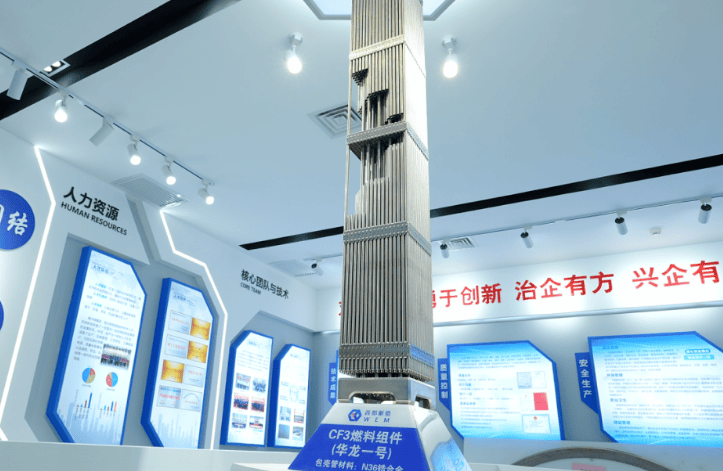
On November 24, 2018, the first batch of N36 zirconium alloy tubes was successfully delivered, taking only one-third of the production time for similar products from international counterparts. To date, the cumulative output value created by the CF series fuel assemblies has exceeded 7 billion yuan, and they have been exported to Pakistan, verifying the reliability and advanced nature of the independent research results through practical application.
Jiao Yongjun, Chief Scientist of CNNC and Chief Designer of CF Fuel: CF stands for China Fuel Assembly, and we have always wanted to give it a very good Chinese name; this work is currently underway. It should be said that the independent supply of nuclear fuel is a fundamental indicator of our nation's transformation from a nuclear power to a nuclear strong country.
At present, nuclear fuel technology continues to develop. Moreover, our country's nuclear power has entered a period of accelerated expansion, and a global nuclear energy renaissance is gradually emerging. Therefore, the nuclear power industry continues to pose questions for us, demanding higher burnup, better safety, and improved reliability. We will persist in finding the answers.