
With just a common permanent magnet worth a few dollars—no electricity, no chemicals required—rare earth elements indispensable to smartphones, electric vehicles, and missile defense systems can be "adsorbed" from industrial wastewater. This is not science fiction but a breakthrough achievement by the Pacific Northwest National Laboratory (PNNL) in collaboration with the University of Mississippi, recently published in Separation and Purification Technology. This discovery overturns the conventional wisdom that "cheap magnets are too weak to drive selective ion separation," opening an unprecedented green pathway for extracting critical metals from coal power plant waste, mine tailings, and oil and gas produced water.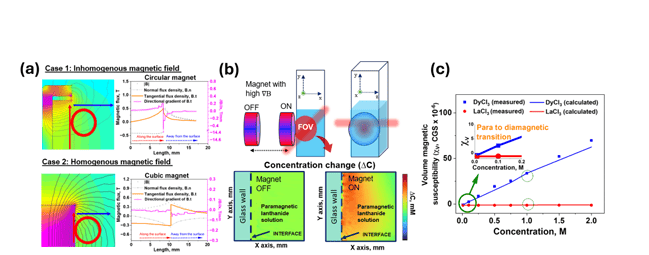
The "Chemical Dilemma" of Rare Earth Recovery
Rare earth elements (REEs)—such as dysprosium, lanthanum, and neodymium—are the central nervous system of the global new energy industry. An electric vehicle consumes about 1 kilogram of rare earths, while a direct-drive wind turbine requires approximately 600 kilograms. However, these elements are not "rare" in the traditional sense; rather, their separation is extremely difficult because they occur intimately intergrown in nature and possess nearly identical chemical properties.
For a long time, industrial methods for recovering trace rare earths from coal power plant waste, mine tailings, and oil and gas produced water have heavily relied on large volumes of organic solvents and complex chemical reagents. These processes are energy-intensive, time-consuming, and generate substantial chemical waste, resulting in high treatment costs. More problematically, these traditional strategies are often inefficient or even unprofitable when extracting industrial byproducts at extremely low concentrations.
The "Magnifying Glass Effect" of Weak Magnetic Fields
In April 2026, a research team from PNNL's Non-Equilibrium Transport Driven Separation (NETS) initiative, in collaboration with the University of Mississippi, published a paper in Separation and Purification Technology. The study systematically demonstrated for the first time that the magnetic field gradient generated by a cheap permanent magnet alone, without an external electric field, is sufficient to drive the long-range, directional transport and spatial redistribution of rare earth ions.
The "local intensity" of weak magnetic fields has been underestimated for decades
The industry previously widely believed that low-cost permanent magnets could only produce uniform magnetic fields at the millitesla level, which were too weak to drive selective ion transport. However, the PNNL team discovered that the "non-uniform magnetic field gradient" is the key. Placing these magnets in a solution containing rare earth ions generates sufficiently strong magnetic field gradients in localized regions. As ions enter regions of stronger or weaker magnetic fields, they experience precise magnetic manipulation, being pushed or pulled toward target areas.
Experimental data showed that this mechanism increased the local concentration of rare earth ions in near-surface regions by a factor of 3 to 4 compared to the initial bulk solution.
Pioneering real-time laser interferometric imaging sees ion migration for the first time
Directly observing magnetically driven ion migration has been a long-standing challenge. To overcome this difficulty, the PNNL team developed a high-throughput Mach-Zehnder interferometric imaging system, using lasers to detect the movement trajectories of ions in liquid feedstocks in real time.
This unprecedented imaging capability revealed that the magnetic field gradient generates dynamic "ion concentration waves" within the solution—alternating enriched and depleted zones form, achieving a delicate dynamic equilibrium among magnetic drift, diffusion, and self-generated electric fields. This discovery provides an intuitive engineering blueprint for optimizing magnetic field configurations to maximize separation efficiency and throughput.
Spontaneous crystallization—ushering in "one-step recovery"
When the research team combined a precipitating agent with the magnetic field, they observed enhanced crystallization of dissolved rare earth ions, making them easier to extract. This magnetically driven, non-equilibrium mechanism could not only elevate the local electrochemical potential of paramagnetic species but also trigger the formation of well-defined dysprosium oxalate crystals at the magnetized interface, all without additional external voltage or chemical reaction equipment. This synergistic mechanism greatly simplifies the separation and purification process, aligning with broader goals of green chemistry and circular resource utilization.
Multidimensional validation through theoretical research
The team performed theoretical calculations using a modified Poisson-Nernst-Planck (PNP) model, which incorporated magnetic drift effects, standard diffusion terms, and charge imbalance driving forces, strongly supporting the experimental observations. The paper's abstract explicitly stated that the magnetic field gradient alone (without an external electric field) could induce long-range, directional ion transport.
Renewable "Urban Mines": Changing the Rare Earth Supply Landscape
The greatest strategic value of PNNL's technology lies in its access to a virtually unlimited supply of "urban mines." The United States has millions of tons of existing mine tailings, coal ash from power plants, and oil and gas produced water, byproducts that often contain valuable traces of rare earth elements. Simply deploying this green magnetic separation system could recover significant quantities of minerals from these sources, addressing the pain point of easily disrupted supply chains due to geopolitical factors.
Preliminary techno-economic assessments indicate that, compared to conventional methods, this non-uniform magnetic field-driven passive magnetic separation strategy can significantly reduce energy consumption and chemical costs. This marks not only a technical milestone but also holds the potential to fundamentally resolve the long-standing problem of the economic infeasibility of trace rare earth extraction.
From "Fighting for Resources" to "Nurturing through Green Practices"
This research not only signifies a paradigm shift in rare earth element recovery from "chemical monopoly" to "physical augmentation" but more profoundly portends that the sustainable source of minerals is no longer limited to ore veins deep within the Earth, but also includes waste liquids and tailings within the circular economy.
- Application of multi-industry waste resource utilization—achieving a win-win economy and environment
This technology possesses strong direct application value, capable of transforming coal combustion fly ash, accumulated mine tailings, and even oilfield brine into entirely new sources of critical metals, creating new economic growth points.
- Empowering autonomous and controllable defense and high-tech industrial chains
Elements like dysprosium and neodymium are core materials for electronic chips, missile guidance systems, and permanent magnet motors. The reliability of foreign supply chains directly impacts the material foundation of national security. This technology lays the cornerstone for building a self-sufficient supply chain reliant solely on domestic industrial waste.
- Opening a new front for green recycling of electronic waste
Given the significant differences in magnetic susceptibility among rare earths and transition metals enriched in high-end electronic waste, this magnetic separation technology can similarly significantly improve the efficiency and sustainability of recovering magnetic materials from old hard drives and new energy vehicle motors.
"We are developing methods that use magnetism to selectively differentiate critical metals from mixed feedstocks. This is a separation method entirely driven by non-equilibrium transport, fundamentally different in mechanism from traditional adsorbents, membranes, and chemical functionalization approaches," described Venkateshkumar Prabhakaran, a PNNL chemist and the principal investigator of the project.
When a seemingly unremarkable physical phenomenon is decoded by scientists, we gain an extraordinarily safe, convenient, and low-energy method of "turning dross into gold." This not only untangles billions of years of geochemical entwinement, minimizing the energy and pollution for humanity to "open a treasure chest," but also forges a brand new critical path forward in the field of resource recovery.