
A piece of spodumene, a household blender, and a room-temperature chemical solution—this "kitchen-level" process brought by a research team from the Massachusetts Institute of Technology is becoming a game-changing hammer poised to reshape the global lithium market landscape.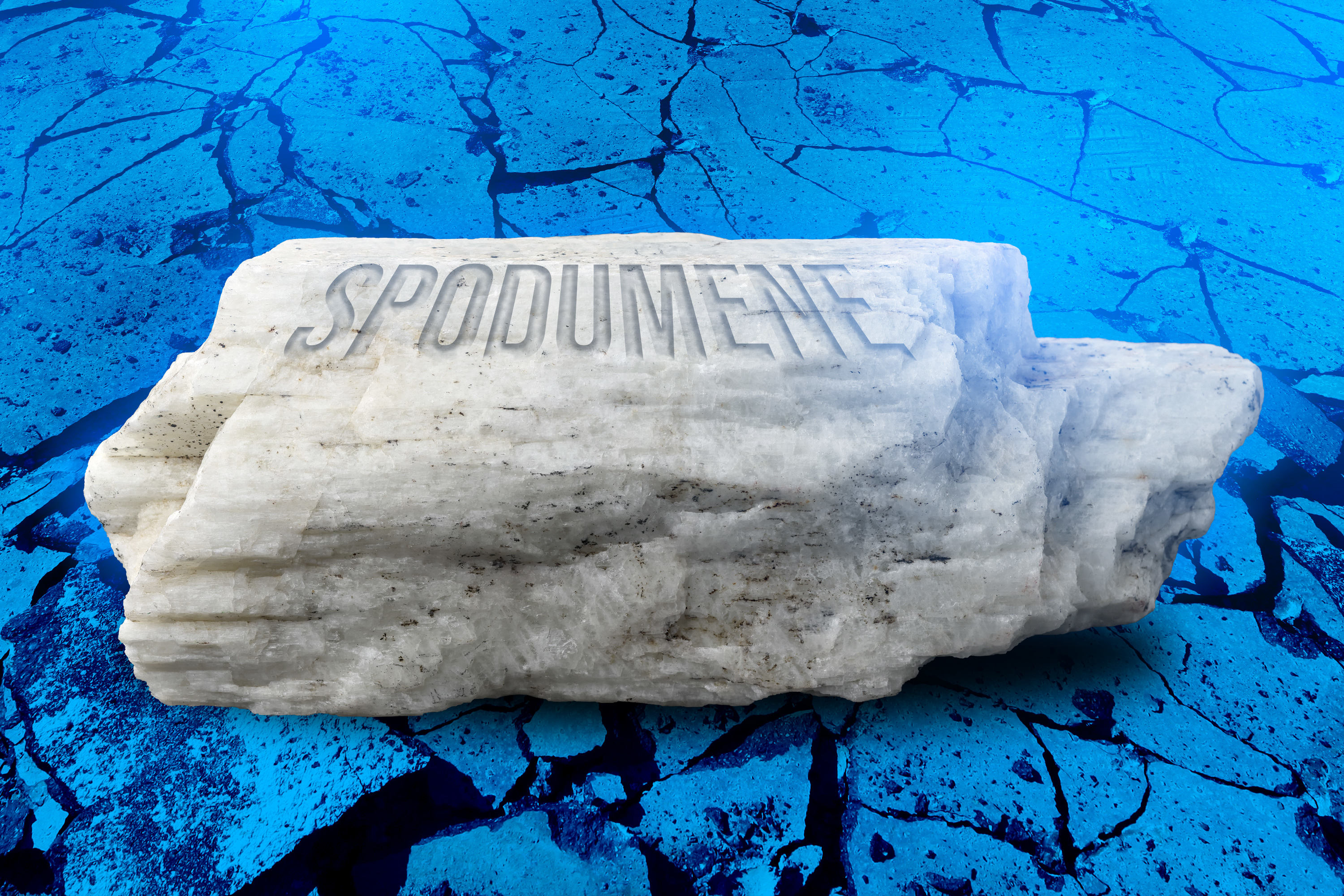
Lithium batteries are driving the global clean energy transition, but lithium mining has long been trapped in a dual dilemma of environmental concerns and high costs. In the latest issue of the journal *Science*, a team led by Professor Yet-Ming Chiang from MIT's Department of Materials Science and Engineering officially unveiled a disruptive new process that can extract lithium from hard rock at room temperature, slashing traditional processing costs by roughly half while almost completely eliminating mining waste.
Pulling the Bottom from the Pot: "Reverse Thinking" Cracks the Silica Cage
The traditional process for extracting lithium from spodumene hard rock can be described as "energy torture": the ore must be roasted in giant kilns at over 1000°C, followed by intense leaching with strong acids. The entire process is extremely energy-intensive, costly, and leaves behind mountains of toxic waste residue.
The breakthrough by the MIT team lies in completely overturning the processing logic that has governed pyrometallurgy and hydrometallurgy for over a century. When facing silicate structures, traditional methods typically leave the insoluble silica to be dealt with last; the MIT team chose to "capture the ringleader first"—dissolving the silica preferentially and gently. They discovered that the crystal lattice of spodumene is essentially composed of a silicon oxide (Si-O) framework, within which elements like lithium and aluminum are encapsulated.
The team precisely selected an ammonium fluoride (NH₄F) solution as the core chemical reagent. Fluoride ions can weaken and break silicon-oxygen (Si-O) bonds, efficiently dissolving the silica framework under mild conditions of about 95°C, thereby simultaneously releasing the encapsulated lithium elements into the solution.
Universally Validated Across 17 Ore Sources, Lithium Recovery Rate Exceeds 95%
This process is not only unique in principle, but the laboratory data is even more compelling: the team conducted extensive tests on 17 different spodumene ore sources from around the world, and the results were successful without exception, with lithium recovery rates all exceeding 95%.
Regarding cost projections, calculations by the MIT team based on parameters such as global production capacity data and reagent recovery rates indicate that if large-scale application and high reagent recovery rates are achieved, the cost per ton of battery-grade lithium product produced would be less than $6,000. In comparison, the traditional hard rock lithium extraction cost threshold is around $12,000, meaning this process could achieve a direct cost reduction of roughly half.
"Cradle-to-Grave" Zero Waste, Full-Process Closed-Loop Operation
The environmental value of this process is almost as significant as its cost advantage. In traditional processes, about 70%-80% of the non-lithium portion ends up as acidic tailings, requiring long-term occupation of large land areas and posing environmental risks. The MIT process achieves "cradle-to-grave" zero-waste full-component resource utilization. Through precise separation, the dissolution products yield three high-value by-products—battery-grade lithium salts, smelting-grade alumina, and highly reactive silica micro-powder for cement—transforming what was originally waste residue into bulk commodities for construction materials and metallurgy. The highly reactive silica micro-powder, when mixed with cement, can enhance cement strength, providing a new raw material outlet for the building materials industry.
In terms of chemical reagent cycling, the ammonia gas (NH₃) produced after the dissolution reaction is captured by a circulation system and directly reacted with by-products to regenerate the initial ammonium fluoride solution, forming a closed loop. Unlike traditional processes where every step has waste liquid discharge, MIT's new process has virtually no secondary emissions apart from the final products.
Hard Rock Lithium Extraction Approaches the Cost Baseline of Brine Extraction
The most significant industry impact of this process lies in reshaping the geopolitical landscape of global lithium resources. Currently, lithium extraction from South American salt lake brines is recognized as the lowest-cost lithium production method globally, but the global reserves of spodumene hard rock are also vast, with extensive deposits in places like the United States, Europe, and Australia. Once scaled, this process will enable the operational cost of hard rock lithium extraction to compete head-to-head with brine extraction for the first time.
Considering that brine extraction is highly dependent on specific geographical environments and large amounts of freshwater resources, while hard rock extraction has minimal location restrictions, this means the long-standing supply chain pattern—where lithium processing is concentrated in China and hard rock resource countries only export raw ore—could be disrupted. The MIT team has founded the startup Rock Zero and is advancing technology commercialization at The Engine, a Boston-based hard-tech incubator.
A Technological Breakthrough, An Industrial Paradigm Shift
A minor adjustment in the direction of a chemical conversion has unexpectedly triggered a massive shift in the geotechnical and economic landscape. From the perspective of the global lithium market, IEA data shows that the current global lithium industry's buffer capacity against supply disruptions is only 3%, and it is projected that by 2030, 57% of refining capacity will still depend on China. Rock Zero can carve out a localized industrial chain for hard rock resource countries to "mine their own ore and refine it themselves."
On the decarbonization pathway, Caltech chemical engineers Gangsan Lee and Karthish Manthiram pointed out in a "Perspectives" column in the same issue of *Science* that the low-temperature operation characteristic of this process allows it to integrate well with renewable energy sources like solar and wind power, and the main lithium hard rock mining regions happen to be areas rich in high-quality renewable energy resources.
This technology, born from a flash of inspiration during a bathroom renovation, journeyed from a small episode in a household hardware store to the spotlight of *Science*, highlighting the value of fundamental scientific breakthroughs, unconventional thinking models, and in-depth pre-research for industrialization.