
A piece of "cloth" and a handful of water can transform into a solid concrete slab in just ten minutes. This is not magic, but the latest achievement published by Professor Jiang Gaoming's team from the School of Textile Science and Engineering at Jiangnan University in the top-tier civil engineering journal Construction and Building Materials. By combining 3D knitting technology with reinforcement techniques, the team successfully developed a high-performance "flexible reinforced warp-knitted spacer structure reinforced concrete composite material"—the cement blanket. This technological breakthrough represents the birth of a new, high-end building substrate for urban construction, carrying significant industry impact.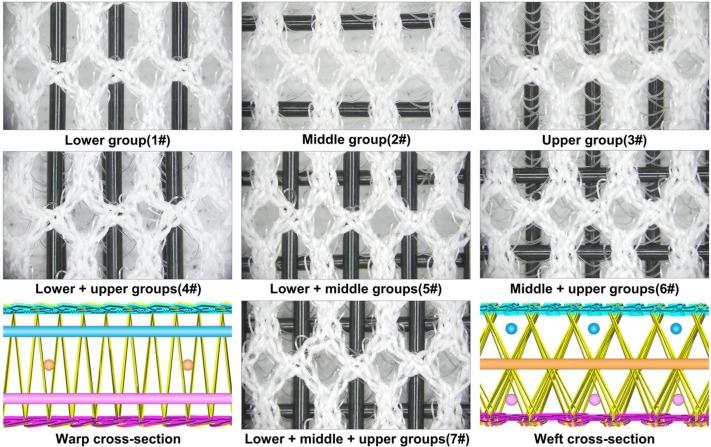
From "Weaving Cloth" to "Building Houses": A Revolutionary New Building Material
Concrete has long been the cornerstone of urban construction, but its construction process often involves complex steps such as formwork installation, mixing, pouring, and curing, leading to high labor intensity, long construction periods, and severe environmental dust pollution. Traditional concrete is also prone to cracking due to its brittleness and low tensile strength, resulting in high maintenance costs. The cement blanket developed by the Jiangnan University team fundamentally overturns all of this.
The key to this technology lies in its unique "cloth-like" prefabricated structure. It is a warp-knitted spacer structure reinforced concrete composite material made using dry cement-based powder filling technology. Before watering, it is soft and lightweight like ordinary fabric, can be cut and bent arbitrarily according to construction needs, and can even be rolled up for easy transport. Upon arrival at the site, workers simply sprinkle water onto this "cloth," and it rapidly hardens within a short time, forming a solid concrete layer 3 to 30 millimeters thick in one integrated process, eliminating the need for mixing, formwork, and demolding.
Compared to traditional concrete and slurry-mixed cement-based composites, the cement blanket demonstrates significant advantages in energy efficiency, environmental friendliness, and high construction efficiency and flexibility, making it particularly suitable for situations with limited manpower, time, and equipment. Its construction efficiency is transformative: a single piece of fabric can be used for construction, it forms upon contact with water, and hardens in about ten minutes. This greatly simplifies the construction site, reducing reliance on heavy machinery and skilled labor.
Internal Reinforcement Structure Breaks Through the Impact Resistance Shortcomings of Traditional Cement Blankets
Material innovation is not only about solving "construction convenience" but also about breaking through its performance "ceiling." Although traditional cement blankets are convenient to construct, as thin-walled materials, they exhibit poor impact resistance when subjected to external impacts such as falling rocks, hail, or vehicle/ship collisions, limiting their application in special scenarios like military shelter protection, bridge pier anti-collision, and bridge load-bearing.
To address this core issue, the Jiangnan University team proposed an ingenious internal reinforcement strategy: using polymer melt-spun large-diameter monofilaments as reinforcing bars, fixed and threaded through the spacer layer of the fabric. Quasi-static puncture tests and low-velocity impact tests showed that the vertically combined reinforcing bars not only significantly improved the load-bearing capacity and toughness of the cement blanket but also enhanced its penetration resistance by altering the stress transfer path. The "internal stiffness strategy" proposed in this study effectively solves the industry challenge of poor mechanical performance of cement blankets under impact loads. It expands the structural design ideas for warp-knitted spacer fabrics used in reinforced concrete, achieving an organic unity of flexibility and high-strength load-bearing in cement blankets.
In addition to developing this reinforced cement blanket, the team also created another concrete composite material containing only 4.8% fiber volume content of knitted spacer fabric, which improved flexural and impact damage tolerance by 9.2 times and 12.4 times, respectively.
Reshaping the Landscape of Emergency, Military, and Civil Construction
The advent of this new building material is powerfully driving urban construction and national defense towards greater efficiency and safety. Its broad application scenarios worldwide also give rise to "Made in China" woven into concrete.
Emergency Rescue and Humanitarian Aid
In disaster-stricken areas, rapidly building shelters is a top priority. The cement blanket can play a key role in quickly forming emergency tents and repairing roads. Its lightweight and rapidly deployable nature provides efficient life-saving protection for affected populations.
National Defense and Military Engineering
On the military front, the ultra-high impact resistance of the cement blanket makes it an ideal material for constructing military shelters, temporary outposts, and rapid runway repairs, as well as for blast-proof walls and anti-collision bridge piers. This material can quickly build robust protective barriers, providing unprecedented safety for personnel and critical equipment.
Infrastructure Maintenance and Protection
In urban construction, whether for bank slope protection, tunnel and culvert protection, or underwater pipeline protection and ditch lining, the cement blanket demonstrates extraordinary application potential. The Jiangnan University team has successfully promoted the new cement-based composite material for use in complex environments such as underwater applications.
Sustainable Development and Green Construction
The production and application process of the cement blanket is energy-efficient and environmentally friendly, effectively reducing carbon emissions during building material production. Additionally, by simplifying construction procedures, it greatly reduces the energy demand and environmental impact of construction sites, promoting green building.
When a piece of "cloth" enters critical construction scenarios with its high performance and enhanced capabilities, we witness not only the birth of a new composite material but also a new future for urban construction and high-end manufacturing.