
The global clean energy transition is driving unprecedented demand for nickel, yet high-grade sulfide nickel resources are increasingly depleted, forcing the industry to turn to low-grade, difficult-to-process ultramafic ores—which are estimated to contain approximately 45 million tonnes of untapped nickel. The University of Toronto, in collaboration with Vale Base Metals, has published a breakthrough study in *Communications Engineering*, a Nature journal, reporting for the first time a low-temperature, primarily solid-state nickel extraction process. This novel method uses inexpensive metallic iron as a "nickel getter" to produce ferronickel alloy containing 16%–24% nickel at temperatures below 950°C in about three hours, with zero sulfur dioxide emissions throughout the process.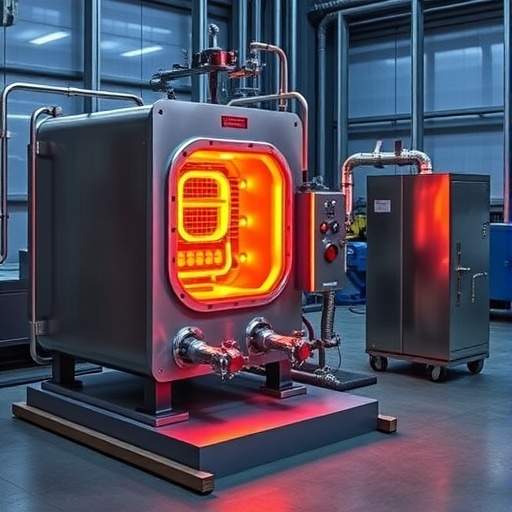
If successfully scaled for industrial application, this technology could have profound implications for the resilience and sustainability of the global nickel supply chain.
Depletion of High-Grade Resources: The Challenge of Ultramafic Ores
Nickel is a critical raw material for stainless steel, nickel-based alloys, and lithium-ion batteries, and its strategic importance is growing amid the clean energy transition. However, after years of mining, global high-grade sulfide nickel resources are rapidly depleting. While low-grade ultramafic ores are abundant, their complex mineral composition and high magnesium silicate gangue content have long hindered cost-effective utilization.
Traditional extraction routes primarily fall into two categories: high-temperature pyrometallurgical smelting, which is energy-intensive and generates significant sulfur dioxide emissions; and hydrometallurgical leaching, which involves complex processes, high reagent consumption, and difficult waste liquid treatment. Both pathways face economic and technical bottlenecks when processing low-grade ultramafic ores, leaving these resources largely untapped.
Four Breakthroughs in Low-Temperature Solid-State Processing
A team from the University of Toronto's Department of Materials Science and Engineering—including Wei Lv, Fanmao Wang, Brian Makuza, Sam Marcuson, and Mansoor Barati—in collaboration with Vale Base Metals Technology and Innovation, has developed an innovative heat treatment process achieving four major breakthroughs:
"Getter" Strategy: Inexpensive Metallic Iron Selectively Captures Nickel
The core innovation of this process lies in using inexpensive metallic iron as a "nickel getter." Under carefully controlled temperature, atmosphere, and iron addition conditions, favorable thermodynamic conditions are created within the reactor, enabling nickel to selectively migrate from the ore and concentrate into the metallic alloy phase.
Unlike previous methods that agglomerate iron powder with concentrate and heat to around 920°C, this process achieves efficient extraction at low temperatures below 950°C. The technical essence is a "solid-state displacement" reaction pathway: iron captures sulfur from sulfides to form non-magnetic FeS, while excess iron combines with nickel to form ferronickel alloy—cleverly avoiding the high-temperature melting conditions required by traditional smelting.
Environmentally Friendly: Complete Elimination of Sulfur Dioxide Emissions
One of the biggest environmental pain points of traditional nickel smelting is sulfur dioxide emissions. This process fundamentally prevents SO₂ generation by stably sequestering sulfur in a solid sulfide phase. This design makes the process a sustainable extraction pathway fully aligned with decarbonized metal production goals.
Fast and Efficient: Three-Hour Output with Controllable Particles
The process takes only about three hours, producing ferronickel alloy with a nickel content of 16%–24%. Crucially, the research team achieved precise control over the size and morphology of the alloy particles—a factor that directly determines the efficiency of subsequent physical separation of the alloy from gangue. The controllability of particle size and morphology enables efficient operation of physical separation methods such as magnetic separation.
Pilot-Scale Validation: A Key Step from Lab to Industry
The process has been validated at a mini-plant scale, marking its transition from the laboratory phase and establishing a technical foundation for industrial scale-up. The research received technical support from Vale Base Metals and funding from the Natural Sciences and Engineering Research Council of Canada (NSERC).
Why "Low-Temperature Solid-State" is Key
Traditional nickel extraction follows a "high-temperature melting" logic—heating ore well above its melting point to liquefy metal components for separation. This pathway is not only energy-intensive but also inevitably generates large amounts of SO₂.
The innovation by the University of Toronto team follows a "solid-state displacement" logic—using chemical reactions between iron and nickel sulfides at temperatures far below the melting point to enable nickel migration from ore to alloy in the solid state. The advantages of this approach include:
Significantly reduced energy consumption: Reaction temperature lowered from over 1200°C in traditional smelting to below 950°C;
No need for smelting equipment: Solid-state reactions can be conducted in simpler reactors;
Sulfur is "locked in": Sulfur is stably present as solid FeS rather than emitted as gaseous SO₂;
Simplified process: No complex gas treatment systems required.
By precisely controlling temperature, atmosphere, and iron addition, the researchers created favorable thermodynamic conditions within the reactor, enabling selective nickel enrichment.
Unlocking 45 Million Tonnes of Nickel Resources, Reshaping the Global Supply Chain
Activating Global "Dormant" Ultramafic Nickel Resources
It is estimated that global ultramafic ores contain approximately 45 million tonnes of untapped nickel—a figure representing a significant portion of proven global nickel reserves. If industrialized, this technology could transform these long-neglected "waste rocks" into economically viable nickel resources, greatly expanding the usable boundaries of global nickel resources.
Securing Nickel Supply for the Clean Energy Transition
Nickel is a key component of lithium-ion battery cathode materials, especially high-nickel NCM (nickel-cobalt-manganese) formulations. With the explosive growth of the electric vehicle market, global nickel demand is accelerating. This technology provides a new resource source to alleviate nickel supply constraints, directly supporting the global clean energy transition.
Driving the Green Transformation of Nickel Production
The process's zero SO₂ emission characteristic starkly contrasts with traditional pyrometallurgical smelting. Against the backdrop of increasingly stringent global carbon pricing mechanisms, this technology offers nickel producers an economically and environmentally viable alternative, potentially setting a new benchmark for low-carbon nickel production.
Output Product Directly Compatible with Battery-Grade Refining
The ferronickel alloy (16%–24% nickel) produced by this process can be further processed into battery-grade nickel through conventional refining processes. This means the technology is not limited to primary smelting but can seamlessly integrate with the final demands of the new energy industry chain.
From "Resource Curse" to "Resource Liberation"
Ultramafic ores have long been considered a "dilemma"—vast in reserves but difficult to utilize. This collaboration between the University of Toronto and Vale began with a sustainable mining partnership established in 2023. Now, this partnership has yielded significant results.
The true value of this technology lies in redefining the boundaries of "mineable resources." As high-grade resources dwindle, technological innovation is transforming former "waste rocks" into future "rich ores." As the paper notes, this process "broadens the technical landscape of nickel extraction, contributing to a more equitable and resilient global nickel supply chain."
At a time when the global nickel market remains tight and countries are racing to secure critical mineral supply chains, this "low-temperature solid-state nickel extraction" technology undoubtedly drops a bombshell for the sustainable supply of global nickel resources—and this time, the epicenter is not a high-temperature furnace, but a quiet "solid-state revolution."