
The global mining industry generates tens of billions of tons of tailings annually, containing a staggering value of critical minerals that have long remained "dormant" due to the high costs and environmental risks of traditional chemical extraction processes. A research team from the University of Queensland has proposed an unexpected solution—letting fungi "eat" the waste and "spit out" metals. This technology, jokingly described by researchers as "superheroes gaining superpowers," is transforming mining waste from an environmental burden into a green resource.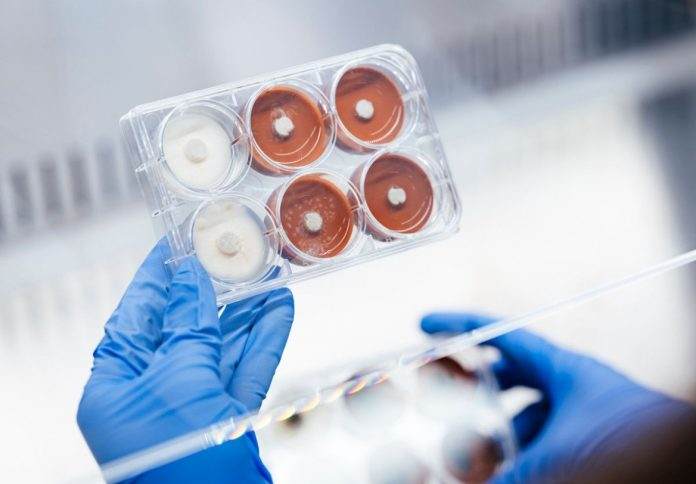
"Sleeping Treasures" in Tailings and the Dilemma of Chemical Extraction
The global mining industry generates hundreds of billions of tons of tailings each year. These wastes not only occupy vast land areas and pose environmental safety risks such as dam failures but also contain trace amounts of critical minerals like vanadium and scandium. With the surging demand for critical minerals driven by the global clean energy transition and high-end chip manufacturing, "secondary mining" from tailings has become a key direction in resource strategy.
However, current solutions have significant shortcomings. Traditional extraction methods rely on chemical leaching—using strong acids and organic solvents to dissolve metals from waste. This approach is not only costly but also generates large volumes of toxic liquid waste, causing secondary pollution and trapping the industry in a dilemma of "solving one pollution problem while creating another."
Giving Fungi "Superpowers"
A team led by Dr. Denys Villa-Gomez, an environmental engineer at the University of Queensland, has developed a bioleaching technology based on engineered fungi at the university's new AUD 70 million Centre for a Sustainable Bioeconomy. The core highlights of this technology include:
Highlight 1: Adaptive Laboratory Evolution—From "Ordinary Fungi" to "Super Fungi"
The research team collected naturally occurring fungal strains from mine environments. Using adaptive laboratory evolution techniques, these fungi were continuously cultivated under extreme toxic conditions and harsh environments. Only the strongest individuals survived and reproduced. After multiple generations of selection, "super fungi" capable of tolerating high concentrations of heavy metals and acidic environments were obtained.
Highlight 2: Natural Metabolic Acid Production—A Gentle and Efficient "Biofactory"
In advanced bioreactors, engineered fungi are mixed with mining waste and nutrient feedstock. During metabolism, the fungi naturally secrete organic acids. These organic acids break down the mineral structure of the waste, releasing the encapsulated metals into the liquid. The metals can then be recovered from the liquid and reused.
Highlight 3: Proven Extraction Capability for High-Value Minerals
The research team has demonstrated significant extraction efficiency for high-value critical minerals such as vanadium and scandium. Vanadium is a key raw material for aerospace alloys and energy storage batteries, while scandium is a core material for next-generation semiconductors and fuel cells. These minerals are indispensable in the manufacturing of electronic products and microchips.
Why Are Fungi Smarter Than Chemicals?
The logic of traditional chemical leaching is "use stronger acids to dissolve"—the higher the intensity, the better the effect, but the environmental cost also rises. The innovation of the University of Queensland team follows the logic of "use living factories to extract"—letting fungi act as miniature biofactories to release and concentrate metals at ambient temperature and pressure. The advantages of this approach include:
No need for strong acids: The organic acids secreted by fungi are mild and controllable, producing no toxic liquid waste;
Dual benefits: While extracting metals, the metabolic activity of the fungi itself **detoxifies** the tailings, helping to remediate the mine environment;
Low energy consumption: The biological process operates at ambient temperature, requiring no high temperature or pressure;
Deployability: In the future, it is expected to be deployed directly on-site at mines for tailings treatment.
The Path from Lab to Mine: "Green Mining"
Unlocking Critical Minerals from Global Vast Tailings
The value of critical minerals contained in global mining tailings is incalculable. Once scaled, this technology will transform these wastes, long regarded as "environmental liabilities," into economically viable secondary resources, significantly broadening the supply channels for critical minerals.
Reducing Geopolitical Risks in Critical Mineral Supply
The global supply chains for critical minerals like vanadium and scandium are highly concentrated, posing prominent geopolitical risks. This technology enables countries to recover these strategic materials from their own mine "waste," enhancing resource self-sufficiency.
Promoting Green Transformation of the Mining Industry
Against the backdrop of increasingly stringent global carbon pricing and ESG investment standards, this technology offers mining companies a tailings treatment solution that is both economically viable and environmentally friendly. As Professor Esteban Marcellin, Director of the Centre for a Sustainable Bioeconomy, stated: "We use cutting-edge synthetic biology to modify microorganisms and biological systems, converting waste, emissions, and low-value materials into sustainable, high-value products."
From Tailings Treatment to In-Situ Remediation
The research team's long-term goal is to deploy these fungi in real mine environments, recovering minerals while remediating the land. The team is currently in discussions with industry partners to advance field testing of the technology.
Redefining the Boundary Between "Waste" and "Resource"
The deeper value of this research lies in redefining the nature of mining waste. In the past, tailings were the "endpoint" of mining production—an environmental burden requiring costly disposal. Now, through the integration of synthetic biology and bioengineering, tailings are becoming a "starting point"—a resource capable of continuously generating value.
Dr. Villa-Gomez's analogy is most vivid: "It's like superheroes gaining superpowers from exposure to radiation." When fungi "evolve" the ability to process toxic waste, the mining industry's "waste problem" may finally find a green and efficient solution.