
In the intelligent upgrade of gas-steam combined cycle units, "unmanned intervention" is just the starting point, while "optimal energy efficiency" is the ultimate goal. Recently, good news came from the research progress of the Automatic Start-up and Shut-down System (APS) based on daily start-stop peak shaving for Unit 6 of Huaneng Nanshan Power Plant. This project, independently developed by Huaneng Xi'an Thermal Power Research Institute Co., Ltd. (hereinafter referred to as "Xi'an Thermal Power Research Institute") and implemented by Huaneng Nanshan Power Plant, has successfully achieved a historic breakthrough in the dual advancement of "zero manual operation" and "significant energy consumption reduction" during the start-up and shut-down process of China's Ansaldo F-class gas turbines.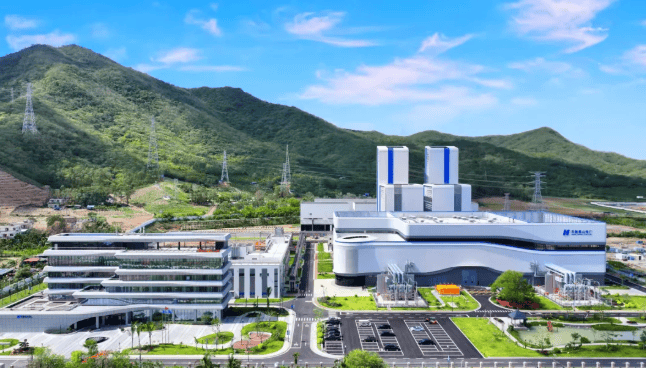
It is particularly noteworthy that this APS system did not stop at mere automation. Instead, through deep logic restructuring and refined process control, it achieved a substantial leap in start-stop efficiency and a significant reduction in energy consumption on the basis of "zero operation." The core value of this APS system is not to "replace people," but to free operators from the thousands of repetitive operations and high-intensity multi-system switching monitoring during the start-up and shut-down phases. At the same time, the successful implementation of this system aligns closely with the national push for "AI+" industrial applications and the use of digital technology to reduce burdens and enhance efficiency at the frontline.
More Than "Saving Manpower":
Freeing Frontline Staff from Repetitive Labor
In the past, the start-up and shut-down process of units required operators to monitor hundreds of nodes, manually adjust feedwater valves, switch bypasses, and close switches. Starting the unit alone involved thousands of operations. "When busy, there wasn't even time to drink water, and the mental tension was high, fearing that one wrong click of the mouse would affect the entire start-up rhythm"—this is a common sentiment among many operators. Now, this APS system has turned the entire process into built-in logic: from boiler water filling, gas turbine ignition, and steam turbine rolling to grid connection and load carrying, each step is automatically triggered by the computer along a preset optimized path. Even the start-stop of closed cooling water pumps and the opening of the drum water supply regulating valve dynamically match the main parameters, requiring no manual intervention.
Hard Data Verification:
The "Low Energy Consumption" Code Behind "Zero Operation"
What further earns the recognition of frontline staff is that this APS system not only "does the work for people" but also "knows how to calculate the details." In the past, to ensure safety during unit start-up and shut-down, the parameter margins were set too large, making it difficult to reduce natural gas consumption. In this breakthrough, the R&D team purposefully embedded "energy saving" into the control logic: by optimizing six core algorithms, including flue gas temperature-load coordination, bypass dynamic matching, and desuperheating water advanced control, the thermal cycle during start-up and shut-down always follows the "most economical path." The successful commissioning of this APS system on Unit 6 of Huaneng Nanshan Power Plant has delivered an excellent report card combining "automation and low energy consumption":
Rapid Response, Significantly Enhanced Peak Shaving Capability. Relying on refined control, the start-up time from gas turbine ignition to unit load reaching 220MW is 54 minutes, shortened by 20 minutes compared to the conventional level, a reduction of 27%; the shut-down time from 220MW to gas turbine disconnection is 11 minutes, shortened by 8 minutes, a reduction of 42%. This "fast start, fast stop" capability greatly enhances the core competitiveness of gas-steam combined cycle units in participating in grid peak shaving.
Meticulous Calculation, Significant Energy Saving and Consumption Reduction Effect. A single start-stop of the unit can save 4,500 Nm³ of natural gas. Based on an estimated 150 start-stop cycles per unit per year, this can reduce carbon dioxide emissions by approximately 1,250 tons annually. "The natural gas saved by a single unit starting and stopping 150 times a year, converted into electricity generation, is equivalent to the annual electricity consumption of 1,250 households," calculated a shift supervisor at Huaneng Nanshan Power Plant, providing an intuitive comparison.
From "Pilot" to "Model":
Paving the Way for Similar Gas-Steam Combined Cycle Units
"The most practical aspect of this breakthrough is turning frontline operational experience into replicable standard logic, not just creating a 'showpiece,'" said the project leader from Xi'an Thermal Power Research Institute. Currently, this APS optimization solution has formed standardized logic modules, which can not only be promoted to other units of Huaneng Nanshan Power Plant but also provide technical references for the vast number of existing gas-steam combined cycle units in China.
A relevant person in charge of Huaneng Nanshan Power Plant stated that the plant will continue to refine the system details together with Xi'an Thermal Power Research Institute, solidifying this "zero operation + deep energy saving" model into a long-term mechanism. This aims to achieve the goals of "human-machine collaboration, efficiency improvement, and safety controllability," providing support for the green, efficient, and intelligent development of the enterprise.