
At the 2026 Changsha International Green Intelligent Construction and Building Industrialization Expo, held in Changsha from June 25 to 27, 2026, China Construction Third Engineering Bureau (CCTEB) unveiled its intelligent construction system covering the entire chain from "digital foundation—cloud design and manufacturing—intelligent equipment—smart operations." From the "Tiangong Cloud Chain" digital foundation to the "CSCEC Wanfang" trinity system, from aerial "Transformers" to underground "pipeline doctors," CCTEB showcased a comprehensive set of intelligent solutions covering the entire lifecycle of buildings, declaring that China's construction industry is undergoing a profound transformation from "building houses" to "building the future."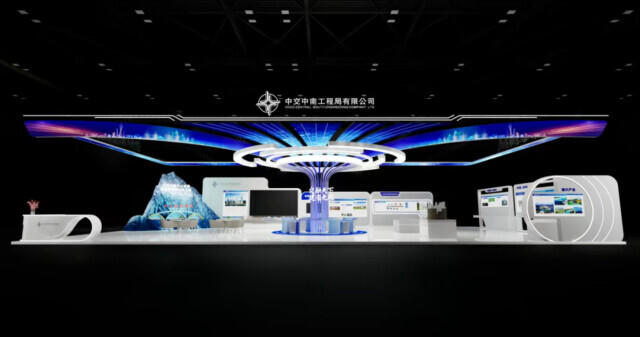
The "Information Silos" and "Human Wave Tactics" of the Construction Industry
For a long time, the construction industry has been called one of the "least digitized industries." Design institutes draw blueprints, factories produce components, construction sites carry out work, and property management handles operations—each link operates independently, with severely fragmented data and numerous information silos. At the same time, construction sites are highly dependent on manual labor: tower crane operators must climb hundreds of meters into the air, workers face suffocation risks when dredging silt in culverts, and shield machine cutter changes require personnel to enter high-pressure chambers... The "human wave tactics" model, characterized by high risk, high intensity, and low efficiency, can no longer meet the demands of high-quality development in the construction industry.
Full-Chain Breakthroughs from Digital Foundation to Intelligent Equipment
"Tiangong Cloud Chain": A Digital "Artery" Connecting Design, Production, and Construction
As the digital foundation of the entire intelligent construction system, CCTEB prominently showcased the "Tiangong Cloud Chain" internet platform. This platform hosts a series of cloud platforms, including Yunjin, Yunjin, Yunzao, Yunzhi, and Yunting, which manage BIM collaborative design and the digital management of production for rebar, PC components, electromechanical systems, and decoration parts. The interconnection between these systems enables full-chain digital integration from blueprint design to component production and on-site construction, and it has been implemented in nearly 3,000 projects to date.
"CSCEC Wanfang": The Core Engine of the "Fanglue-Wanlian-Wanqing" Trinity
In the CCTEB exhibition area, the "CSCEC Wanfang" intelligent construction system solution attracted significant attention. This system is centered on the "Fanglue-Wanlian-Wanqing" trinity:
Fanglue is the methodology—based on modern industrial logic, it reshapes an integrated intelligent construction model of "advanced design—industrial prefabrication—on-site assembly";
Wanlian is the digital hub—it eliminates "information silos" between various stages of traditional construction through unified data standards;
Wanqing is the equipment system—it develops intelligent flexible production lines at the factory end and intelligent equipment centered on building machines and construction robots at the site end, enabling data-driven operations, human-machine collaboration, and reduced manpower.
Intelligent Equipment Matrix: From Aerial "Transformers" to Underground "Pipeline Doctors"
The intelligent equipment segment was a highlight of the exhibition.
Aerial "Transformers"—Three series of building machines cover different scenarios, including super high-rises over 200 meters, ordinary residential buildings, and prefabricated structures. They can integrate equipment such as tower cranes, elevators, all-weather canopies, and intelligent vehicles, continuously iterating and upgrading towards intelligent equipment integration and factory-like environments.
The top-jacking through-core tower crane features a unique top-jacking design, allowing the tower body to rise and fall for hazard avoidance. It has successfully withstood a Category 17 typhoon and supports 5G remote ground control. The single-rail multi-cage circulating construction elevator enables multiple cages to run cyclically on a single rail, reducing the building's external facade footprint by over 50%.
Underground "Pipeline Doctors"—Among two types of urban pipeline robots, the large-diameter pipeline water-bearing inspection robot can accurately detect pipe wall defects over long distances in high-flow environments. The culvert dredging robot can remove silt at a rate equivalent to 20 workers operating simultaneously, reducing comprehensive costs by 40%.
Smart Operations and "Good Housing": Full Lifecycle Coverage from Construction to Maintenance
The smart operations segment showcased three major platforms: Zero-Carbon Smart, Urban Watershed, and Campus Smart Connect. These platforms use digital technology to break down data barriers across multiple systems, shifting from passive response to proactive optimization, empowering intelligent operations and maintenance throughout the lifecycle of buildings and cities.
A core product in the "Good Housing" series—the Zero-Altitude House—uses indoor pressurization technology to recreate a plain-level atmospheric environment on plateaus, fundamentally addressing health issues such as altitude sickness. The cabin adopts the same cage structure design as aircraft, capable of withstanding 5 tons of pressure per square meter, and a single cabin can be installed and put into use within two hours. It has been successfully deployed in scientific research, tourism, engineering, and defense fields, including the Antarctic Kunlun Station, Mount Everest Base Camp, and the Huoshaoyun lead-zinc mine in Xinjiang.
Empowering "Good Housing" and Urban Renewal
The "CSCEC Wanfang" system, based on unified data standards, creates a closed-loop data flow across design, factory, and site processes. At the factory end, intelligent flexible production lines automate the production of components and parts. At the site end, intelligent equipment such as building machines and construction robots promote human-machine collaboration and reduced manpower operations.
The three smart operations platforms use digital technology to break down data barriers across multiple systems, shifting from passive response to proactive optimization. The Zero-Carbon Smart platform empowers building carbon neutrality, the Urban Watershed platform supports intelligent operations and maintenance of urban infrastructure, and the Campus Smart Connect platform serves the refined management of educational buildings.
Wen Jie, Party Secretary and General Manager of CCTEB's Central South Company, stated that this exhibition comprehensively showcased the full industry chain achievements from digital design, intelligent equipment, and smart operations to "Good Housing" construction. In the future, CCTEB will continue to promote the application of intelligent equipment in more projects, enabling products like the Zero-Altitude House to be deployed in more scenarios, and driving high-quality development in the construction industry through technological innovation.
Driven by the dual goals of "carbon peak and carbon neutrality" and urban renewal, CCTEB's intelligent construction system, covering the entire lifecycle of buildings, is redefining the technological content and industrial height of "China Construction."