
At a height of 100 meters, the tower crane cab is empty; on the ground control center's large screen, every lift and descent of the hook is completed with millimeter-level precision. On June 26, at the observation meeting for the Hong Kong University of Science and Technology (Guangzhou) Phase II project, this scene left a deep impression on nearly 200 academicians, experts, and industry representatives. This is not a scene from science fiction, but the real-world answer provided by the 5G intelligent group tower remote joint control system deployed on a large scale by China Railway Guangzhou Engineering Bureau Group.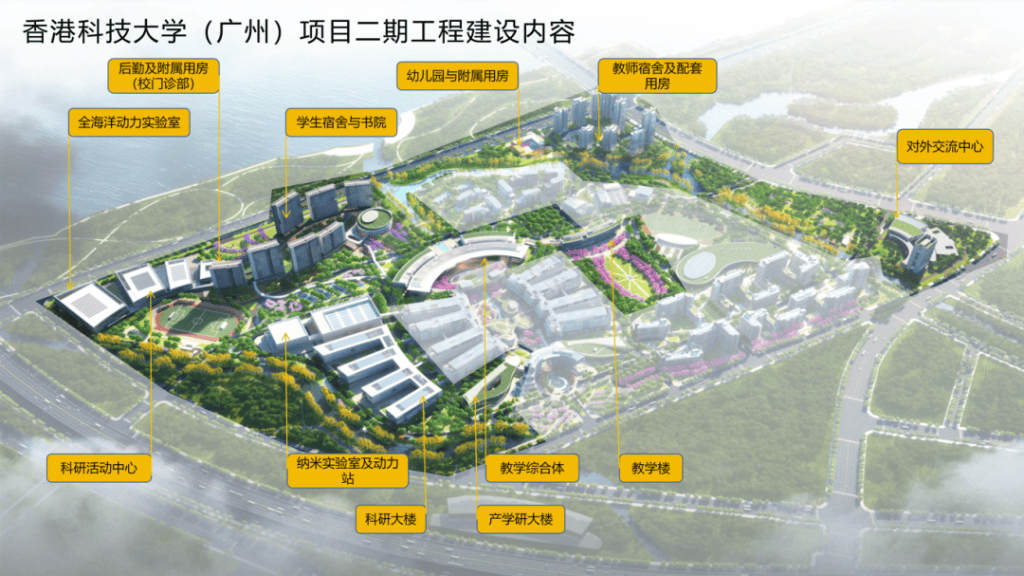
The "High-Risk Island" 100 Meters in the Sky
Tower cranes are the most critical large equipment on construction sites and also one of the highest-risk job positions. Under the traditional tower crane operation mode, drivers need to climb to a height of 100 meters and work continuously for over a dozen hours in a cramped cab that barely fits one person. High-altitude work itself carries the risk of falls, compounded by prolonged intense concentration, adverse weather conditions, and blind spots, making tower crane operations a persistent major safety concern in construction management.
More challenging is that with the increasing number of super high-rise buildings, multiple tower cranes operating crosswise on the same site has become the norm. Ensuring that these cranes do not interfere with each other and avoid collisions traditionally relies entirely on the driver's personal experience and coordination with ground command via verbal instructions—resulting in information transmission delays, low coordination efficiency, and extremely high safety risks.
Bringing tower crane operators down from 100 meters to the ground and enabling precise coordination among group cranes in the cloud—this is the core challenge that the 5G intelligent group tower remote joint control system aims to solve.
5G + AI + Robots: A Triple Composite Reshaping the Construction Site
5G Low Latency: Making "One-to-Many" Remote Control a Reality
Leveraging the low latency and high bandwidth characteristics of 5G technology, the system completely breaks the spatial limitations of tower crane operations. Tower crane drivers, who previously had to work continuously in cramped high-altitude spaces, can now sit in an air-conditioned room on the ground and perform precise operations using computer screens and joysticks.
In the command center, operators gently push handles in front of multiple screens, and the remote tower cranes respond with precision. More importantly, this system enables intensive "one-person, multiple-machine" control—a single operator can simultaneously control several tower cranes, greatly improving the utilization efficiency of human resources. High-definition images from under the hook are transmitted back in near real-time, and the group cranes use intelligent algorithms to automatically plan trajectories and avoid collisions, achieving precise coordination in the "cloud."
This is not simply replacing humans with machines, but a fundamental change in the production function.
AI Large Model: Equipping the Construction Site with "Eagle Eyes" and a "Brain"
If 5G gives the construction site agile "hands and feet," the AI large model implants an intelligent "brain."
The AI digital safety supervision platform deployed on the project has autonomous learning capabilities and can analyze tens of thousands of video streams in real time. From identifying violations like not wearing a hard hat to predicting potential structural risks such as deformation of high-formwork supports, the system can issue warnings within milliseconds.
This means engineering construction is shifting from "passive compliance" to "active defense"—safety management no longer involves tracing causes after an accident occurs, but intervening and preventing risks before they happen. The safety line of defense on the construction site is truly drawn before risks emerge.
Robot Clusters: From "Human Wave Tactics" to "Robots Replacing Humans"
At the HKUST(GZ) Phase II project site, unmanned construction hoists autonomously call floors and dock precisely; indoor painting robots swing their mechanical arms to apply paint evenly along walls, reducing paint mist splatter; measurement and inspection robots, equipped with laser scanners, can complete data collection for a room in minutes, instantly generating a color 3D model that clearly shows deviations in wall flatness and verticality.
These technologies, once confined to blueprints and concepts, have now become part of daily project operations. Through the systematic integration of digital and intelligent means, the project has significantly improved construction efficiency while notably reducing material waste and carbon emissions. This project has become the first under-construction project in the Guangdong-Hong Kong-Macao Greater Bay Area to achieve full-chain implementation of "5G + AI + Robot Clusters."
From the "Nansha Sample" to a New Industry Paradigm
Solving the Construction Industry's "Labor Shortage" Problem
The construction industry has long faced the awkward situation of "young people unwilling to do it, and experienced workers unable to do it." Recruiting for positions like tower crane operators and high-altitude workers is becoming increasingly difficult. The 5G intelligent group tower remote joint control system transforms high-altitude, high-risk operations into safe, ground-based indoor work, greatly improving the working environment and making the industry more attractive to young people. When tower crane operators can control equipment from an air-conditioned room, the industry's appeal to young talent will fundamentally change.
Providing a Standard Solution for Super High-Rise Building Group Construction
As urbanization deepens, super high-rise building groups and complex irregular structures are becoming more common. Cross-operation of multiple tower cranes within the same confined space will become the norm. The 5G intelligent group tower remote joint control system, through algorithms for automatic collision avoidance and cloud-based coordinated scheduling, provides a replicable and scalable standardized solution for such complex scenarios. Experts at the meeting believe that the complete set of technical systems and management standards developed in this project could become a universal template for future intelligent construction.
Moving Towards "Swarm Intelligence" and Round-the-Clock Autonomous Construction
The project has not stopped at the intelligence of individual equipment. It is reported that the technical team has begun exploring a "swarm intelligence" collaborative operation mode, aiming to achieve seamless workflow integration for measurement, painting, and leveling robots through a unified AI central command. Concurrently, a large model under development for the construction industry is attempting to convert the "feel" of experienced workers into algorithms, enabling robots to understand natural language commands and autonomously handle unexpected situations.
In the future, with the introduction of photovoltaic self-powering technology and digital twin pre-simulation systems, this team of "steel worker comrades" is expected to achieve round-the-clock, zero-carbon autonomous construction.
A Microcosm of China's Construction Transforming into "Intelligent Manufacturing"
The national "15th Five-Year Plan" places higher demands on the green and low-carbon development of urban and rural construction, and the construction industry is facing unprecedented transformation pressure. The complete technical system integrating "5G remote control, AI full-site supervision, and robot cluster operations," developed by China Railway Guangzhou Bureau in the HKUST(GZ) Phase II project, deeply integrates 5G, artificial intelligence, and robotics technology into all elements of the construction site: personnel, machinery, materials, methods, and environment.
Industry analysis points out that this not only provides a replicable "Nansha sample" for the industry but also confirms from a practical level that driving total factor productivity growth through technological innovation is the essential path for the construction industry to cultivate new quality productive forces.
The Hong Kong University of Science and Technology (Guangzhou) Phase II project is not just a physical space expansion project; it is a microcosm of China's construction transforming into "Intelligent Manufacturing." When tower crane cabs are empty, when AI identifies violations in milliseconds, and when robots work in clusters on construction sites—the era of "new quality productive forces" in China's construction industry has arrived.