
On August 11, the offshore wind project using flexible DC transmission technology for the first time in Asia—the Three Gorges New Energy Jiangsu Rudong 800 MW Offshore Wind Project—cumulatively surpassed 10 billion kWh in power generation, providing practical validation for the large-scale application of China's large-capacity, long-distance offshore wind flexible DC transmission technology.
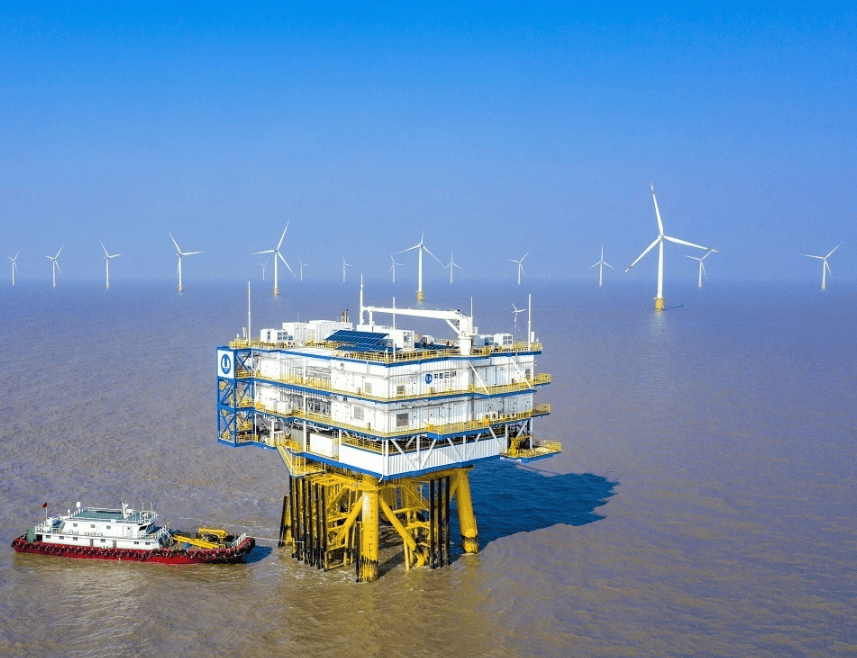
Located in the Huangshayang sea area of Rudong, Jiangsu, the project has a total installed capacity of 800 MW and is equipped with Asia's first offshore flexible DC converter station, achieving full-capacity grid connection and commissioning in 2021. Flexible DC transmission can be vividly described as the "intelligent transmission aorta" for offshore wind power delivery—it not only carries high-capacity power over long distances but also actively smooths out intermittent output fluctuations of wind power, ensuring stable integration into the power grid. To date, the project has operated safely and stably for over 1,600 days, with equipment availability reaching 99.5%.
Wang Xuefeng, Deputy General Manager of Nantong Company, Jiangsu Branch of China Three Gorges Corporation: "With no mature experience to draw upon for this project, we focused on overcoming challenges such as the stable operation of the ±400 kV flexible DC system, long-distance submarine cable monitoring and maintenance, and regulation under high-load conditions. Compared with traditional AC transmission methods, the project's transmission line losses have been reduced by approximately 1.2 percentage points, with cumulative transmission cost savings exceeding 735 million yuan."
As China's offshore wind development continues to extend into deeper and farther seas, with increasing offshore distances and rising transmission capacities, the technical limitations of traditional AC transmission are becoming increasingly prominent. With its technical advantages of large capacity, low losses, and flexible regulation, flexible DC transmission is better suited to meet the delivery needs of deep-sea offshore wind power. According to estimates, 10 billion kWh of clean electricity can meet the annual household electricity demand of approximately 4 million families, equivalent to saving 3 million tons of standard coal and reducing carbon dioxide emissions by 7.4 million tons, delivering significant energy-saving and emission-reduction benefits.