
Recently, China has made significant progress in key rare earth detection technologies. For a long time, the accurate determination of rare earth impurity content in high-purity rare earths has faced the challenge of matrix interference, which has severely constrained the precise control of rare earth product quality. To break through this technical bottleneck, the Key Laboratory of Rare Earth Product Testing and Traceability (under the State Administration for Market Regulation), established at Jiangxi University of Science and Technology, launched a dedicated technical research initiative. Through the relentless efforts of the research team, breakthroughs have been achieved in detection technologies, elevating the overall technical capability to a new level.
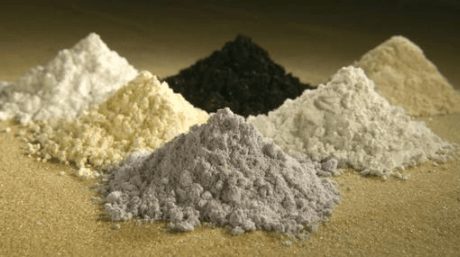
The research team has successfully developed multiple key rare earth detection technologies, among which the direct determination of rare earth impurity content in high-purity rare earths using inductively coupled plasma tandem mass spectrometry stands out as particularly notable. This technology successfully overcomes the bottlenecks of traditional detection methods, which require prior matrix separation and suffer from high detection limits. It offers significant advantages such as high sensitivity, high accuracy, and rapid detection, enabling the direct and precise determination of trace rare earth impurities in high-purity rare earths, thereby providing solid and robust technical support for rare earth product quality control. In addition, the team has achieved a series of innovative results in rare earth sample pretreatment technologies and detection instrument calibration technologies. These achievements comprehensively cover all aspects of rare earth detection, realizing a full-process upgrade from sample processing to precise detection.
Currently, the relevant technological achievements have been widely applied in rare earth production enterprises and testing institutions. In the production sector, enterprises leveraging the new detection technologies can control product quality more precisely, enhance product purity, and thereby improve production efficiency and market credibility. In the testing sector, testing institutions adopting advanced detection methods have greatly improved detection efficiency and accuracy, providing reliable and precise technical evidence for market regulation and helping accelerate China's transition from a major rare earth country to a global rare earth powerhouse.