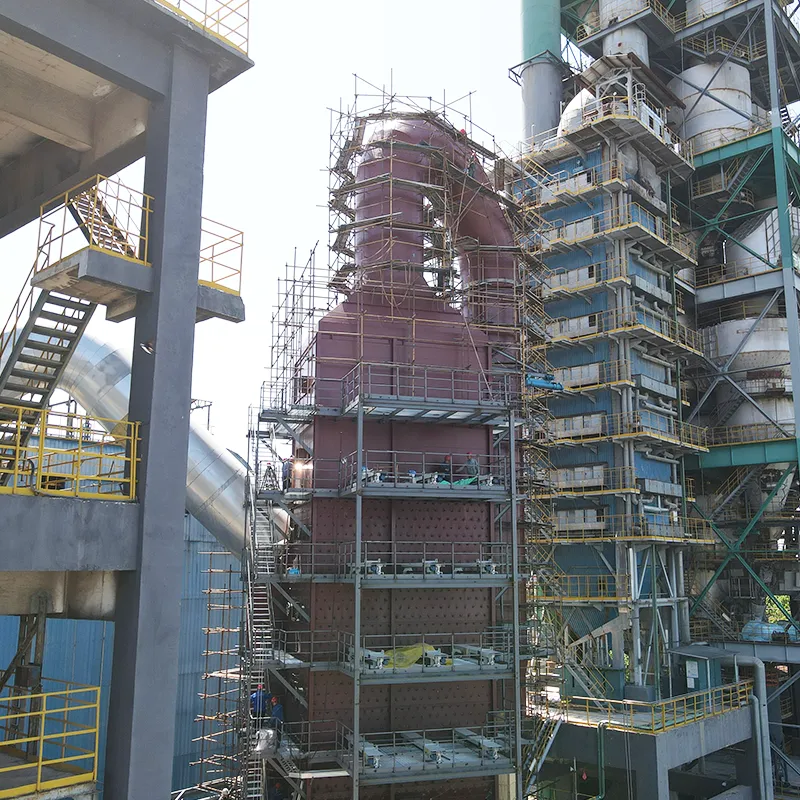

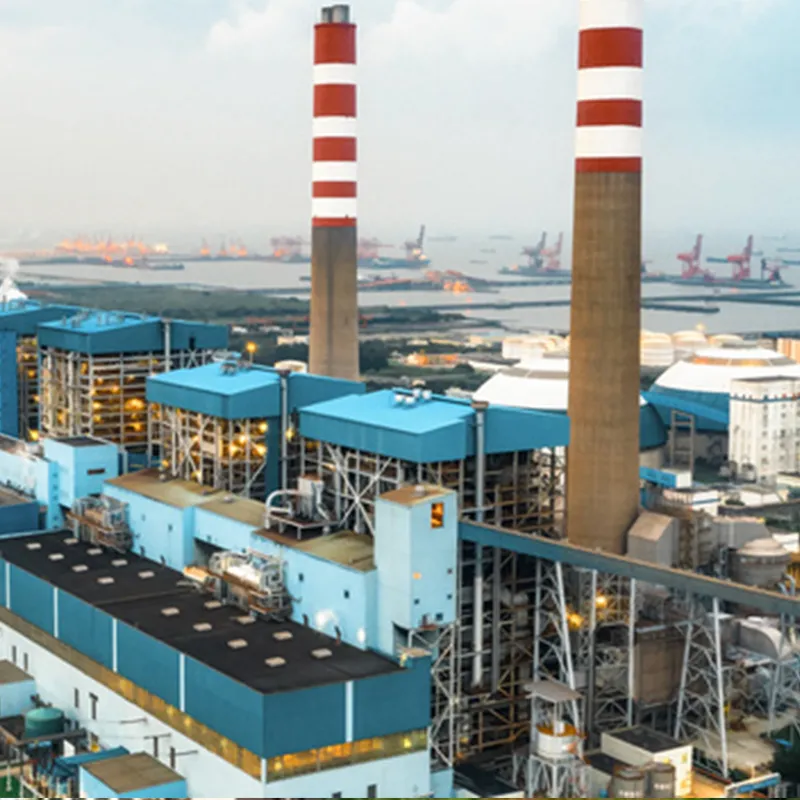


Common flue gas denitrification technologies are mainly the following:
Selective Catalytic Reduction (SCR):
Principle: Under the action of the catalyst, ammonia is sprayed into the flue gas at a temperature of about 280-420℃ to reduce nitrogen oxides to nitrogen and water.
● Chemical reaction formula: 4NO + 4NH₃ + O₂ → 4N₂ + 6H₂O; 6NO₂ + 8NH₃ → 7N₂ + 12H₂O
● Advantages: High denitrification efficiency, generally up to 80%-90%; mature technology and reliable operation.
Selective non-catalytic reduction (SNCR):
● Principle: Without using a catalyst, a reducing agent such as ammonia or urea is sprayed into the furnace temperature area of 850-1100℃ to reduce nitrogen oxides to nitrogen.
● Chemical reaction formula: 4NH₃ + 6NO → 5N₂ + 6H₂O; CO(NH₂)₂ + 2NO → 2N₂ + CO₂ + 2H₂O
● Advantages: relatively low investment cost and short construction period.
SNCR - SCR combined denitrification technology:
● Principle: combining the advantages of SNCR and SCR, first denitrification through SNCR, and unreacted nitrogen oxides are further denitrified in the downstream SCR reactor.
● Advantages: reduces costs to a certain extent and improves denitrification efficiency.