China's World's First Ratoon Rice Unmanned Smart Farm: Click the Mouse, Farm Machinery Enters the Field
Wedoany.com Report on Mar 18th, "This year, 20 sets of unmanned agricultural machinery equipment have been promoted in Datonghu District, covering 10,000 mu of rice." During the spring plowing and sowing season in March, at the Ratoon Rice Unmanned Smart Farm in Datonghu District, Yiyang City, Hunan Province, located in the heart of the Dongting Lake Plain, Xiong Jiaojun, the head of Hunan Hongshuo Biotechnology Co., Ltd., was conducting network status inspections and maintenance on the unmanned machinery. He was also arranging for 20,000 jin of rice seeds to be cultivated into high-quality seedlings.
Xiong Jiaojun is responsible for the world's first ratoon rice unmanned (or minimally manned) smart farm. This farm was established in 2023 through a collaboration between the team of Academician Luo Xiwen from South China Agricultural University, the team of Professor Peng Shaobing from Huazhong Agricultural University, the team of Professor Tang Qiyuan from Hunan Agricultural University, and Hunan Hongshuo Biotechnology Co., Ltd. It encompasses nearly 500 mu of experimental fields. Currently, the 3,000-mu base has preliminarily achieved intelligent, minimally manned management.
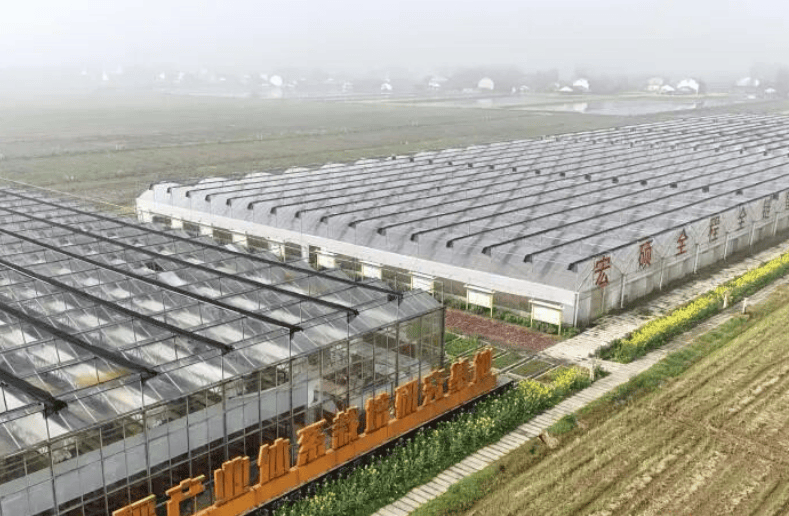
Stepping into the smart seedling factory of the smart farm, dry rice grains undergo 36 hours of intelligent temperature control in the integrated seed soaking and germination machine until they sprout and show white tips. On the fully automated production line, a small number of workers can complete the entire set of processes including sowing, soil covering, and tray stacking through manipulation. The up-and-down circulating seedling cultivation equipment ensures the seedlings receive sufficient light, and automated sprayers achieve uniform spraying.
In the farm's cloud control center, a large screen displays information such as daily farming activities, agricultural machinery statistics, daily weather, pest forecasts, and intelligent irrigation. This is the "brain" of the farm, capable of viewing data in real-time, analyzing rice growth, and making intelligent decisions. With a click of the mouse, precise operations can be carried out by the "cloud-connected" agricultural machinery.
"Some say farming is hard, but I say farming is cool," said Xiong Jiaojun. Through the integration of "agricultural machinery + agronomy + intelligence," the unmanned farm has basically achieved full traceability and comprehensive coverage of processes like plowing, planting, management, and harvesting. In recent years, the average yield per mu has exceeded 1,200 kilograms, an increase of 400 kilograms per mu compared to the previous traditional double-cropping rice.
"The machinery goes into the field, I don't," Xiong Jiaojun said. By utilizing technologies such as the Internet of Things, cloud computing, big data, and artificial intelligence, the unmanned farm has carried out unmanned modifications to agricultural machinery like transplanters, rotary tillers, and harvesters. Relying on BeiDou satellite navigation and positioning technology, these machines can operate precisely in the field according to planned paths.
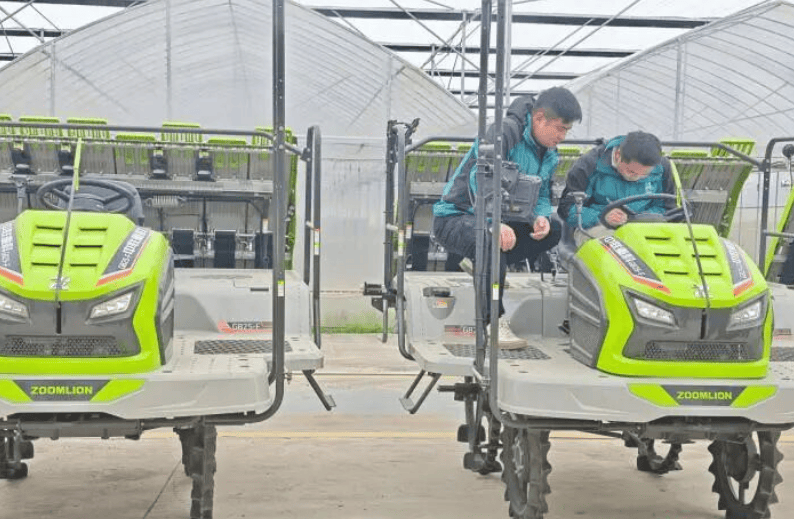
Ratoon rice utilizes the rice stubble left after harvest to continue sprouting and producing panicles. Harvesting the first crop requires minimizing damage to the stubble. Traditional manually driven harvesters have poor straight-line tracking, easily crushing the stubble. Unmanned agricultural machinery, following planned paths based on planting operation trajectories, can reduce the straight-line crushing rate from about 45% to around 18%.
The farm is equipped with distributed intelligent sensing systems such as automatic water level gauges, pest monitoring stations, and field weather stations. The cloud control center, embedded with a "deep learning classification algorithm," can display real-time views of each field and possesses "anomaly recognition and analysis" capabilities. Decisions on when to transplant, fertilize, apply pesticides, which fields need irrigation or supplemental fertilizer can all be managed intelligently.
Xiong Jiaojun said the expert teams from the three universities each have their own strengths and cooperate with each other. Under the guidance of experts, modern farmers have started a "foolproof" farming model: the cloud control center issues commands, and one only needs to press the start button. "Through these three years of experimentation, we have evolved from an experimental field into a replicable, promotable model for agricultural production in lake regions."
In 2025, the unmanned farm planting technology was promoted and applied across 2,000 mu in Nan County, Yiyang. Xiong Jiaojun is also establishing the Hongshuo Smart Agricultural Service Industrial Park in Nan County. Through standardized production technology, intelligent agricultural services, and standardized agricultural management, it serves a planting area exceeding 20,000 mu.
Related Products


714CD Series C-Band Weather Radar
Chengdu Zhongdian Jinjiang Information Industry Co., Ltd.

Industrial and Commercial Point-Type Gas Detector
Jinan Benan Technology Development Co., Ltd.
4HS-8 High-efficiency Peanut Inverted-laying Harvester
Hebei Yongfa Hongtian Agricultural Machinery Manufacturing Co., Ltd.