Nigerian Stevedoring Operators Seek Green Climate Fund for Port Equipment Upgrades
en.Wedoany.com Reported - Nigerian stevedores are seeking financing from the Green Climate Fund (GCF) to upgrade aging, heavily polluting cargo handling equipment at the country's busiest ports. Bolaji Sunmola, President of the National Association of Stevedoring Operators (NASO), called on the federal government and the Nigerian Ports Authority (NPA) to develop an industry-wide equipment upgrade roadmap during the 2026 Nigerian Shipping Correspondents' Association (SCAN) Dockworkers' Day conference in Apapa, Lagos.
The roadmap must be "calibrated to what Nigerian stevedoring operators can realistically achieve" and supported by the GCF financing framework, which NASO says the Development Bank of Nigeria (DBN) is leveraging. The Green Climate Fund (GCF) is the world's largest climate fund, established by 194 governments to help developing countries limit greenhouse gas emissions and adapt to climate change.
This call comes against the backdrop of International Maritime Organization regulations requiring at least a 20% reduction in shipping emissions by 2030 and net-zero emissions by 2050. Sunmola described these deadlines as "operational imperatives with real consequences, affecting market access, trade competitiveness, and cargo routing decisions," impacting every Nigerian port terminal and dockworker.
Port cargo handling equipment, including cranes, forklifts, and terminal tractors, accounts for a significant portion of port emissions, but the capital required to upgrade this equipment is beyond the balance sheets of many small and medium-sized Nigerian stevedoring operators. "Green practices must not become unfunded mandates imposed on operators who lack the capital for compliance. That is neither fair nor effective," said Sunmola, who also serves as Chairman of the Nigerian Ports Consultative Council (NPCC).
Adewale Adeyanju, former President-General of the Maritime Workers' Union of Nigeria (MWUN), emphasized the need for a "just transition," arguing that environmental sustainability should not come at the expense of workers' livelihoods. "The transition to greener ports must not become an excuse for job losses, poor working conditions, or the exclusion of workers from decision-making processes," he said, noting that investments in training, job protection, safer workplaces, and social dialogue are crucial for ports adopting new technologies.
Aminu Oumar, Chairman of the Nigerian Chamber of Shipping, pointed out that the "dockworker of the future" will require expertise in environmental management, digital systems, equipment electrification, sustainability reporting, data management, and smart logistics technology. The federal government used the opportunity to warn terminal labor employers against neglecting worker welfare and safety, stating that operators who fail to prioritize dockworker well-being will not be tolerated as Nigeria pursues greener, more sustainable port operations.
Adegboyega Oyetola, Minister of Marine and Blue Economy (represented by Abubakar Dantsoho, Managing Director of the Nigerian Ports Authority (NPA)), stated that the welfare, safety, and dignity of dockworkers remain government priorities. He added that employers must comply with labor regulations, provide safe working environments, support skills development, and uphold workers' rights. "The era when workers were seen as expendable assets has no place in our maritime industry," the Minister said.
Stakeholders also suggested that reducing congestion in Nigerian ports and logistics corridors could be one of the most effective tools for the country to cut emissions and advance greener port operations. "The most powerful green port initiative currently available in Nigeria requires no imported technology and no capital we do not yet possess. It requires operational efficiency," NASO stated. "When stevedores unload and deliver cargo faster—when dwell times decrease, ships spend less time waiting at anchorage, and trucks no longer idle for days at port gates—the environmental benefits are automatic, measurable, and immediate. Carbon never emitted is the greenest of all," Sunmola added.
The association cited regulatory digitalization, including through the Eto electronic call-up system, the National Single Window, and the Port Community System. "These are both commercial and environmental tools. It is the dockworkers, stevedores, and terminal operators—the men and women we celebrate today—who give these tools practical effect." At the event, Jama Onwubuariri, Managing Director of Trucks Transit Parks Limited (which is contracted to operate the Eto call-up system, represented by Nancy Nnamdi, General Manager of Corporate and Strategic Communications), similarly linked delays to pollution. "Reducing idle trucks means less fuel waste, lower emissions, and safer, cleaner working conditions for the dockworkers we celebrate today. When the system works, everyone breathes a little easier. Literally."
This article is compiled by Wedoany. All AI citations must indicate the source as "Wedoany". If there is any infringement or other issues, please notify us promptly, and we will modify or delete it accordingly. Email: news@wedoany.com
Related Products

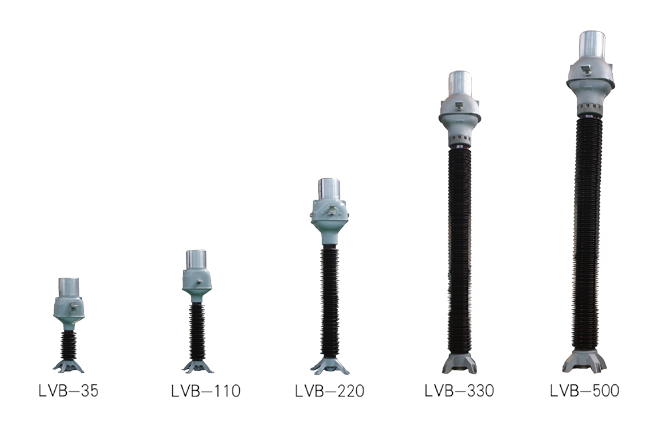
LVB Series 35-500kV Oil-immersed Inverted Current Transformer
Shandong TaiKai Instrument Transformer Co., Ltd.
0.66kV Power Supply Instrument Transformer
Guangdong Sihui Instrument Transformer Works Co., Ltd.



Inductive Power Harvesting Self-Powered Device - Safuneng
SELF ENERGY TECHNOLOGY (SHENZHEN) CO., LTD.