100MW Fishery-Solar Complementary Photovoltaic Project in Wujiang, Hexian County, Anhui, China, Achieves Full-Capacity Grid Connection
en.Wedoany.com Reported - Recently, the 100MW fishery-solar complementary photovoltaic project in Wujiang, Hexian County, constructed by China Railway Wuhan Electrification Bureau, officially achieved full-capacity grid connection.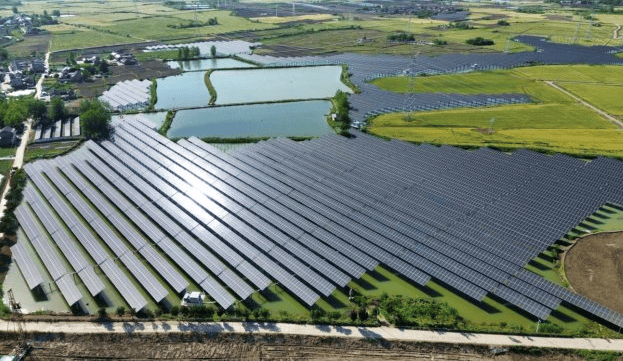
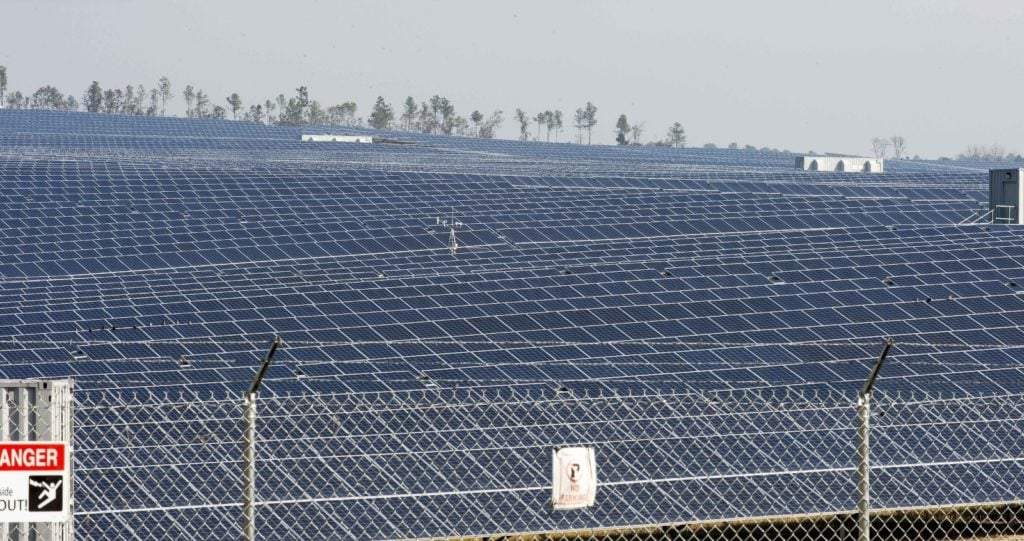
Located in Hexian County, Ma'anshan City, Anhui Province, at the heart of the Yangtze River Delta, the project's photovoltaic array covers a water surface area of over 2,600 mu. Adopting a three-dimensional approach of "power generation on water, aquaculture below," the project team has turned solar panels into "new fishing nets" for local fishermen. A total of 156,000 monocrystalline silicon modules are installed at a 22° tilt angle on the water surface, arranged in a scale-like pattern to maximize sunlight capture while leaving sufficient space for fish activity. The support system uses a dual-bracket composite structure, with a column clearance height of over 5 meters, providing wide passages for fishery operations. This "dual-use of one land" model increases the economic benefit per unit area by 300% and reduces carbon dioxide emissions by 170,400 tons annually. Leveraging multiple technological innovations, the project achieves mutual benefits between photovoltaic power generation and aquaculture, while simultaneously promoting ecological protection and industrial income growth.
Behind these impressive results lies the project team's persistent efforts to overcome challenges and meticulous coordination throughout the construction process. Facing multiple challenges such as complex water construction environments, numerous overlapping work procedures, and high pressure on material supply, the team planned ahead, scientifically organized, and anchored on the grid-connection target. They refined measures from multiple dimensions including safety control, construction coordination, and material support, uniting efforts to break through various construction difficulties.
In response to numerous obstacles, the project leadership led the development of a reverse schedule plan, detailing the progress of each construction team and each work procedure on a daily basis. They assisted construction teams in optimizing the types and numbers of workers, improving construction progress and quality assessment mechanisms. Meanwhile, they collaborated with construction, supervision, operation, and construction teams to hold daily construction progress meetings, addressing key, difficult, and bottleneck issues affecting construction progress on-site, ensuring orderly daily work arrangements and timely fulfillment of each construction plan.
The successful grid connection of this project will effectively fill the green electricity gap in eastern Anhui, optimize the regional energy structure, and support the local economy and society in achieving green, low-carbon, and high-quality development.
This article is compiled by Wedoany. All AI citations must indicate the source as "Wedoany". If there is any infringement or other issues, please notify us promptly, and we will modify or delete it accordingly. Email: news@wedoany.com
Related Products


Prefabricated Houses and Electrical Energy Boxes
Chengdu Ruilong Machinery Manufacturing Co., Ltd.
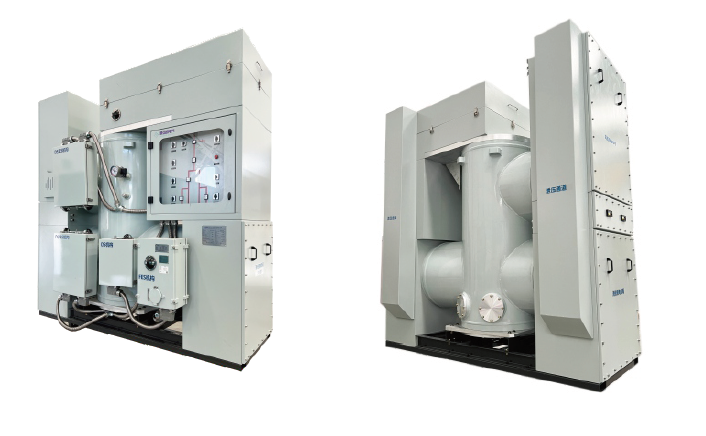
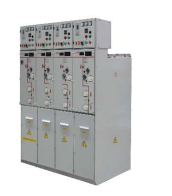
72.5kV 1250A 31.5kA SF6 free Gas-insulated Metal-enclosed Switchgear
Zhejiang Juhonkia Intelligent Electric Co., Ltd.
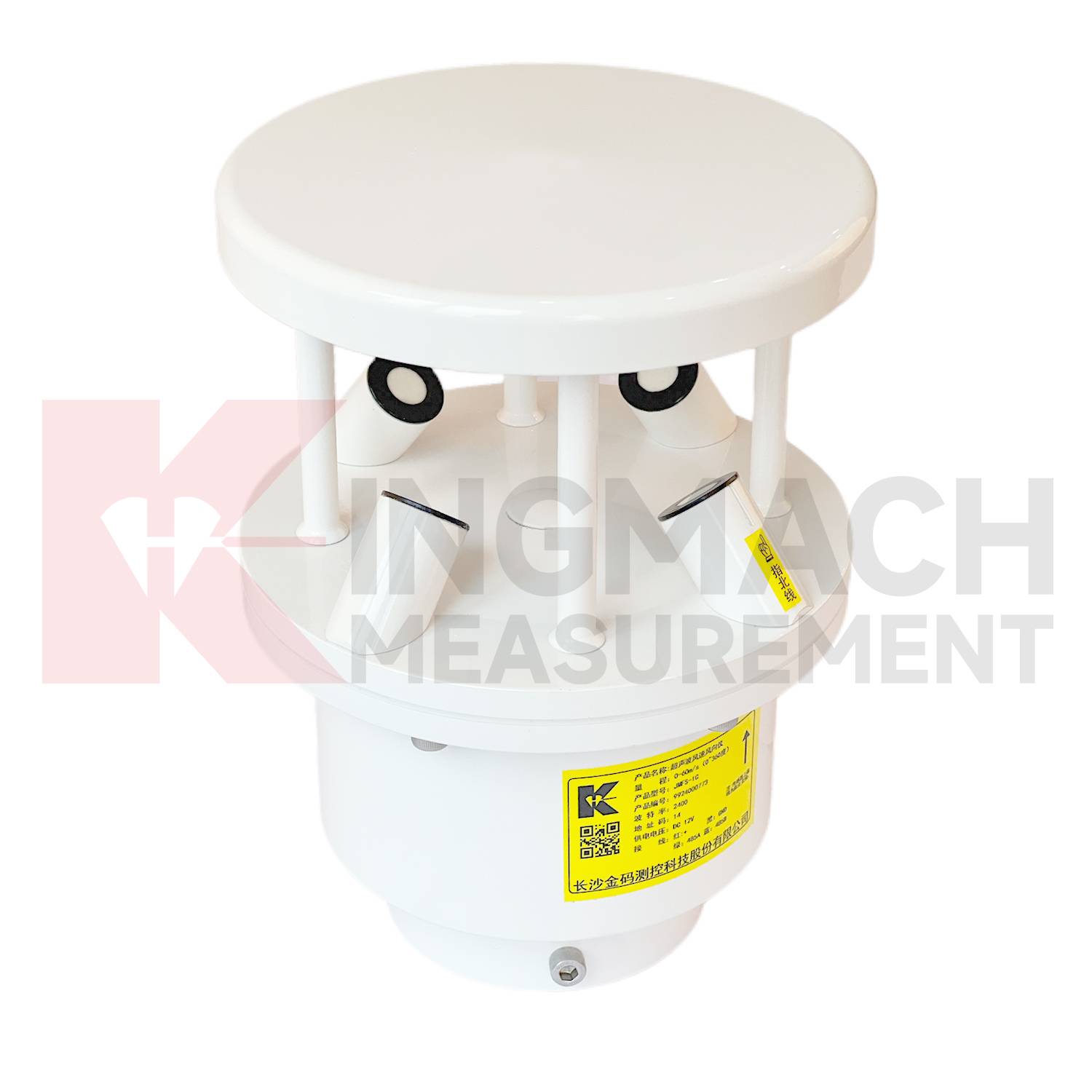
Ultrasonic Wind Speed and Direction Instrument
Kingmach Measurement & Monitoring Technology Co., Ltd.