en.Wedoany.com Reported - A machine described as a high-speed road cleaning vehicle made in China has drawn attention on social media, with a video showing it capable of directly collecting stones, dust, and debris from asphalt roads at an operating speed of up to 80 km/h.
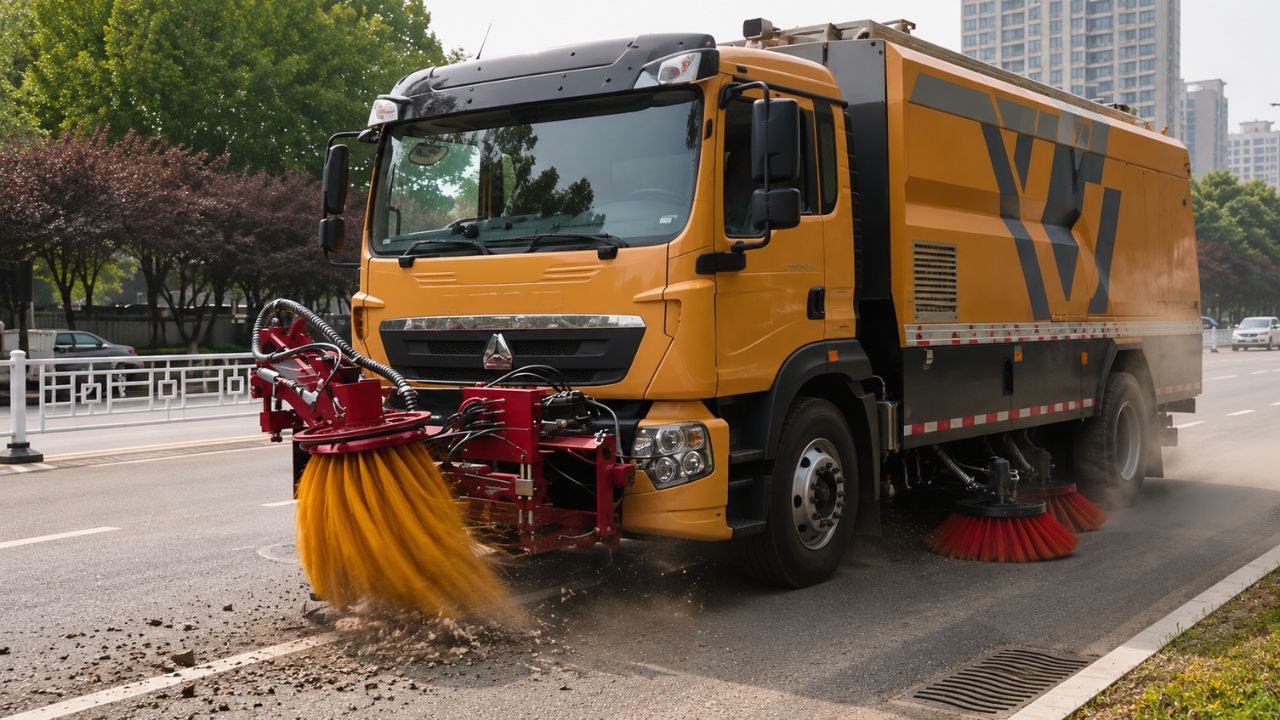
In the video footage, the vehicle is a yellow heavy truck, equipped with a high-roof cab, enclosed cargo box, front brush, hydraulic arm, bottom sweeping system, and a structure for collecting road waste. This configuration differs from ordinary urban street sweepers and is more suitable for high-efficiency maintenance scenarios such as highways and expressways.
The core promise of this technology is to clean roads while moving, thereby reducing traffic congestion, avoiding prolonged road closures, and lowering risks for drivers and maintenance personnel.
According to circulated information, this device is a Chinese high-speed road sweeper capable of removing stones, dust, metal fragments, and larger debris at speeds of up to 80 km/h. The video shows the truck driving on an asphalt road with its front and bottom brushes operating. The machine pushes, sweeps, and concentrates scattered road waste while raising dust and collecting some materials.
It should be noted that public sources do not provide detailed specifications of the exact truck model or complete factory technical data. Therefore, any association with specific manufacturers should be considered as industry background information.
A device capable of cleaning highways at 80 km/h has clear practical value. On busy highways, scattered debris such as metal fragments, stones, or wood can cause serious accidents like tire blowouts, loss of control, sudden braking, or chain collisions. Traditional road cleaning often requires slow-moving vehicles, workers near traffic, and temporary road closures, which can easily lead to congestion and new risks on expressways. This device, operating at speeds compatible with expressways, promises to transform slow road cleaning into agile operations with minimal disruption to traffic flow.
From the video footage, the vehicle uses a combined cleaning system. The front red device is equipped with a mechanical arm and hydraulic hoses to position the brush and guide waste on the asphalt. Yellow and red brushes rotate close to the ground, pushing dirt, small stones, and debris toward the collection area. Additional sweeping mechanisms at the bottom and middle of the truck work in coordination. The device does not rely solely on "suction" to clean the road but combines mechanical sweeping, dust control, airflow, and suction into an integrated operation to handle both light and heavy waste.
The concept of a high-speed road sweeper is not entirely new. Patents related to China's highway cleaning concepts have described devices capable of operating at speeds ranging from 40 km/h to 80 km/h. This indicates ongoing research in China for cleaning highways, airport runways, and large paved areas to reduce reliance on extremely slow operations.
This case also reflects the strength of China's special-purpose vehicle industry. Companies such as Shandong Dongyue Special Purpose Vehicle Manufacturing Co., Ltd. modify trucks for specific uses like road maintenance, logistics, special transport, and infrastructure equipment. This industry typically collaborates with large OEMs and chassis manufacturers like Dongfeng, while specialized companies convert these base vehicles into functions such as urban cleaning, sanitation, cargo transport, road maintenance, and public services. This means China has an industrial chain capable of transforming ordinary trucks into highly specialized machines to address specific infrastructure problems.
The core value of this technology lies in achieving highway cleaning without completely interrupting traffic. If the device delivers on its promises, it could reduce maintenance time, lower worker risks, avoid congestion, and improve road safety. Although the video cannot determine all specifications of the model or precisely identify every factory component, the footage demonstrates a clear direction: road maintenance is transitioning from slow manual operations to more automated, rapid, and industrialized activities.
This article is compiled by Wedoany. All AI citations must indicate the source as "Wedoany". If there is any infringement or other issues, please notify us promptly, and we will modify or delete it accordingly. Email: news@wedoany.com