China Galaxy General-Purpose Robot Releases Humanoid Robot Motion Control Model Based on 20,000 Hours of Data
en.Wedoany.com Reported - Galaxy General-Purpose Robot recently released its full-body real-time motion control foundation model for humanoid robots, AstraBrain-WBC 0.5. This model is a key component of the AstraBrain technology system, trained on approximately 2 billion frames of human motion data, with a parameter scale of 80.4 million, focusing on building the robot's "general-purpose cerebellum" capabilities.
To train this model, the joint research team of Galaxy General-Purpose Robot constructed the industry's largest humanoid robot motion training dataset, totaling approximately 20,000 hours, covering diverse scenarios such as dance, sports, daily behaviors, industrial operations, and collaborative handling. Data shows that the model's action space coverage is approximately 4 to 5 times larger than the widely used AMASS dataset in the industry.
AstraBrain-WBC 0.5 introduces a GPT-like large-scale training paradigm for the first time in the field of real-time motion control for humanoid robots. The model adopts a GPT-style causal Transformer architecture, redefining full-body robot control as a continuous sequence prediction problem. The research team also constructed a motion prior library consisting of 384 motion experts, which was fused into a unified control model through distillation training, achieving a leap from a "collection of expert skills" to a "general-purpose motion foundation model."
In terms of performance, the model achieves full-body coordinated control on a 29-degree-of-freedom robot, enabling complex actions such as hand-foot coordination, center-of-gravity shifting, and body coordination.
In real robot tests, the model can perform high-dynamic actions such as basketball, boxing, dance, rolling over and standing up, and collaborative handling with zero-shot capability. After engineering optimization, the model achieves an end-to-end inference latency of less than 1.5 milliseconds on a single RTX 4090 GPU, with the entire motion capture pipeline device latency under 20 milliseconds, meeting the requirements for 50Hz real-time closed-loop control.
Paper data shows that as the training data scale expands from 2 million frames to 2 billion frames, the model's zero-shot tracking error continues to decrease, with the success rate improving from 83.26% to 92.58%, validating the significant benefits of large-scale training.
In terms of applications, AstraBrain-WBC 0.5 can serve as a motion control foundation model, providing research institutions and developers with high-quality motion data generation capabilities, and can also be used to generate complex motion content such as dance, performances, and interactive displays in real time. The model supports real-time full-body teleoperation and complex motion tracking, with application potential in scenarios such as emergency rescue and hazardous environment handling.
Currently, the related papers, code, and technical achievements of AstraBrain-WBC 0.5 have been fully open-sourced and made available to the ecosystem.
Galaxy General-Purpose Robot stated that through the combination of large-scale data and a GPT-style architecture, this model enables humanoid robot motion control to begin possessing foundation model capabilities, providing a fundamental capability foundation for the large-scale entry of robots into retail, industrial, and service scenarios.
This article is compiled by Wedoany. All AI citations must indicate the source as "Wedoany". If there is any infringement or other issues, please notify us promptly, and we will modify or delete it accordingly. Email: news@wedoany.com
Related Products



MUX Series Communication Interface Device for Security and Stability Control System
Nanjing NR Electric Co., Ltd.
20 Inch 1600*900 Full HD 60Hz TFT LED Monitor with VGA and DP Interfaces for Desktop Computers-Business Use
Guangzhou Zanying Optoelectronics Technology Co., Ltd.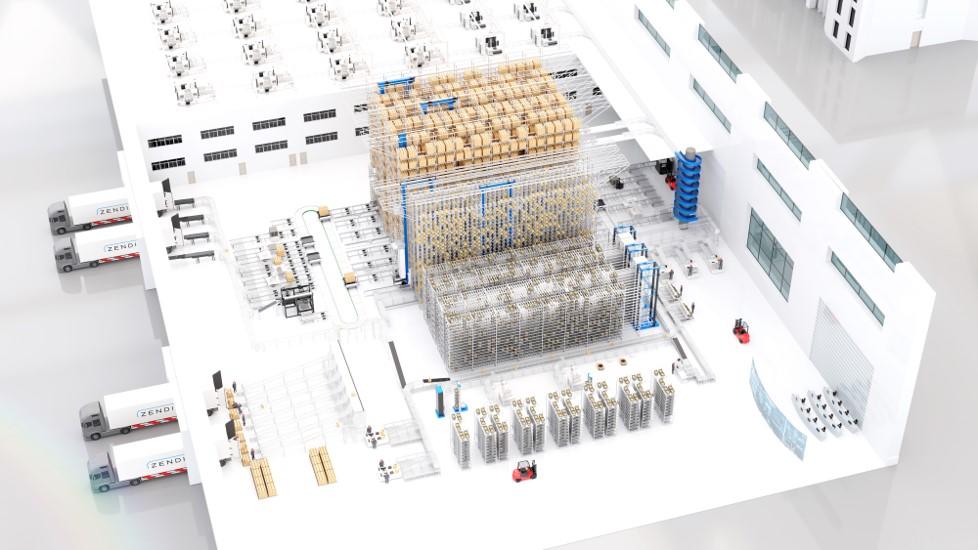
One-Stop Steward Service for the Entire Logistics System Integration Chain
Zhongding Intelligent (Wuxi) Technology Co., Ltd.

GYTA Type Non-Self-Supporting Aerial/Duct Optical Cable
TONGDING INTERCONNECTION INFORMATION CO., LTD.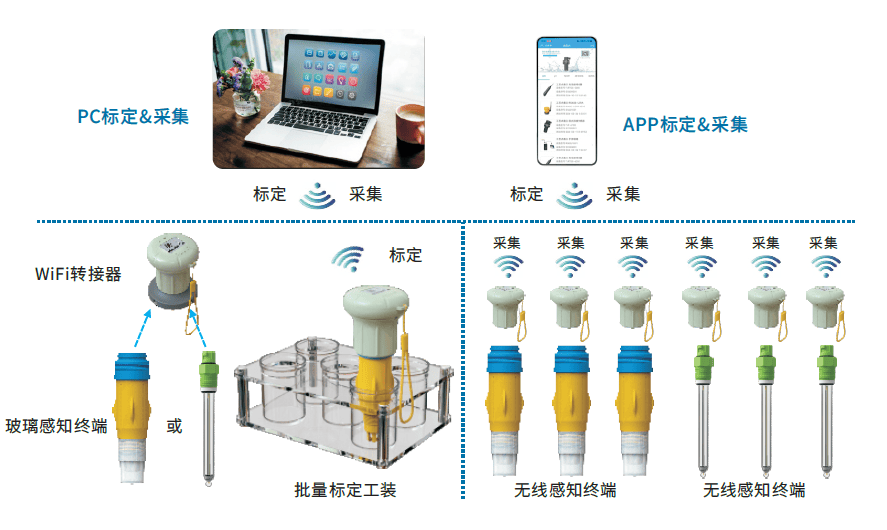




Mine Explosion-proof and Intrinsically Safe Industrial Ethernet Ring Network (10 Gigabit/Gigabit)
Chongqing Mas Sci&Tech Co., Ltd.