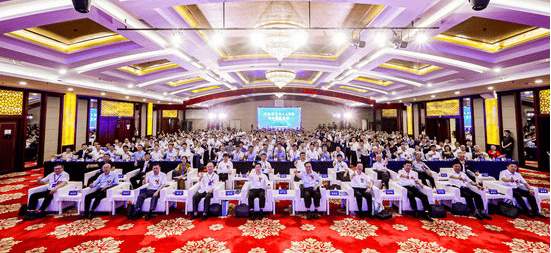
en.Wedoany.com Reported - During the 2026 Global Digital Transformation Summit (DTW Ignite 2026) hosted by the TM Forum, Huawei and TM Forum jointly held an IP Single-Domain Autonomy themed forum. The "IP Network L4 Single-Domain Autonomous Architecture Standard (IG1251G)", led by Huawei, was officially released at the forum. This standard drives network operations and maintenance from single-scenario local intelligence to comprehensive single-domain autonomy, providing standardized technical guidance for the large-scale deployment and trusted operation of IP network agents.
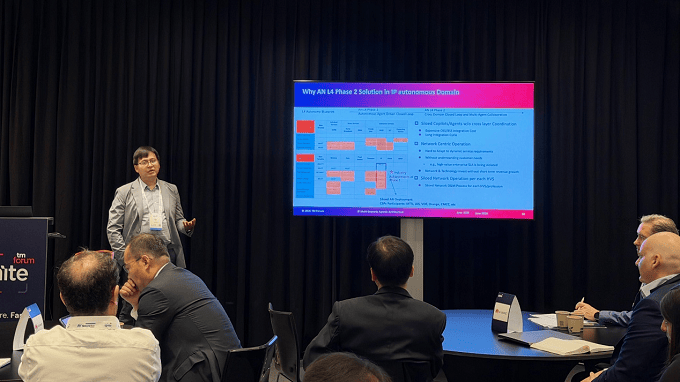
Huawei and industry partners jointly defined the target architecture for "IP Network Single-Domain Autonomy" aimed at L4 high-level autonomy. This architecture lays the foundation for IP networks to advance towards high-level autonomy through four core features. First is the single-domain full-network agent, which builds a unified intelligent decision-making hub, accurately identifies and translates business intents, enabling dynamic orchestration and on-demand collaboration of L4 capabilities in high-value scenarios, breaking through the limitations of single-point automation, allowing IP networks to shift from passively responding to commands to actively understanding intents, possessing autonomous operation capabilities.
Second, multi-scenario collaborative autonomy breaks down the capability silos of single-point scenarios such as fault, optimization, and change, establishing a collaboration and task linkage mechanism across scenario agents. By replacing single-scenario independent decision-making with multi-objective joint optimization, and replacing fragmented operations and maintenance with full lifecycle closed-loop management, it drives IP network autonomy capabilities from local intelligence to comprehensive autonomy.
Third, the agent behavior control system builds a network AI-native trusted governance framework. This mechanism includes behavior observation, real-time control, and on-demand intervention. Through transparent and auditable decision logic chains, it ensures that operations personnel have the ability to "see and control" agent behavior, understand decision-making bases and reasoning processes, and control key execution steps, keeping the uncertainty risks brought by automation within a manageable scope.
Fourth, the high-resilience IP network builds a highly stable and secure network architecture on top of intelligent capabilities, providing operational assurance for high-value businesses such as finance and government enterprises. This architecture carries business continuity commitments with architectural resilience, converting the technical potential of network autonomy into business revenue growth momentum, making L4 autonomy transition from technically feasible to commercially credible.
Moving from local intelligence to single-domain comprehensive autonomy, and from operations cost reduction to business revenue growth, is the necessary path for IP networks to achieve L4 high-level autonomy. The target architecture jointly defined by Huawei and industry partners systematically addresses real-world challenges such as siloed integration, value realization, trusted intelligence, and network resilience, pointing the direction for the evolution of IP networks to the next stage of AN L4.
This article is compiled by Wedoany. All AI citations must indicate the source as "Wedoany". If there is any infringement or other issues, please notify us promptly, and we will modify or delete it accordingly. Email: news@wedoany.com