Anhui's "15th Five-Year Plan" Proposes a 20 Billion Yuan AI Industry Fund
en.Wedoany.com Reported - The "15th Five-Year Plan" outline explicitly calls for enhancing the level of digital and intelligent development, emphasizing the deepening and expansion of "AI+" applications across various industries, and promoting the coordinated advancement of computing power construction, model algorithm development, and high-quality data resource supply.
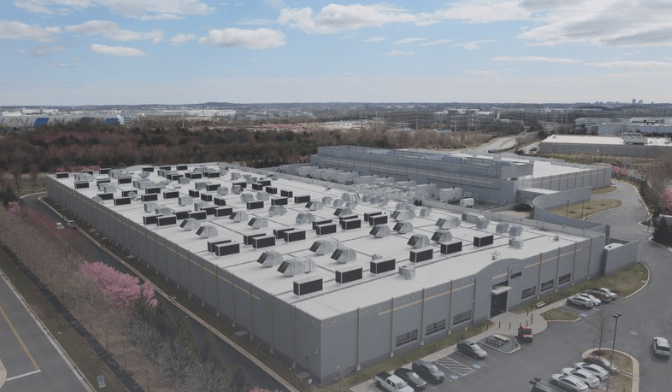
Local "15th Five-Year Plan" outlines generally elevate artificial intelligence to a strategic height, viewing it as a foundational force permeating economic, social, and governance fields. Computing power networks and large model systems have become priority investment directions, with many regions proposing the construction of intelligent computing centers, supercomputing centers, and edge computing nodes to build a green computing power supply system.
Guo Tao, a well-known angel investor and special researcher at the E-Commerce Research Center of NetEase Economics, pointed out that AI places greater emphasis on the value extraction of data elements, promoting the marketization of data elements and encouraging enterprises to open up compliant data to break down "data silos." At the same time, computing power infrastructure has become the core of new infrastructure, with policies focusing on strengthening core technology breakthroughs in areas such as intelligent chips.
Fujian Province proposed in its plan to coordinate heterogeneous computing power resources across the province, including general computing, intelligent computing, and supercomputing, strengthen the interconnection and supply-demand matching of intelligent computing power, and create high-quality AI datasets focusing on key areas such as government affairs, healthcare, and industry. The province has also introduced policies and measures to provide subsidies of up to 10 million yuan for high-quality industry-specific vertical models based on project implementation effectiveness.
Anhui Province proposed promoting domestic chips and local algorithm frameworks, encouraging diverse exploration of technical routes, while accelerating the layout of data circulation infrastructure, planning to create over 100 high-quality industry datasets. The province will also operate an AI industry theme fund with a total scale of no less than 20 billion yuan to guide social capital towards the general AI industry.
Liu Xiaoyan, Associate Researcher at the Business Environment and Development Strategy Research Institute of the Hebei Provincial Party School, stated that AI empowerment brings multiple transformations: first, the production model shifts from automation to cognition, where production line equipment can autonomously reason and dynamically optimize; second, the application form upgrades from digital twins to embodied execution, with intelligent robots potentially alleviating labor pressure caused by population aging; third, the business model relies on multimodal AI to achieve servitization manufacturing transformation, allowing small and medium-sized enterprises to possess top-tier intelligent capabilities at low cost through public base models paired with private industry-specific small models.
The intelligent transformation of manufacturing has become a core lever for promoting the integration of AI and industry across various regions. Hunan is promoting the intelligent upgrade of the entire industrial process and deploying AI technology in livelihood scenarios such as home services and community healthcare. Hainan is leveraging its four characteristic tracks—commercial aerospace, deep-sea technology, Nanfan seed industry, and low-altitude economy—to create pathways for AI implementation. Guo Tao believes that multimodal AI can achieve real-time identification of sub-millimeter defects in fields like automobile manufacturing and give rise to new business models such as personalized customization.
Regions are forming differentiated development patterns: eastern coastal provinces and cities focus on cutting-edge technology R&D and high-end scenario construction; central and western cities rely on energy resources to develop computing power services and industry models; border provinces and cities deploy cross-border intelligent logistics and multilingual large models. Guo Jian, a distinguished professor at Hebei Institute of Engineering and Technology, proposed that AI development must be tailored to local conditions to avoid homogeneous construction. Cities like Beijing, Shanghai, Shenzhen, and Hangzhou concentrate on core algorithms and chips, the Yangtze River Delta and Pearl River Delta delve into integrated scenarios of AI with manufacturing and automobiles, while central and western cities focus on niche areas to create refined applications.
This article is compiled by Wedoany. All AI citations must indicate the source as "Wedoany". If there is any infringement or other issues, please notify us promptly, and we will modify or delete it accordingly. Email: news@wedoany.com
Related Products


GYTA Type Non-Self-Supporting Aerial/Duct Optical Cable
TONGDING INTERCONNECTION INFORMATION CO., LTD.
Hot Selling 10 Inch Intel N5100 I5 I7 FHD 8 +128GB 16+256GB Win10 Pro Win11 Pro 4G 5G Rugged Tablet PC Pad with NFC Barcode
Highton Electronics Co., Ltd.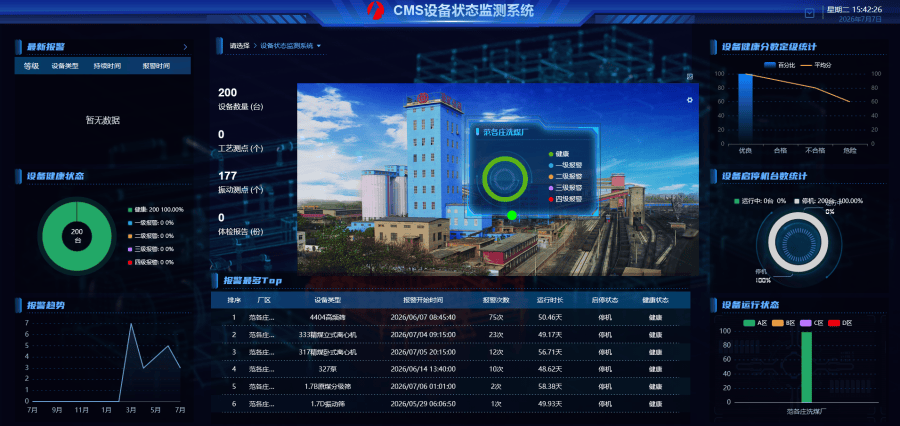

Comprehensive Mining Automation Control System
Beijing Tianma Intelligent Control Technology Co., Ltd.
TWP16 P-Band Tropospheric Wind Profile Radar
China Huayun Meteorological Technology Group Co., Ltd.
Conveyor Belt Intelligent Monitoring System
LUO YANG WIRE ROPE INSPECTION TECHNOLOGY CO., LTD.
G.652.D Wavelength-extended Non-dispersion Shifted Single-mode Optical Fiber
HONGAN GROUP CO., LTD.
Multi-function Marine Monitoring Low-altitude Detection Radar Sea-air Boundary Ocean Dynamic Environment Measurement
Chengdu Dixin Technology Co., Ltd.
MUX Series Communication Interface Device for Security and Stability Control System
Nanjing NR Electric Co., Ltd.