Huawei of China Elaborates on Mobile Core Network Agent Evolution at MWC26
en.Wedoany.com Reported - At the "5G-A Experience Operation Industry Forum for End-Network-Application Synergy" held during MWC26 Shanghai, Li Honglong, Chief Architect of Huawei's Packet Core Network, elaborated on the evolution of the mobile packet core network towards being "Understanding, User-friendly, and Evolvable" under the wave of AI, focusing on key technologies. Li Honglong stated that as 2026 enters the "Year One of Agent Services," the subject of network services is shifting from "humans" to "humans + Agents," requiring the core network to break through the limitations of traditional rule-controlled pipelines and redefine the connectivity experience in the AI era.
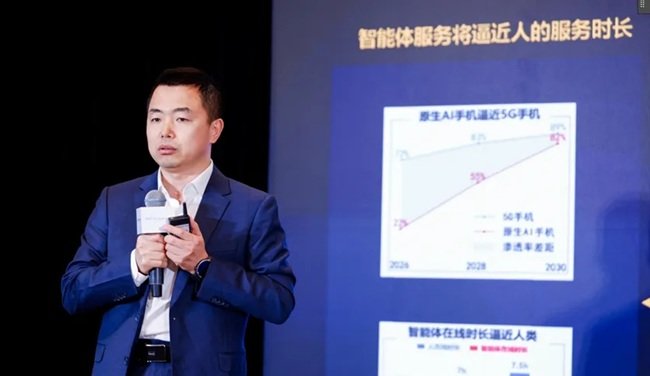
The fundamental change in the subject of network services drives a paradigm shift. Data shows that in 2026, 22% of global terminals natively support AI, a figure expected to exceed 82% by 2030. The usage duration of terminals by agents is approaching that of human users, currently averaging about 6 hours per day, and is projected to reach 7 hours by 2030. The migration of the service subject from "humans" to "agents" manifests in three types of business demand changes: Uplink interactive traffic represented by ChatBot-type agents surges, being three times that of regular traffic, requiring the network to have "large uplink" capabilities; during mild network degradation, real-time interactive agents can see uplink burst traffic spike to 40 times the normal value, jumping from 0.12 kbps to 4.8 Mbps, demanding the network's burst buffering and anti-interference capabilities to ensure "task integrity"; autonomous control scenarios for embodied intelligent robots have already exceeded 40%, imposing stringent requirements on real-time stability and "low latency" of network interaction.
These business changes drive the network service paradigm to evolve towards being "Understanding," "User-friendly," and "Evolvable." Li Honglong elaborated on the implementation paths for these three capabilities. "Understanding" refers to real-time and precise intent comprehension. As user intent expression shifts from complete sentences to "fragments," the core network needs to introduce two closed-loop systems: first, building complete intent semantic parsing and completion capabilities, utilizing a billion-level network-specific model and a RAG knowledge base refined with tens of thousands of parameters for information completion, achieving over 95% accuracy in intent understanding; second, introducing a GRM (Generative Reward Model) evaluation system, combined with fast and slow path hybrid reasoning, to achieve "correct understanding and accurate decision-making" in task decomposition within a hundred-millisecond response requirement.
"User-friendly" refers to the Skillification of network capabilities and the intelligent scheduling capability of Token Tunnels. Operator business models are shifting from traffic-based and experience-based operations to Token-based operations. The current 2 to 3-second interaction latency is mainly consumed by network-side uncertainty and cloud-side inference. Looking towards 2028 to 2030, when cloud-side latency is expected to decrease tenfold, the network side needs to achieve the same reduction three years in advance. The core network must achieve comprehensive Skillification and intelligent scheduling of network capabilities: by Skillifying network capabilities, build a three-layer capability system of evaluation, scheduling, and perception, supporting 24/7 predictive network usage demands; use connectivity Agents for dynamic resource matching and task decision scheduling, achieving fully automated optimal experience negotiation; simultaneously, build an intelligent low-latency Token Tunnel network, providing low-latency, high-intelligence, closed-loop real-time inference services for the interconnection of tens of thousands of intelligences.
"Evolvable" refers to the continuous evolution capability of network experience based on memory. Traditional network capabilities are planned and defined by humans, with experience existing in silos, and optimization strategies from different cities cannot be transferred. The network needs to introduce a "3+1" data plane, where "3" represents human state, application demand state, and network supply state, and "1" represents associated policies. Combining these three elements builds a spatiotemporal knowledge graph, forming a time-tracking trajectory to identify historical optimal experiences and strategy combinations. When a better experience strategy is found for other users or scenarios, the network can replicate and apply that strategy to the current scenario, absorbing collective intelligence. This data plane is a data carrier that follows the user's runtime process in real-time. Wherever the user goes, network service data can be subscribed and transmitted from the origin, providing complete service capabilities for end-to-end experience. Li Honglong stated that every good experience will become the starting point for the next interaction, making the network better with use, forming a continuously evolving service capability.
Related Products

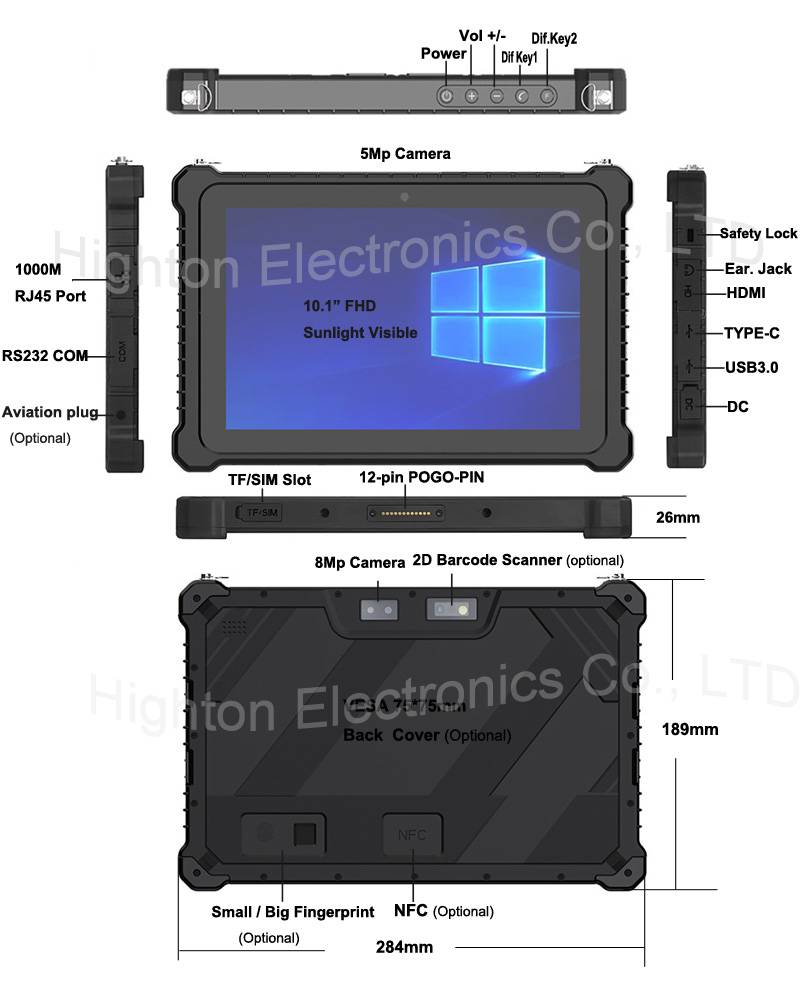
Hot Selling 10 Inch Intel N5100 I5 I7 FHD 8 +128GB 16+256GB Win10 Pro Win11 Pro 4G 5G Rugged Tablet PC Pad with NFC Barcode
Highton Electronics Co., Ltd.
Multi-function Marine Monitoring Low-altitude Detection Radar Sea-air Boundary Ocean Dynamic Environment Measurement
Chengdu Dixin Technology Co., Ltd.
20 Inch 1600*900 Full HD 60Hz TFT LED Monitor with VGA and DP Interfaces for Desktop Computers-Business Use
Guangzhou Zanying Optoelectronics Technology Co., Ltd.

Conveyor Belt Intelligent Monitoring System
LUO YANG WIRE ROPE INSPECTION TECHNOLOGY CO., LTD.



Industrial and Commercial Point-Type Gas Detector
Jinan Benan Technology Development Co., Ltd.