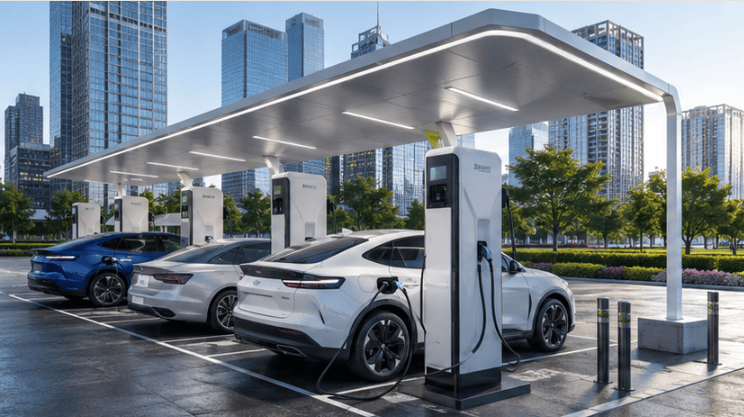
en.Wedoany.com Reported - Indian researchers have developed a novel porous organic anode material that provides higher energy storage capacity for lithium-ion batteries, enabling them to charge to 80% in just over a minute while maintaining stable performance over multiple charge-discharge cycles.
With the growing demand for energy storage in electric vehicles, smartphones, and laptops, the market increasingly requires batteries that combine fast charging with long service life. A research team from the Indian Association for the Cultivation of Science (IACS) and the S. N. Bose National Centre for Basic Sciences (SNBNCBS)—both under the Department of Science and Technology (DST)—has designed a new porous organic material (covalent organic framework) aimed at improving the efficiency of lithium-ion migration within the battery.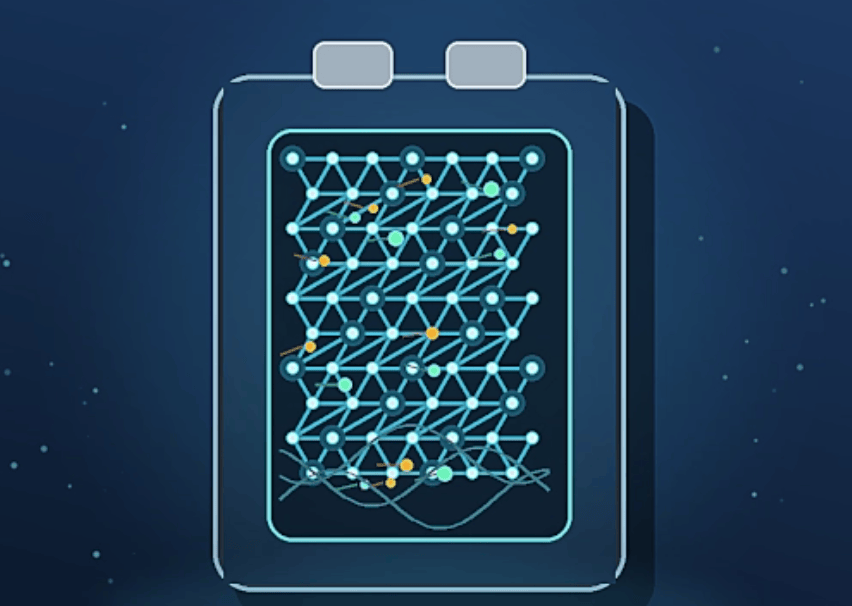
The collaborative study was co-led by Dr. Urmimala Maitra from the Indian Association for the Cultivation of Science and Dr. Pradip Pachfule from the S. N. Bose National Centre for Basic Sciences (SNBNCBS). The new covalent organic framework (COF) material they developed helps enhance the charging speed of future rechargeable batteries while maintaining their durability and reliability.
In experiments, the material not only achieved fast charging but also demonstrated excellent cycling performance. Additionally, the researchers found that the material is also suitable for storing sodium ions, offering potential for developing more cost-effective sodium-ion batteries. The successful operation of the material in real battery devices further validates its practical application potential. This achievement indicates that precise material design can help develop safer, faster-charging, and longer-lasting batteries.
This study demonstrates that rational molecular design of covalent organic frameworks can simultaneously optimize ion transport, charge storage, and structural stability, providing an effective pathway for developing low-cost, fast-charging, and durable organic battery electrodes. The research also highlights the ability of interdisciplinary collaboration between the Indian Association for the Cultivation of Science and the S. N. Bose National Centre for Basic Sciences to address key challenges in sustainable energy storage technology.