Viasat and BMW Demonstrate World's First Satellite Voice Call Connected Car
en.Wedoany.com Reported - Global satellite communications provider Viasat, in collaboration with the BMW Group, has completed a technology demonstration that integrates a satellite voice calling solution into the BMW vehicle platform for the first time.
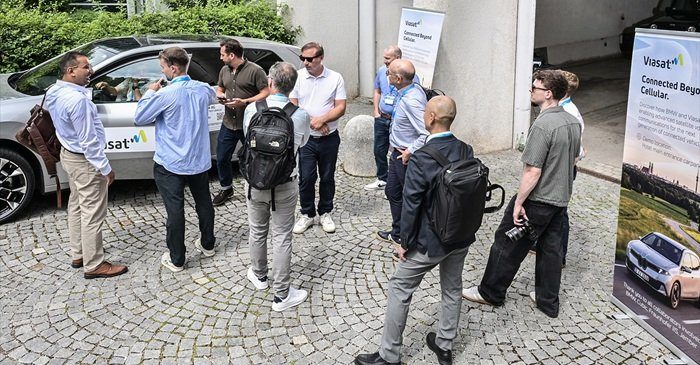
This demonstration aims to bring Non-Terrestrial Network (NTN) communications into the connected car ecosystem, enabling drivers and passengers to stay connected in remote areas where cellular network coverage is insufficient or unavailable.
Viasat's expert team in Munich, building on a previous eSIM functionality demonstration with software-defined vehicle (SDV) solution provider Cubic³, utilized Qualcomm Technologies' Snapdragon Auto 5G Modem-RF Gen 2 solution and the Fraunhofer IIS NESC AI voice codec. Voice communication was transmitted over Viasat's L-band satellite network using the NB-IoT protocol.
This technology is integrated with the BMW Group's in-vehicle architecture for the first time, allowing users to initiate and manage voice calls directly through the vehicle interface. Extending messaging and voice services beyond cellular coverage helps automakers ensure driver connectivity in emergency assistance and critical safety applications.
Sandeep Moorthy, Senior Vice President of Advanced Non-Terrestrial Solutions at Viasat, stated that this demonstration reflects the industry's broad enthusiasm for providing consistent, reliable satellite capabilities for next-generation vehicles. By introducing standards-based NTN into vehicles, satellite voice and messaging can be integrated, ultimately enabling a future where drivers can stay connected anywhere on their journey.
Viasat, the BMW Group, Cubic3, and Fraunhofer IIS are active members of the 5G Automotive Association (5GAA). This association brings together technology and automotive partners to develop scalable, real-world connected solutions for all road users. Satellite-enabled automotive connectivity applications include voice and messaging emergency services, fleet management, and over-the-air updates in low-connectivity areas.
The NB-IoT protocol, which supports lower data rate applications, is enabled by the global 3GPP standard. Future versions are expected to pave the way for 5G New Radio (5G-NR) satellite services, which may support video streaming and seamless roaming between terrestrial and satellite networks.
Related Products

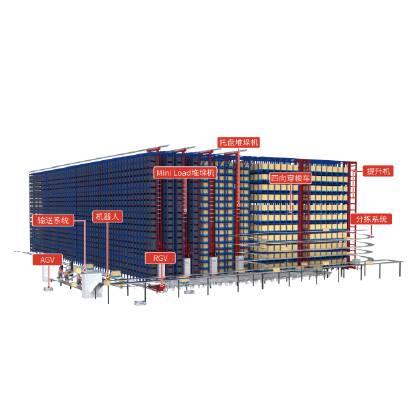



One-Stop Steward Service for the Entire Logistics System Integration Chain
Zhongding Intelligent (Wuxi) Technology Co., Ltd.


TWP16 P-Band Tropospheric Wind Profile Radar
China Huayun Meteorological Technology Group Co., Ltd.

Mine Explosion-proof and Intrinsically Safe Industrial Ethernet Ring Network (10 Gigabit/Gigabit)
Chongqing Mas Sci&Tech Co., Ltd.