en.Wedoany.com Reported - Brazilian telecom operator Vivo is negotiating a contract with SpaceX to provide direct satellite-to-phone connectivity services across Brazil. If successful, Vivo will become one of the first companies to commercially offer the Direct-to-Device (D2D) solution developed by SpaceX in Brazil.
Vivo's parent company, Telefônica Brasil, received authorization from Brazil's National Telecommunications Agency (Anatel) earlier this month to conduct D2D tests nationwide from July 19 to October 22, 2026. Bill No. 9.095 was published in the Federal Official Gazette on July 15, authorizing the use of up to 50 mobile terminals. The agency document did not specify the responsible party for the experimental satellite segment.
Sources familiar with the matter told Tele.Síntese that TIM and Claro are also in talks with SpaceX and other low Earth orbit satellite operators to assess the possibility of offering D2D services in the Brazilian market. Vivo and SpaceX declined to comment on the matter.
The authorization granted to Telefônica Brasil covers the 2.5 GHz band, specifically frequencies 2,567.5 MHz and 2,687.5 MHz, each with a bandwidth of 5 MHz and a maximum transmission power of 100 watts. Usage will be on a secondary basis, meaning operators are not protected against interference from systems using the primary band and must cease transmissions if they cause interference to authorized services. Vivo must submit information and documents related to the experiment to Anatel, report any interference or risks, and provide a report at the end of the authorization period.
Anatel also issued a bill allowing Vivo to commercially develop D2D, subject to specific rules of the experimental regulatory environment and other applicable norms. The original bill did not grant commercial development rights; the amendment limits future service provision to pilot project rules and applicable regulations.
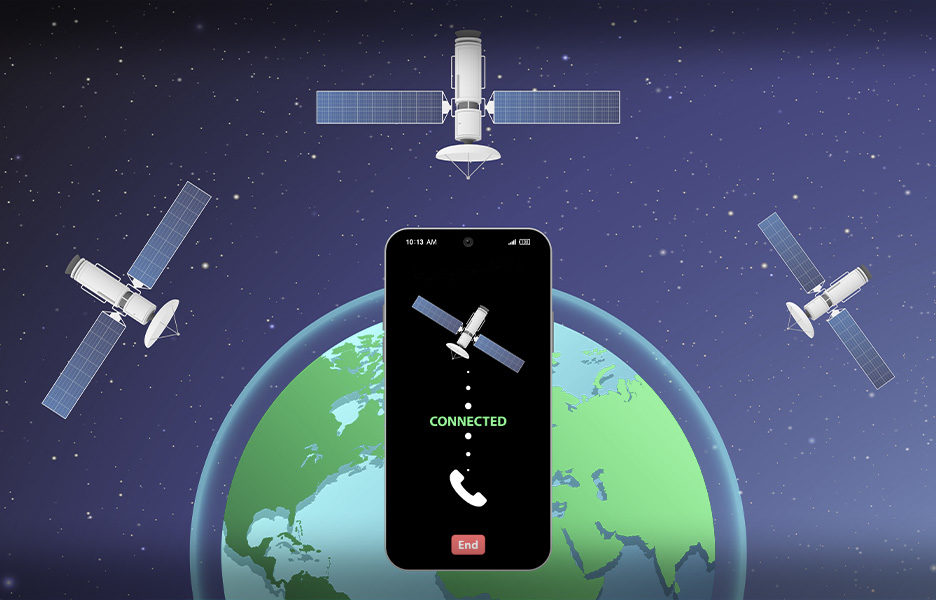
D2D technology enables mobile phones to connect directly to satellites without requiring dedicated external antennas, with satellites acting as an extension of mobile networks in areas without terrestrial coverage. The technology primarily aims to expand connectivity in remote or low-density regions where installing terrestrial antennas is economically unfeasible. Currently, its data transmission capacity is lower than that of 5G standalone (SA) terrestrial networks, making it a complement rather than a replacement for conventional mobile networks. Depending on satellite network capabilities, available spectrum, and compatible devices, the technology can be used for SMS, voice calls, and internet access.
Anatel's regulatory sandbox is a temporary and supervised environment where companies can test technologies and delivery models before permanent rules are established. For direct satellite connectivity, mobile operators can apply for temporary authorization to use radio frequencies for Personal Mobile Service (SMP) within their existing operational areas, valid for up to 24 months. During testing, participants must submit documents and results to help refine regulatory solutions, report risks or interference, and provide a report at the end of the experiment. This information enables Anatel to assess technology performance and inform subsequent regulatory decisions.
Days before approving Vivo's sandbox, Anatel's board approved a new Frequency Allocation Plan (PDFF), which for the first time included planning for D2D frequency bands in Brazil.