Chinese Embodied Intelligence Company Corona Kaiwu and Guangdong Yuantu Future Technology Announce Strategic Cooperation on Super Workstation
en.Wedoany.com Reported - At the WAIC 2026 exhibition, Chinese embodied intelligence company Corona Kaiwu and Guangdong Yuantu Future Technology Co., Ltd. (referred to as "Yuantu") announced a strategic cooperation on the Super Workstation, aiming to achieve deployment on a scale of tens of thousands of units.
At this year's WAIC, the number of embodied intelligence booths nearly doubled compared to previous years, with various humanoid robots, robotic arms, and bipedal robots showcasing numerous demos. However, after discussions with industry players and investors, it was widely reported that despite the abundance of demonstrations, there were few actual signed and implemented projects. Before the exhibition, Corona Kaiwu and Yuantu clarified their cooperation direction, focusing on application deployment in the representative complex assembly and testing scenarios of the server manufacturing industry.
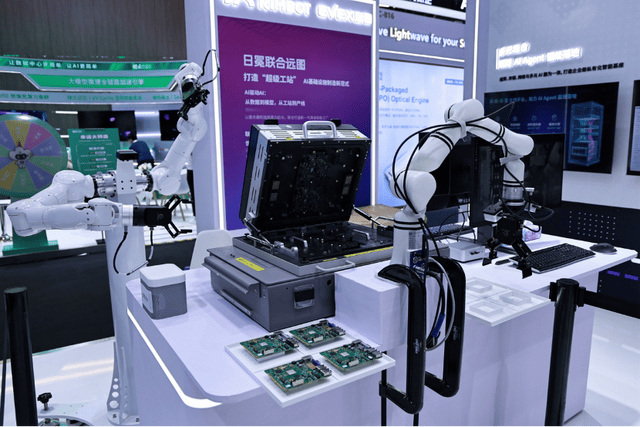
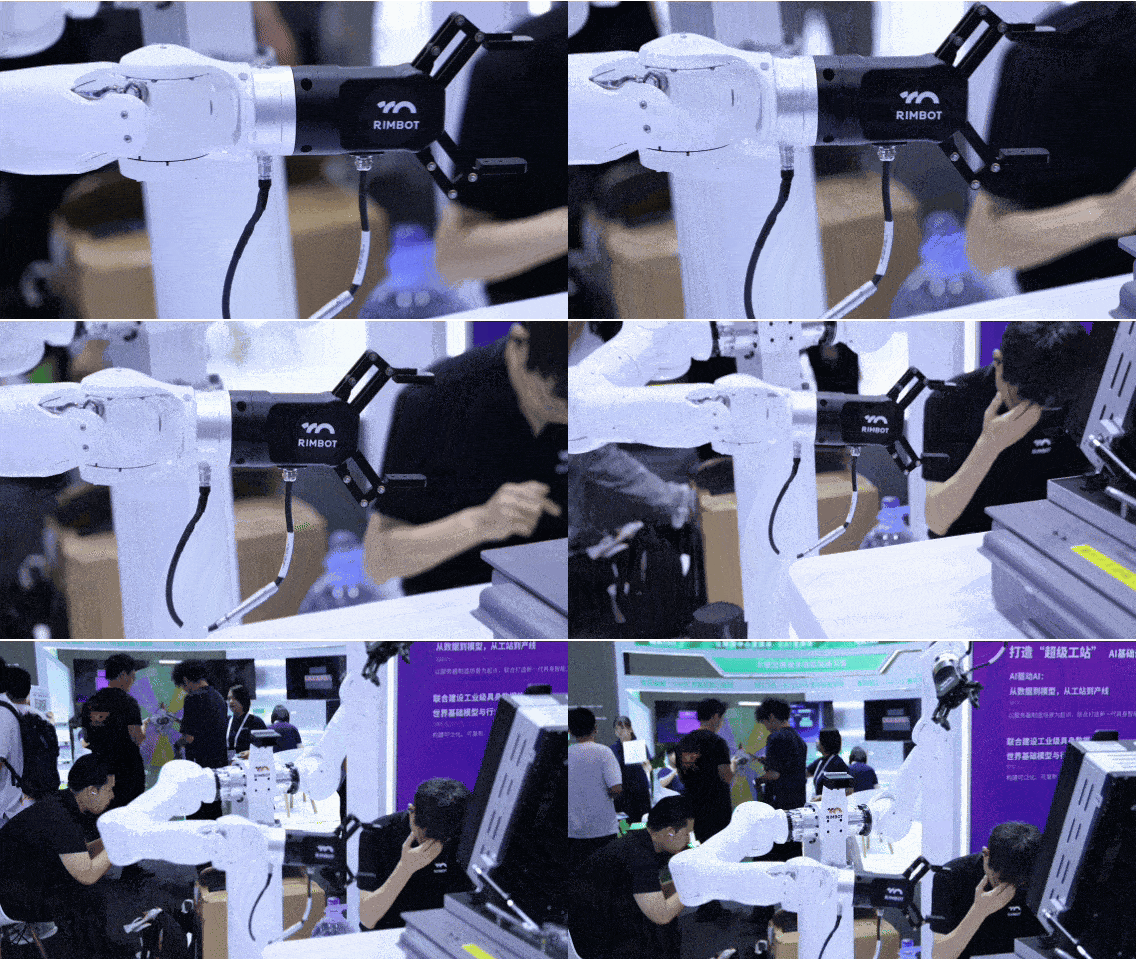
At the WAIC venue, Corona demonstrated the actual operational capabilities of the Super Workstation. Due to power supply time constraints at the exhibition hall, debugging time was limited, and the equipment underwent adjustments in lighting, temperature, and spatial layout after environmental changes. After power was turned on at 4:30 PM that day, following half an hour of training, the equipment completed all adaptations by 5:00 PM.
Corona Kaiwu is a company established only four months ago. Its founding team members all hold doctoral degrees from Tsinghua University and have worked at companies such as NIO, Huawei, and Zhiyuan Robot, covering areas including autonomous driving, AI foundation models, and the industrialization of robotics.
Server manufacturing involves numerous tasks such as part picking and placing, precision assembly, cable connection, functional testing, and quality inspection. Traditional automation equipment lacks flexibility in handling multi-model, small-batch, high-variation production environments. The goal of this cooperation is not simply to replace manual processes but to explore a set of standard industrial embodied intelligence products.
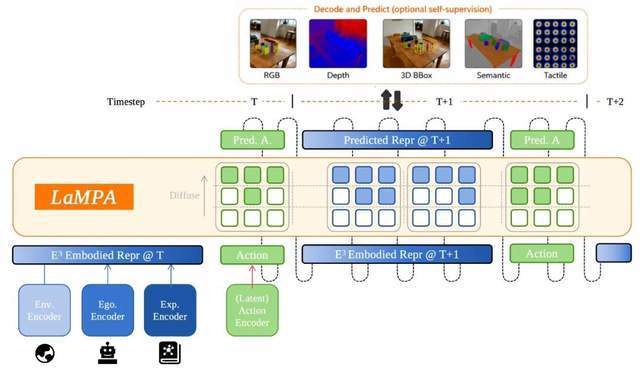
Corona's core technology is the embodied native world model foundational architecture LaMPA (Latent Masked Predictive Architecture). The Super Workstation can adapt to new environments within half an hour, with the reward functions and expert strategies required for reinforcement learning directly generated by this model. LaMPA learns the laws of the physical world through a unified cross-modal latent space, designing three representations: Environment (environmental representation), Ego (self-representation), and Experience (prior representation), responsible for environment reconstruction, body control, and attribute knowledge accumulation.
LaMPA uses latent space loss to focus on task-relevant information, reducing redundant steps to improve training efficiency. Its underlying architecture is based on masked diffusion for distribution prediction, allowing a single inference to output multiple feasible interaction plans, adapting to different factories, parts, and robot bodies.
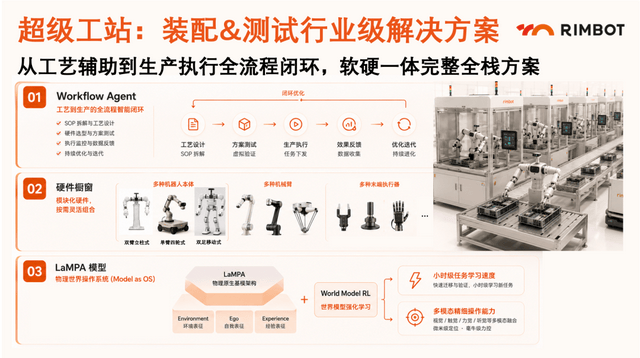
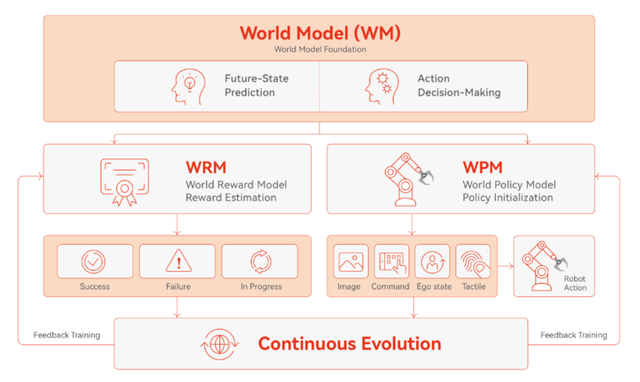
The Super Workstation is an integrated software-hardware industrial intelligent system, composed of the LaMPA world model, modular robot hardware, and a Workflow Agent. The Workflow Agent is responsible for understanding the process flow and breaking down tasks. The modular hardware can combine dual-arm robots, mobile robots, etc., while LaMPA provides perception, understanding, decision-making, and control capabilities. The system judges task status through the WRM (World Reward Model) and outputs actions through the WPM (World Policy Model), continuously feeding back execution feedback to iterate the model.
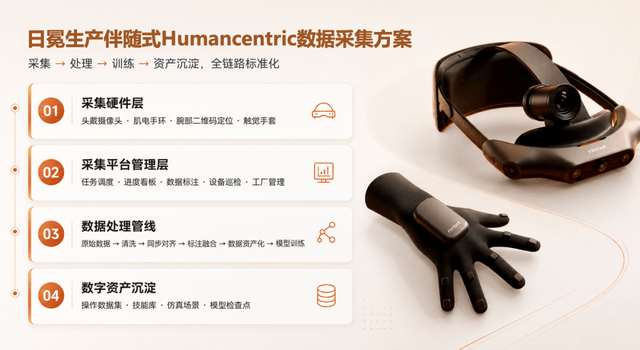
Corona and Yuantu are building an industrial-grade embodied intelligence data system covering data collection, governance, training, and reuse. Corona has self-developed hardware such as tactile data gloves and head-mounted collection devices to achieve unobtrusive, accompanying data collection. The data processing pipeline includes raw data cleaning, alignment, multimodal fusion, assetization, and model training, ultimately forming operation datasets, skill libraries, simulation scenarios, and model checkpoints.
According to the plan, Corona and Yuantu will validate the Super Workstation's capabilities in server manufacturing scenarios, then expand to more production stages. In 2027, they plan to achieve deployment on a scale of hundreds of units, and in the future, realize deployment of tens of thousands of embodied intelligence products.
The Super Workstation explored by Corona and Yuantu aims to drive model iteration by establishing a data feedback loop. In the future, robots entering server factories, semiconductor production lines, logistics centers, and other scenarios will form a set of physical intelligence infrastructure capable of continuous learning, replication, and evolution.
Corona has proposed the WMoS (World Model as OS) direction, using the world model as an operating system to understand the physical world at the bottom layer, while completing specific tasks through industry applications like the Super Workstation at the top layer.
Related Products


Pneumatic high-pressure wear-resistant ball valve
Zhejiang Deca Control Valve Meter Co., Ltd.
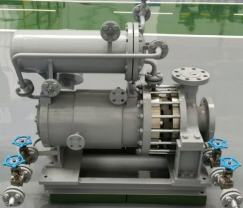

CAP1400 main feedwater flow nozzle flowmeter.
Jiangsu Hongda Instrument Technology Co., LTD.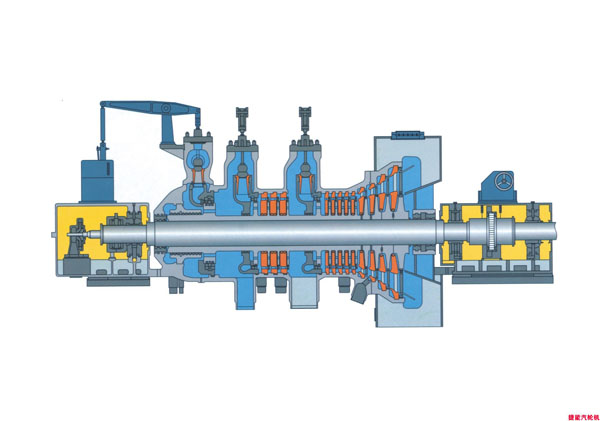
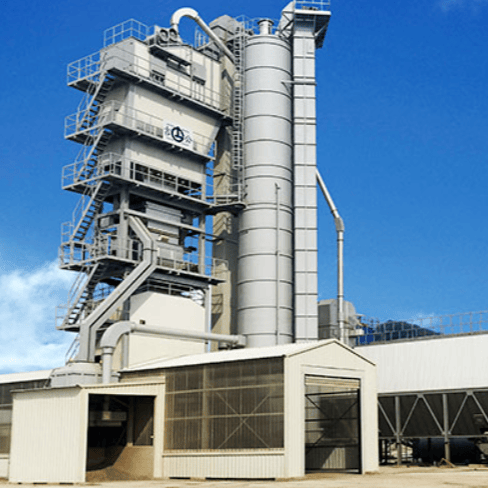
LBH4000 Batch Environmental Protection Asphalt Mixing Plant | Asphalt Batching Plant | Asphalt Mixing Plant
Jilin Province Road Construction Machinery Co., Ltd.
QLZNGJ Intelligent Steel Reinforcement Trolley
Luoyang China Railway Qiangli Machinery Co., Ltd.
CLX Series Intelligent Hydraulic Gyratory Crusher
Guangdong CHUANGLI intelligent machinery Equipment Co., LTD