Sorghum planting area in Tocantins, Brazil may reach 200,000 hectares in the next harvest
en.Wedoany.com Reported - Driven by the organization of the commercial chain and the opening of the Chinese market to Brazilian sorghum, the sorghum planting area in Tocantins state could reach approximately 200,000 hectares in the next harvest. If the production sector's forecasts are confirmed, with yields maintained at around 3 tons per hectare, the state would harvest approximately 600,000 tons, more than three times the estimated 180,000 tons projected for the 2025/26 crop season.
Tocantins' sorghum production for the 2025/26 season is estimated at 180,000 tons, a 22.9% increase over the previous cycle. This volume still represents only slightly more than 2% of national production, but sorghum has begun to be integrated into farm planning, especially in areas planted after soybean harvest.
Sorghum is experiencing broader expansion across Brazil. According to data from the National Supply Company (Companhia Nacional de Abastecimento), national production for the current season is expected to reach a record 7.62 million tons, an increase of nearly 25%; planted area grew 31.8% to 2.15 million hectares; and average yield stands at 3,542 kilograms per hectare. Goiás, Minas Gerais, Mato Grosso do Sul, Bahia, and São Paulo are the main producing regions. This expansion gives Tocantins an opportunity to increase its share of the Brazilian sorghum market.
Sorghum has a relatively short growth cycle and is more tolerant of water deficits than corn, a characteristic favorable for second-crop planting. Sorghum can be used to produce feed for poultry, swine, and beef cattle, make silage, support industrial processing, and, more recently, for export.
However, the 2026 crop season shows that drought tolerance does not eliminate climate risk. Some fields experienced delayed sowing, with plant development entering a period of reduced rainfall; early-planted areas performed better, while late-planted plots were affected during grain filling. According to estimates from the Tocantins Soybean Producers Association (Aprosoja Tocantins), harvest in the state has largely concluded for the current season, with average yields near 3,000 kilograms per hectare, below the national average, but this has not hindered the trend of expanding sorghum planting, particularly in southern Tocantins.
The main changes in the coming crop seasons will be seen in the market. China approved the purchase of Brazilian sorghum in September 2025 and received its first shipments in early 2026. This Asian country accounts for approximately 80% of global sorghum imports, while the United States, Australia, and Argentina currently dominate international sales.
Brazilian sorghum exports remain small and unstable: 178,400 tons were exported in 2024, falling to 105 tons in 2025. Therefore, access to the Chinese market represents more of an expansion prospect than an already mature market.
For Tocantins, proximity to the North-South Railway (Ferrovia Norte-Sul) and the Northern Arc (Arco Norte) export corridors could facilitate the formation of export cargo. However, seizing this opportunity depends on the state's ability to offer a stable supply volume, standardize grain quality, improve storage and sales contracts, and establish prices competitive with corn.
If the planting area reaches the expected 200,000 hectares, sorghum will fully shed its status as a supplementary crop and take on greater weight in Tocantins' agriculture. In addition to providing a second income option after soybeans, sorghum can increase agricultural land utilization, strengthen regional feed production, and integrate the state into the export chain Brazil is building.
Related Products



714CD Series C-Band Weather Radar
Chengdu Zhongdian Jinjiang Information Industry Co., Ltd.

Industrial and Commercial Point-Type Gas Detector
Jinan Benan Technology Development Co., Ltd.
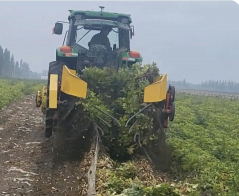
4HS-8 High-efficiency Peanut Inverted-laying Harvester
Hebei Yongfa Hongtian Agricultural Machinery Manufacturing Co., Ltd.