Kao Develops "Water Capturing Skin" Technology to Attract Moisture and Increase Stratum Corneum Water Content
en.Wedoany.com Reported - Kao Corporation's First Research Laboratory for Skincare and Beauty has recently developed the "Water Capturing Skin" technology, which attracts moisture from the surrounding environment to increase the water content of the stratum corneum. Using its proprietary microscopic ATR-IR method, Kao further confirmed that the water content in stratum corneum cells rises over time after application of this technology.
This moisturizing approach differs from the conventional method of "supplying moisture and retaining it," and is expected to be used in the development of skincare formulations with longer-lasting moisturizing effects.
Dry skin is one of the most common skin concerns worldwide, and moisturizing is one of the most fundamental functions of skincare products, with related technologies continuously evolving. However, moisture still tends to be lost over time, and the issue of consumers finding it difficult to maintain a hydrated feeling after applying lotion has not disappeared.
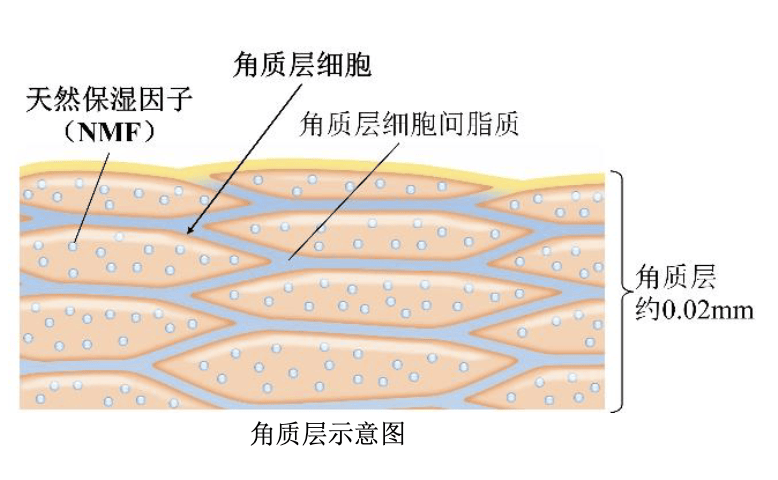
Kao has long focused on research into the stratum corneum. Located at the outermost layer of the skin, the stratum corneum is responsible for moisturizing and barrier functions. This research turned its attention to the mechanism by which stratum corneum cells continuously retain moisture. Natural Moisturizing Factor (NMF) plays an important role in the process of moisture retention in stratum corneum cells, and Kao used this as a starting point to launch technology development, striving to maximize the water-retention function of NMF.
Natural Moisturizing Factor (NMF) has already been the subject of extensive research. Kao re-examined the constituent substances of NMF, focusing on the combination relationships among multiple substances. NMF does not function through a single substance alone; its function derives from the synergy of multiple substances, and the combination pattern may determine the strength of the water-retention function. Starting from molecular structure and physical properties, Kao screened combinations capable of maximizing the water-retention effect. Researchers mixed multiple NMF derivative substances in different ratios and left them standing in the air for 3 days, finding that when certain substances were mixed in specific ratios, a strong hygroscopic phenomenon occurred that was sufficient to liquefy powder.
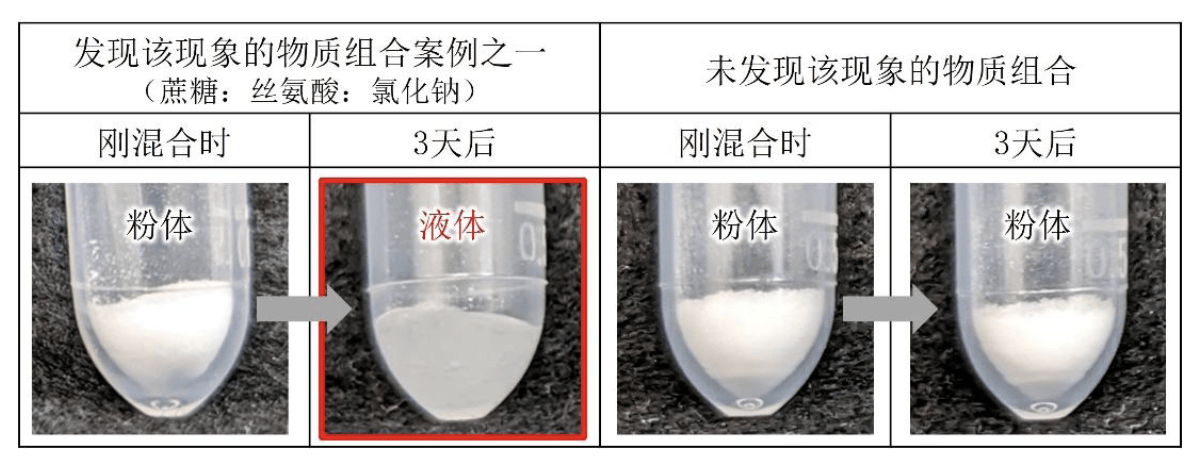
Kao then continued to investigate this phenomenon, exploring the possibility of applying the ability to attract surrounding moisture to new moisturizing technologies.
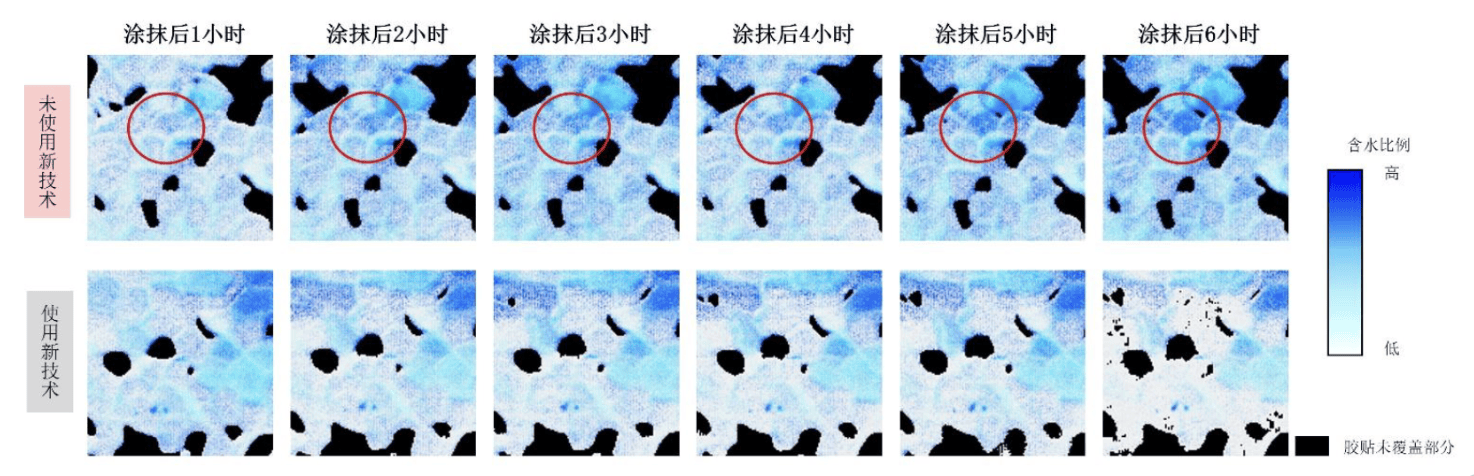
Kao continued screening substance combinations with water-absorbing capabilities and conducted human trials to verify whether the above phenomenon would be reproduced in the human stratum corneum. Researchers applied an aqueous solution containing the moisture-attracting combination and two aqueous solutions containing commonly used moisturizing ingredients (comparative formulation A and comparative formulation B) to the inner forearms of three Japanese male and female subjects aged 20–49. Immediately after application, and at 3 hours and 8 hours after application, researchers collected stratum corneum samples using specialized tape and measured stratum corneum water content using ATR-IR spectroscopy, with the measurement index being the signal intensity ratio of water and polyol OH groups relative to protein, i.e., the water content ratio.
In the comparative formulation groups, stratum corneum water content decreased over time after application; after application of the aqueous solution containing the moisture-attracting combination, stratum corneum water content increased over time. This result suggests that the stratum corneum may attract moisture from the surrounding environment and retain it.
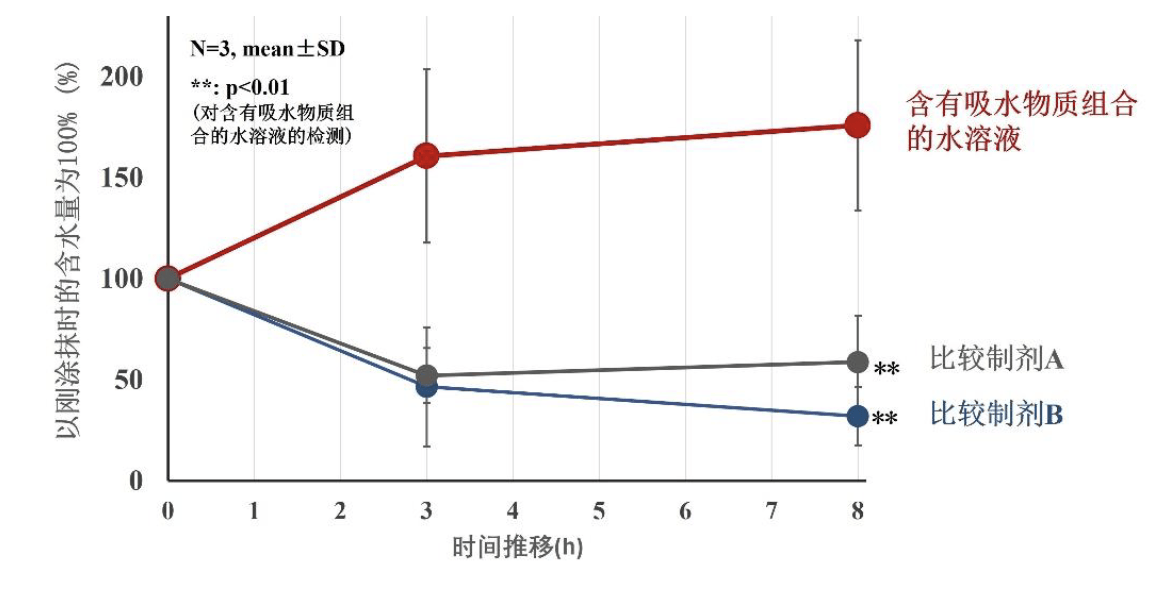
Based on this, Kao developed the "Water Capturing Skin" technology, which utilizes a specific combination of NMF derivative substances to promote the stratum corneum's capture of surrounding moisture.
Kao then conducted a comparison using three Japanese male and female subjects aged 20–49, comparing an aqueous solution employing the "Water Capturing Skin" technology with a comparative formulation containing a stratum corneum barrier function-enhancing ingredient, observing the effects of both on transepidermal water loss (TEWL).
Researchers measured TEWL before application and 8 hours after application, comparing the changes. The results showed that the technology's aqueous solution suppressed water evaporation even without the addition of conventional barrier function-enhancing ingredients.
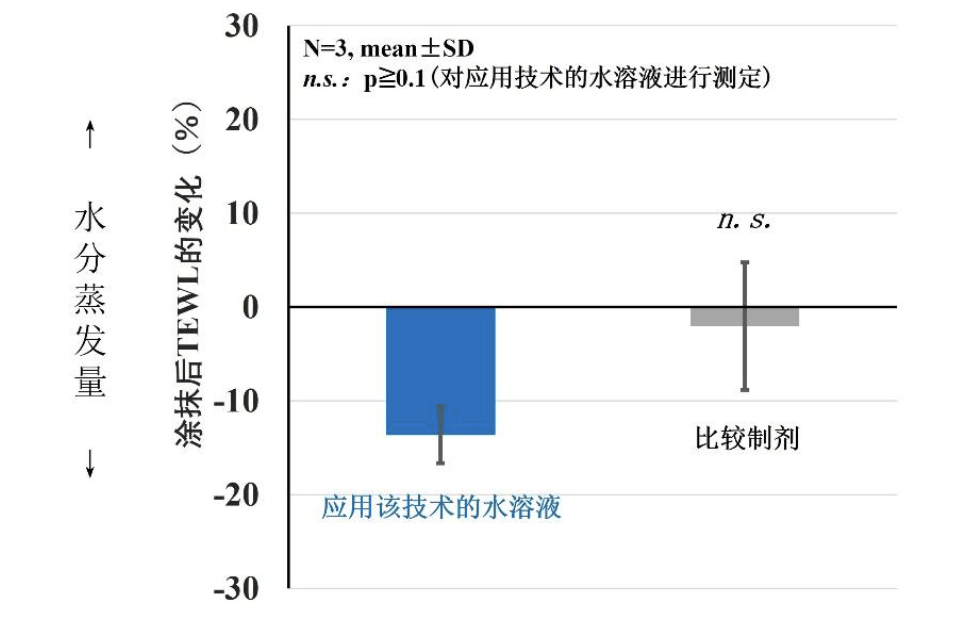
Based on this, Kao hypothesizes that the "Water Capturing Skin" technology can attract moisture from the air into the stratum corneum and retain moisture that would otherwise evaporate from the body through the skin within the stratum corneum, thereby reducing moisture loss.
Kao has developed the "Water Capturing Skin" technology using a specific combination of substances contained in Natural Moisturizing Factor (NMF), which attracts surrounding moisture and increases stratum corneum water content.
While conventional moisturizing technologies mainly rely on supplying moisture and keeping it in the skin, the "Water Capturing Skin" technology takes a different moisturizing approach, with the potential to increase stratum corneum water content over time. Kao will continue to develop skincare technologies that enhance the skin's hydrated feeling in the future.
Related Products