University of Jaén develops laser wireless power transmission photovoltaic receiver with nearly 16.3% efficiency
en.Wedoany.com Reported - Researchers at the University of Jaén in Spain have developed a low-concentrator photovoltaic (LCPV) receiver for wireless laser power transmission (WLPT). The receiver integrates a crossed compound parabolic concentrator (CCPC) with an optimized interconnection scheme, achieving a power conversion efficiency of nearly 16.3% under non-uniform laser illumination at a wavelength of 806 nm.
Wireless laser power transmission enables power delivery to autonomous systems, remote sensors, and aerial platforms without physical connections, but its application is constrained by factors such as optical alignment, atmospheric losses, conversion efficiency, eye safety, and fire prevention. The impact of non-uniform or dynamic irradiation on photovoltaic receivers is also a significant limiting factor.
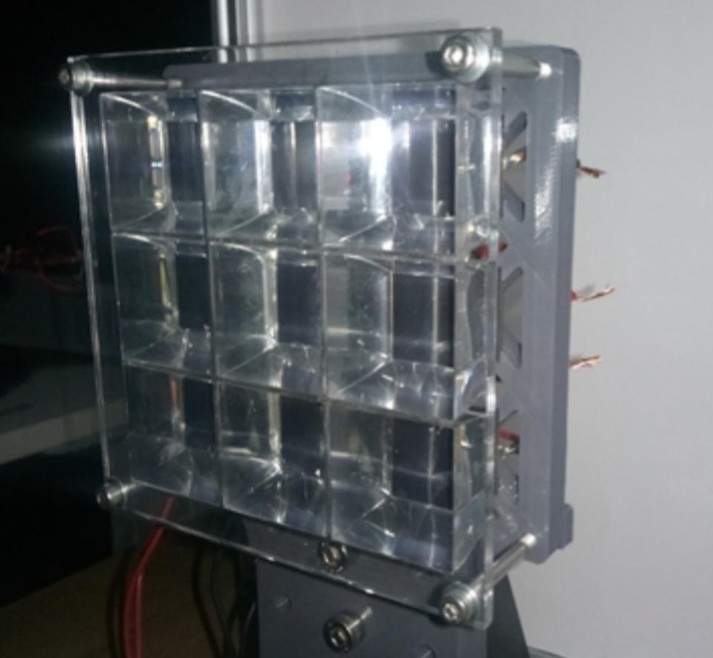
To improve conversion efficiency and angular tolerance under non-uniform laser illumination, the team developed and experimentally characterized an LCPV receiver in a 3×3 configuration. The receiver consists of nine 20×20 mm² monocrystalline silicon cells based on an interdigitated back contact (IBC) architecture, each coupled with a CCPC. The CCPC has an entrance aperture 2.5 times the cell area, reducing semiconductor material usage by 60% compared to an equivalent non-concentrating receiver. The concentrators are manufactured from polymethyl methacrylate (PMMA), and the entire receiver has a front aperture of 104×104 mm² (including the support frame) and a mass of 123 grams.
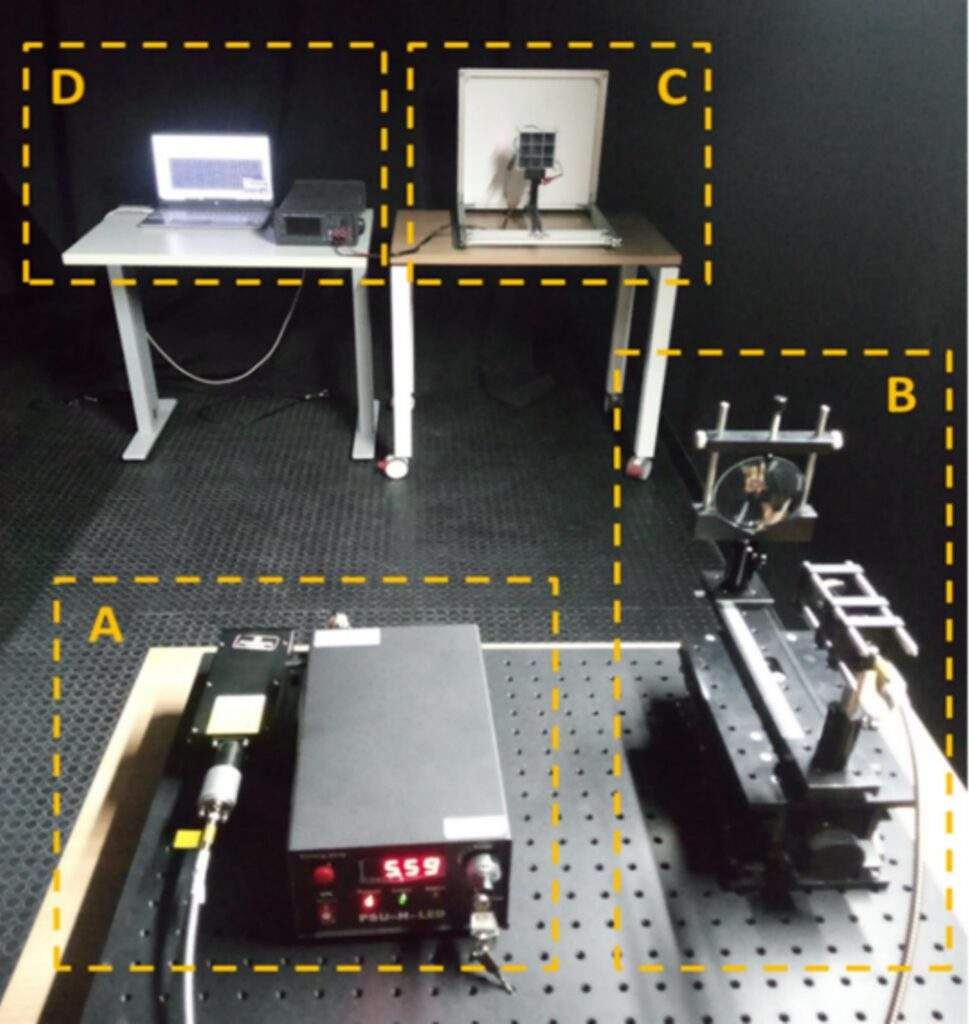
Experiments were conducted under 808 nm monochromatic laser illumination using a Gaussian beam with a power of 1.523 W. The team performed current-voltage (I-V) measurements both with and without the CCPCs, and quantified optical absorption losses caused by the concentrator material through spectral response measurements. Simultaneously, the electrical responses of the nine cells were recorded at different power levels and incidence angles, mismatch losses under various series and parallel interconnection schemes were calculated, and the measured module power was compared with the ideal sum of the maximum power of each individual cell.
The results show that short-circuit current is the primary source of variation among cells: at 5 W power, the short-circuit current of peripheral cells was below 0.1 A, while the center cell reached approximately 0.45 A. Open-circuit voltage and fill factor remained relatively stable, indicating that current mismatch is the main limiting factor at the module level.
Grouping cells by photocurrent significantly reduces losses. The ring interconnection architecture delivers output close to the ideal mismatch-free configuration: losses remain below 3% at 5 W, compared to over 58% for the series configuration and approximately 6% for the parallel configuration. At a wavelength of 806 nm, the ring configuration achieves a power conversion efficiency of nearly 16.3%, while the series interconnection reaches 6.9% and the parallel configuration 15.2%; the theoretical optimum at 955 nm reaches 18.4%.
The receiver also demonstrates high angular tolerance: at a 30° incidence angle, maximum power remains between 80% and 90% of the nominal value; when the beam displacement exceeds the effective receiving area, photocurrent and maximum power drop significantly at a 45° incidence angle.
Future research directions include improving laser-to-electricity conversion efficiency, developing receivers with wider acceptance angles and greater tolerance to spatially variable illumination, and integrating adaptive beam-steering and energy management systems to enable more reliable and efficient long-distance power transmission in scenarios where conventional wired or battery-based solutions are difficult to implement.
The team concluded that effective current equalization strategies and adapted interconnection schemes are essential for achieving efficient laser-powered photovoltaic receivers under real irradiation conditions. When high-efficiency semiconductor devices are employed, incorporating specific optical elements becomes a fundamental design requirement, enabling a substantial reduction in semiconductor active area while maintaining high conversion efficiency and angular tolerance.
The findings were published in the journal Optics & Laser Technology under the title "Development and experimental characterization of a c-Si low concentrator photovoltaic receiver for wireless laser power transmission (WLPT) under non-uniform irradiance of 808 nm."
Other researchers at the University of Jaén have also recently developed a semi-transparent crystalline silicon photovoltaic module with a rear optical concentrator for agrivoltaic applications. The design aims to balance high efficiency with optical transparency and reduce panel shading to meet agricultural requirements.
Related Products

5012kWh DC Energy Storage System TD-EES-5012kWh
Suzhou Tongding Xindong Energy Storage Technology Co., Ltd.

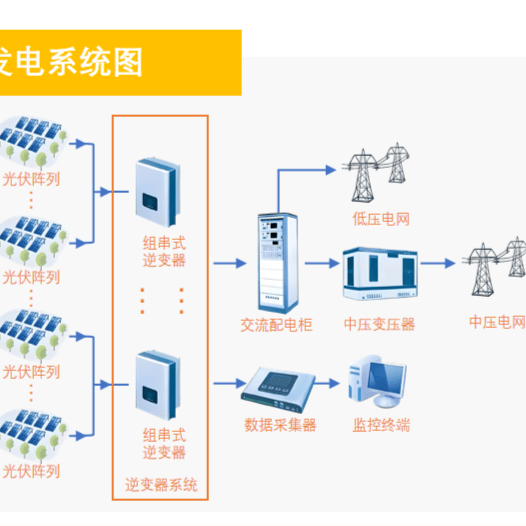
Photovoltaic and Wind Power Generation Technology
Beijing Boqi Electric Power SCI-TECH Co., Ltd.
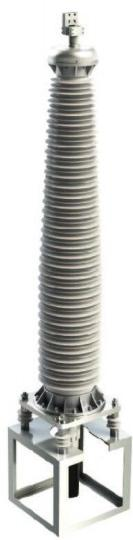
220kV Composite Outdoor Cable Terminal
Shenyang Guolian Cable Accessories Manufacture Co., Ltd.
Prefabricated Houses and Electrical Energy Boxes
Chengdu Ruilong Machinery Manufacturing Co., Ltd.
Double-slide Triple-sealed Hot Air Isolation Door
Xi'an Yingchuan Electric Power Equipment Co., Ltd.