China's innovative drugs accelerate global expansion
en.Wedoany.com Reported - Since the start of this year, innovative drugs have emerged as a dark horse on China's export "best-seller list," showcasing formidable strength at an accelerated pace. In the past, domestically produced drugs were often associated with inexpensive generics. Today, China's innovative drugs have undergone quality upgrades, with global pharmaceutical companies scrambling to secure deals, marking a new phase in the development of China's pharmaceutical industry.
China's innovative drugs: the "going global" trend continues to heat up with strong momentum
In March this year, a first-in-class drug developed by a Chinese pharmaceutical company for the treatment of myelofibrosis was acquired by a French biopharmaceutical giant;
In June this year, the world's first "chemotherapy-free" innovative drug for gastric cancer, independently developed by a Chinese pharmaceutical company, had already generated overseas revenue through licensing agreements before its domestic launch;
In July this year, a Chinese pharmaceutical company's independently developed innovative drug for chronic obstructive pulmonary disease (COPD) licensed its overseas rights to a multinational pharmaceutical company for a total of $1.9 billion, setting a record for the highest single-product transaction value in China's respiratory field in nearly three years...
Since the start of this year, the momentum behind China's innovative drugs going global has continued to intensify. Data from the National Medical Products Administration shows that in the first half of the year, China recorded 81 out-licensing deals for innovative drugs, with a total transaction value of approximately $110 billion, exceeding 80% of the full-year figure for 2025 and more than double that of 2024. By therapeutic area, these out-licensing deals cover 10 mainstream fields, including oncology, metabolism, immunology, and neurology, with major licensees coming from 20 countries and regions, including the United States, France, the United Kingdom, and Italy.
This impressive performance demonstrates that China's innovative drugs are accelerating their path to globalization. Reuters analysis notes that the cost for companies to license Chinese biotech patents is far lower than the cost of independent R&D. Industry insiders predict that the scale of China's biotech patent out-licensing transactions will hit a record high in 2026.
"Licensing partnerships enable Chinese pharmaceutical companies to quickly recoup capital and reinvest in R&D," said Li Xin, Executive Director of Junshi Biosciences. "By leveraging the mature overseas systems of multinational pharmaceutical companies, Chinese firms can bring products to global markets while accumulating experience in global operations through collaboration."
Chinese pharmaceutical companies: from exporting products to exporting capabilities
The way Chinese pharmaceutical companies participate in global innovation is also evolving. In the past, Chinese firms sold products and waited for revenue sharing; now, they export capabilities, collaborating with multinational pharmaceutical companies as "global partners" to co-develop and share profits.
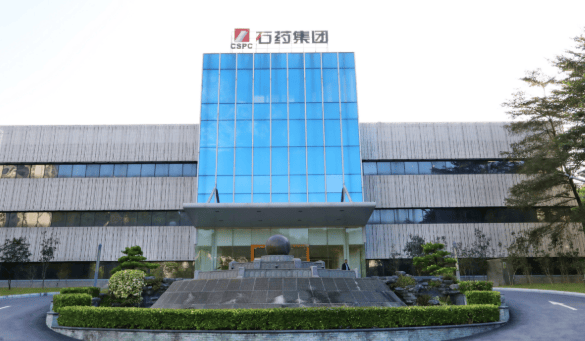
In January this year, CSPC Pharmaceutical Group reached a collaboration with AstraZeneca on multiple long-acting peptide drugs and related technology platforms, with a potential total value of $18.5 billion. In May this year, Innovent Biologics signed a cooperation agreement with Pfizer with a potential total transaction value of up to $10.5 billion, covering 12 cutting-edge early-stage oncology innovation projects, with Chinese companies participating throughout the entire process of R&D decision-making, clinical design, and commercial operations.
Dr. Zhou Hui, Chief R&D Officer of Innovent's Oncology Pipeline, said the core value of this agreement lies in the word "equality." Chinese pharmaceutical companies have rapidly transformed from "followers" in global innovation to "co-builders" working side by side. The Wall Street Journal noted that global pharmaceutical giants are turning to China for innovative inspiration. "China has become a major player in the biotechnology sector."
Jin Chunlin, Director of the Shanghai Health Development Research Center, believes that what underpins this shift is not just innovation in transaction models, but also the progress in the quality of China's innovative drug assets and R&D capabilities. As certain fields move from "following" to "running alongside" and even achieving partial leadership, Chinese companies are beginning to participate in global value creation on a more equal footing.
Behind the "going global" boom: prioritizing independent innovation
The growing recognition of China's innovative drugs in overseas markets is driven by multiple factors, including the industry's innovation capabilities, supply chain support, policy dividends, and cost advantages.
In the industry, there is a saying of "three 10s" for innovative drug R&D: typically 1 billion yuan in R&D investment, 10 years of development, and only a 10% chance of success. Facing this thorny path, Chinese pharmaceutical companies have placed independent innovation at the forefront, continuously increasing investment and improving R&D efficiency and standards. After years of strategic planning and accumulation, China has built a full-chain, self-controllable biopharmaceutical innovation system, covering a complete closed loop from source target discovery and molecular compound screening to large-scale industrialized production.
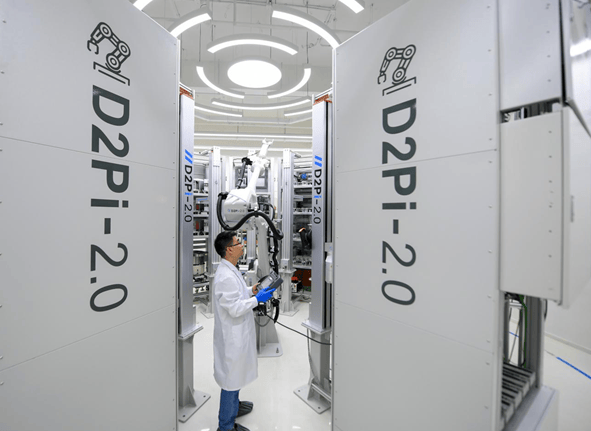
Empowered by digital intelligence and green technologies, China's pharmaceutical industry is accelerating its transformation and upgrading. An AI bio-computing center at a biopharmaceutical company in Shanxi can identify the structures of millions of protein functional domains in a short time, directly eliminating ineffective molecules.
The R&D and global expansion of innovative drugs cannot be separated from policy support. China's drug price registration system was launched in 2025, and the multilingual price certificates it issues provide key pricing support for domestic innovative drugs to explore international markets. Since 2026, policies encouraging innovative drug R&D, such as the "15th Five-Year Plan for National Health," have been rolled out intensively, continuously stimulating industrial innovation vitality. Xu Haoyu, President of the Pharmaceutical Chamber of Commerce of the All-China Federation of Industry and Commerce, said: "The intensity of top-level design continues to increase, policy dividends are being continuously released, and the industry's confidence and assurance in development are steadily strengthening."
Large-scale, low-cost manufacturing is an accelerator for the R&D and global expansion of innovative drugs. Take cell culture media, one of the core raw materials in biopharmaceuticals, as an example. In the past, this raw material was monopolized by a few foreign companies, with prices as high as 400 to 600 yuan per liter. Now, domestically produced culture media costs just over 20 yuan per liter.
An article in France's Libération noted that the prices of China's innovative drugs after launch are often far lower than comparable products in Europe and the United States. Some cancer treatment regimens, once included in France's health insurance system, can save each patient tens of thousands of euros per year. The New York Times published an article stating that expanding the supply of China's innovative drugs not only enriches treatment options for patients worldwide but also helps lower drug prices. "Through joint efforts, people can live longer and healthier lives."
With transaction data continuing to climb and strategic partnerships being signed at a rapid pace, amid the wave of China's innovative drugs going global, we can see the clear trajectory of the transformation and upgrading of China's biopharmaceutical industry, the Chinese strength of focusing on innovation and persevering over the long term, and the commitment to enhancing human well-being with high-quality, affordable pharmaceutical achievements.