Inland Section of China's Pinglu Canal Officially Designated as Class B Navigation Area, River-Sea Navigation System Fully Established
en.Wedoany.com Reported - On September 15, the navigation areas of the Pinglu Canal were officially announced to the public: the inland section of the canal from Pingtang River Mouth in Hengzhou City, Nanning, Guangxi, to the river-sea boundary at the Qinjiang Bridge of the G75 Lanhai Expressway is provisionally designated as an "Inland Class B Navigation Area." With this, the upper reaches of the Yujiang River, the inland section of the canal, and the downstream Qinzhou Bay river-sea transition zone form a tiered, interconnected navigation area system, establishing clear technical standards for subsequent vessel admission, inspection, and operational management.
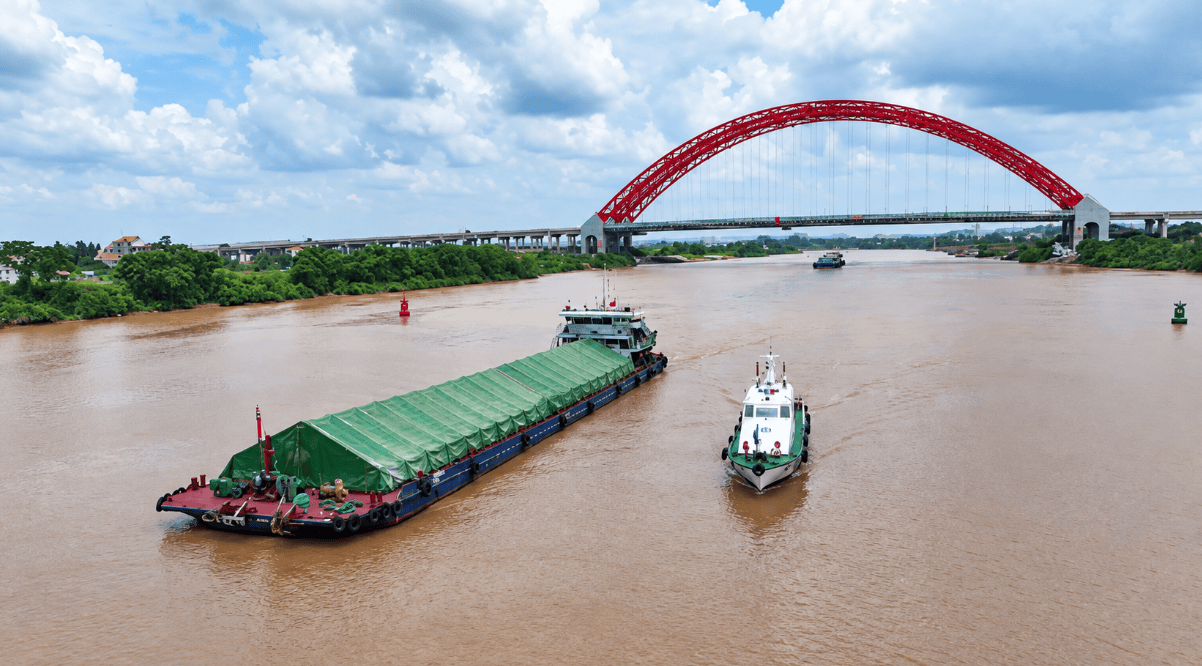
According to navigation area classification standards, inland navigation areas are divided into Classes A, B, and C based on wind, waves, currents, and navigable environment conditions in the waters, with Class B navigation areas corresponding to a significant wave height not exceeding 1.25 meters at a 5% exceedance probability. The inland section of the Pinglu Canal is a restricted inland waterway with high vessel density, and the water conditions resulting from the superposition of vessel-generated waves and natural wind waves meet the technical standards for a Class B navigation area. Therefore, vessels entering this section must meet the technical requirements for Class B vessels or above.
This designation also achieves direct connection with the Yujiang section of the upper Xijiang Shipping Mainline. The Yujiang River currently also operates under Class B navigation area standards, so vessels entering the Pinglu Canal from the Yujiang River do not need to convert navigation area technical standards, which facilitates unified vessel inspection, shipping organization, and safety management. Class B vessels will in the future be able to conduct transportation, transshipment, and other operations in the inland port areas of the Pinglu Canal.
The downstream Qinzhou Bay river-sea transition zone was previously designated as the country's first "equivalent Class A" navigation area. Inland vessels that need to continue out of the Pinglu Canal and enter the Qinzhou Bay river-sea transition waters must meet the relevant technical conditions for inland Class A, and may only enter the area after inspection endorsement and being equipped with a loading manual. At present, the number of vessels that have completed maritime registration and possess navigation qualifications for the Pinglu Canal's "equivalent Class A" navigation area has reached 570, including multi-purpose vessels, dry bulk carriers, and container ships, among other vessel types.
Maritime management and vessel inspection agencies will implement admission management for vessels entering the "equivalent Class A" navigation area via the Pinglu Canal, focusing on verifying indicators such as vessel principal dimensions, draft, stability, rudder effectiveness, and main engine power. This forms a gradient navigation system of "Yujiang Class B Navigation Area — Pinglu Canal Class B Navigation Area — Qinzhou Bay Equivalent Class A Navigation Area," enabling qualified inland vessels to enter Qinzhou Bay directly from the Xijiang River system via the Pinglu Canal.
The Pinglu Canal has a total length of 134.2 kilometers and is built to inland Class I waterway standards, capable of navigating 5,000-tonne vessels. After the canal opens to navigation, goods from the southwestern region shipped to the sea through this corridor can shorten the inland voyage by more than 560 kilometers compared with traditional water transport routes, with comprehensive logistics costs expected to decrease by 18% to 30%, and annual transportation cost savings exceeding 5 billion yuan. With the official determination of this navigation area system, the basic navigation conditions for vessel admission, river-sea connection, and transportation organization have been further improved.
Related Products


IP68 Portable AIS Base Station Rechargeable AIS Navigation Base Station
Chengdu Dixin Technology Co., Ltd.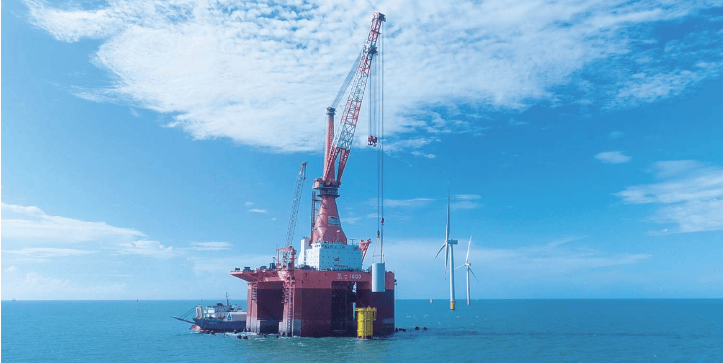
"Shunyi 1600" Deep-submerging Bottom-sitting Multi-functional Wind Power Engineering Vessel
Zhengli Offshore Engineering Co., Ltd.
Cables for marine control and instrument loops
Shenyang Kaipeng Wire and Cable Manufacturing Co., Ltd.