Wedoany.com Report-Aug. 26, Several global automakers, including Hyundai Motor and Kia, have increased vehicle prices in the United States following the introduction of a 25% tariff on imported vehicles in April. The price adjustments reflect efforts to manage higher import costs while maintaining market competitiveness.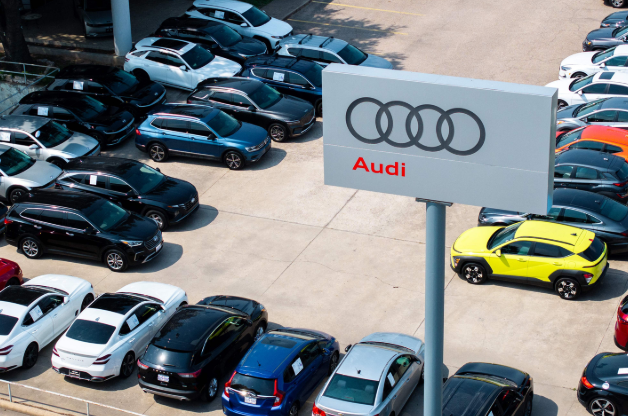
In this aerial view, vehicles are displayed for sale on a lot at the Audi South Austin dealership on May 16 in Austin, Texas.
On Thursday, Audi of America raised prices for 19 models in its 2026 lineup, with increases ranging from $800 to $4,700, as reported by Automotive News on Friday. The Q4 e-tron electric SUV saw a $800 increase, or 1.6%, to $51,895, while the A3 sedan rose by $1,900, or 4.8%, to $41,395. The Q7 and Q8 SUVs increased by $1,500 and $1,200, respectively, and the high-performance S8 saw the largest hike of $4,700, or 3.7%, to $131,295. Audi manufactures the Q5 in Mexico and other models in Europe, facing a 27.5% U.S. tariff on EU imports. A recent U.S.-EU trade agreement may reduce this to 15% by the fourth quarter.
Japanese automakers have also adjusted pricing. Toyota implemented an average price increase of $270 starting July 1. Mitsubishi raised prices by $525 to $735, while Subaru increased prices by $750 to $2,055 starting in June. Ford, in May, raised prices by $2,000 on Mexico-built models, including the Mustang Mach-E and Bronco.
Hyundai and Kia initially maintained stable prices after the tariffs began but have now introduced modest increases for 2026 models. In July, Hyundai Motor America launched 11 updated models, four with higher prices. The Sonata sedan, imported from Korea, increased by $400, or 1.5%, to $27,300. The Santa Cruz pickup, produced in Alabama, rose by $795, or 2.6%, to $29,500. The Tucson and Santa Fe models saw increases of $495 (1.7%) and $500 (1.5%), respectively. A July agreement between Seoul and Washington reduced U.S. tariffs on Korean vehicles and parts from 25% to 15%.
These price adjustments remain below the U.S. consumer inflation rate of 2.9% last year. Axios projects a 6.3% rise in vehicle prices next year. Kwon Yong-joo, a professor at Kookmin University, commented: “By keeping increases lower than competitors, Hyundai Motor and Kia are accepting thinner profits in order to maintain or slightly expand market share.”
The price changes reflect automakers’ strategies to balance tariff-related costs with market positioning, as they navigate a shifting trade environment in the U.S.