Padcev/Keytruda Scores Again in Early Bladder Cancer
Wedoany.com Report-Dec.18, Pfizer and Astellas have reported positive outcomes from two clinical trials supporting the combination of Padcev (enfortumab vedotin) and Keytruda (pembrolizumab) as a perioperative treatment for muscle-invasive bladder cancer (MIBC).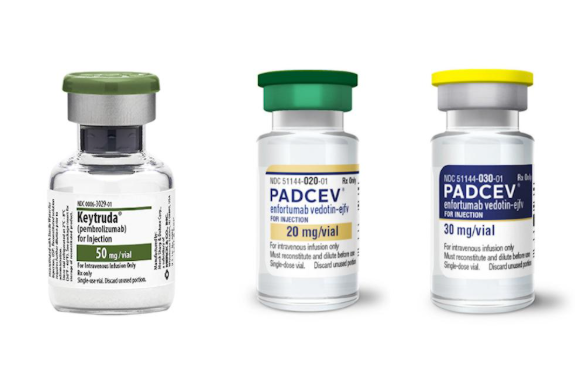
The EV-304/KEYNOTE-B15 trial demonstrated that this regimen, an antibody-drug conjugate targeting nectin-4 paired with a PD-1 inhibitor, is the first non-platinum chemotherapy option to improve event-free survival and overall survival in cisplatin-eligible patients when administered before and after surgery.
These findings follow earlier results from the EV-303/KEYNOTE-905 study, which showed similar benefits in MIBC patients ineligible for cisplatin-based therapy. That indication received FDA approval in November.
The companies described the combined trial data as evidence of the regimen's potential to establish a new platinum-free standard in earlier-stage bladder cancer treatment.
Padcev plus Keytruda is already authorized for first-line therapy in locally advanced or metastatic urothelial carcinoma, the predominant type of bladder cancer, irrespective of cisplatin suitability.
Christopher Hoimes, principal investigator for EV-304 from Duke Cancer Institute in the United States, commented: "The EV-304 results represent a key milestone in the new era of urothelial cancer treatment…signalling a shift from conventional platinum-based chemotherapy and the potential to transform the standard of care."
The positive perioperative data expands opportunities for both drugs in bladder cancer management. Padcev, developed through a collaboration between Astellas and Seagen (acquired by Pfizer), has seen sales growth, reaching $1.43 billion in the Americas during the first nine months of 2025, largely from its established advanced disease indication. Astellas records revenues outside the Americas. Updated forecasts reflect peak annual sales potential of $3.4 billion.
Keytruda, Merck's leading immunotherapy, continues strong performance with projected full-year sales exceeding $31 billion, maintaining its status as the highest-selling pharmaceutical product globally. It has held approval for non-muscle-invasive bladder cancer since 2020.
These advancements address persistent challenges in MIBC, where progression to metastatic disease occurs in nearly half of cases within three years despite current options. By offering an effective alternative to traditional chemotherapy regimens, the combination aims to improve outcomes across broader patient groups.
The trials underscore ongoing progress in targeted and immune-based therapies for urothelial cancers. Successful integration into perioperative settings could shift treatment paradigms, providing options that balance efficacy with tolerability.
Pfizer and Astellas continue to evaluate the regimen across disease stages, building on established approvals to extend benefits to patients earlier in their treatment journey. Regulatory reviews for the new indications are anticipated based on these datasets.
Overall, the results contribute to evolving standards in bladder cancer care, emphasizing combinations that enhance survival while exploring chemotherapy-free approaches.