
An international research team led by Philipp Adelhelm has achieved a significant breakthrough, with results published in Nature Materials, providing a completely new approach for designing high-efficiency and fast-charging sodium-ion batteries.
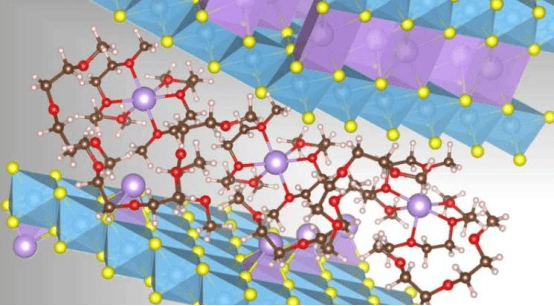
Traditional views hold that co-intercalation (a process in which ions and solvent molecules are stored simultaneously) leads to rapid battery failure and is therefore undesirable. However, the team has demonstrated that the co-insertion process in sodium-ion battery cathode materials is reversible and fast. The method of co-storing ions and solvents in the cathode material holds promise for designing efficient and fast-charging batteries.
Battery performance is influenced by many factors, among which the way ions are stored and released in electrode materials is crucial. Larger charge carriers (ions) cause a “breathing” effect when migrating into the electrode, leading to unfavorable volume changes and shortening battery life. When sodium ions co-migrate with organic electrolyte molecules, volume changes are particularly pronounced, and co-intercalation is often considered to damage battery life. But the research team has developed cathode materials that enable co-insertion of ions and solvent molecules, achieving faster charge and discharge.
In earlier studies, the team had already demonstrated that sodium combined with diglyme molecules can rapidly and reversibly migrate in and out of graphite anodes. This time, to validate the concept in cathode materials, the team explored a series of layered transition metal sulfides and identified the solvent co-intercalation process in cathode materials.
The study integrates results from the past three years: Dr. Yanan Sun conducted volume change measurements on cathode materials, used the PETRA III synchrotron radiation facility at the German Electron Synchrotron (DESY) for structural analysis, studied the electrochemical properties of various electrode and solvent combinations, and collaborated with Dr. Gustav Åvall to determine key parameters that help predict future co-intercalation reactions.
Professor Sun pointed out that the co-intercalation process in cathode materials is very different from that in graphite anodes. Co-intercalation reactions in graphite anodes often lead to low electrode capacity, whereas in the studied cathode materials, the capacity loss caused by co-intercalation is very low, and some cathode materials exhibit ultra-fast kinetics, similar to supercapacitors.
Adelhelm stated that co-intercalation reactions offer broad chemical prospects for designing new layered materials for various applications. Although exploring the co-intercalation concept goes against traditional battery knowledge, these findings are the result of joint efforts by many researchers, thanks to the opportunity provided by the in-situ battery analysis joint research group funded by the Helmholtz Centre Berlin and Humboldt University. In addition, the recently announced Berlin Battery Lab by HZB, HU, and BAM will provide more opportunities for joint research projects in Berlin.