
In a review published in Advanced Materials Science and Technology, researchers surveyed battery technologies crucial for sustainable green transformation. Eunho Lim and colleagues from Dongguk University, Korea, discussed the latest progress and challenges, and outlined research directions needed to develop alternatives to lithium-ion batteries.
Lithium-ion batteries have played a major role in the electronic revolution, powering laptops, smartphones, electric vehicles, and many other devices. However, their expanded application faces serious challenges: lithium is not a common resource, and growing demand has made it a high-value strategic resource. The green transformation is expected to further increase its demand.
One alternative is to develop battery technologies based on more abundant materials. Sodium-ion batteries are one option and are approaching commercialization, but potassium-ion batteries may be better because their energy density could be higher than that of sodium-ion batteries—a key advantage for large-scale energy storage such as renewable energy.
Lim explained: “Due to potassium’s abundance and cost-effectiveness, potassium-ion batteries are emerging as a viable alternative. However, to realize their potential, advanced anode materials suitable for the unique properties of potassium ions must be developed.”
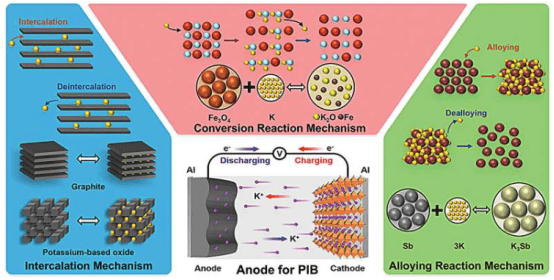
Professor Lim’s review explores the research needed to unlock the potential of potassium-ion batteries. The paper systematically analyzes the advantages and disadvantages of different anode materials and the electrochemical mechanisms each relies on, and outlines strategies to overcome the drawbacks of each approach, as well as the trade-offs between performance and stability.
One key finding is the interplay between electrochemical parameters and physical structure in determining the capacity and lifespan of potassium-ion batteries. Based on this, the team highlights future research directions to advance potassium-ion battery technology.
Lim plans to build on this foundation to develop new materials that can both harness the potential of potassium-ion batteries and overcome their limitations. He said: “My research will focus on developing cost-effective, high-performance, and safe anode materials for potassium-ion batteries.”
He also plans to use advanced characterization techniques to study fundamental phenomena in battery materials. “Understanding these mechanisms is crucial for optimizing material design and electrode structure. Ultimately, my goal is to contribute to the commercialization of potassium-ion batteries by developing materials that match or even surpass the performance of existing lithium-ion battery anodes,” Lim stated.