
Recycled glass has the potential to become a major material in the construction sector, opening new pathways for developing more environmentally friendly building materials and advancing more sustainable development. A recent in-depth study on the application of recycled glass in construction materials has been published in the journal Exploration of Civil Engineering.
Traditionally, construction blocks made by mixing soil with water and compressing it under high pressure (compressed earth blocks) are often reinforced with cement. However, scientists from the University of Portsmouth and others tested and found that mixing recycled glass with lime—and significantly reducing the amount of cement—can achieve reliable stabilization.
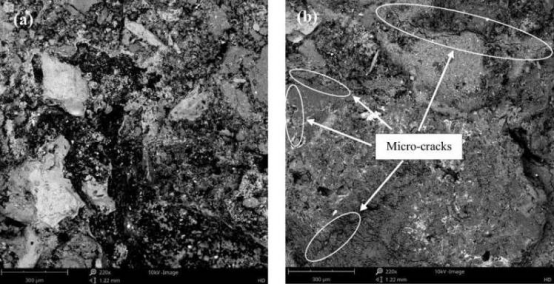
During the research, scientists mixed recycled waste glass particles (RWGP) into compressed earth blocks at proportions from 0% to 25%. In addition to measuring mechanical properties, they used electron microscopy to examine the microstructural characteristics of the blocks after 28 days of curing.
Co-author Dr. Muhammad Ali, Associate Professor of Materials and Environmental Innovation at the School of Civil Engineering and Surveying at the University of Portsmouth, stated that as the demand for using recycled industrial waste as sustainable building and construction materials continues to grow, the team aimed to evaluate the performance of compressed earth blocks with recycled glass particles. In the tests, for each percentage level of mixture, the team measured water absorption, the brick’s resistance to crushing under compression, and the maximum stress the brick could withstand when pulled or stretched before fracturing or deforming.
After testing blocks made with different mixtures of lime and recycled waste glass, the scientists found that blocks composed of 10% lime and 10% recycled glass particles were the strongest and did not crack under strong pressure. Specific data showed that when compressed earth blocks (CEB) were made with 10% recycled waste glass particles (RWGP) and 10% lime, the compressive strength reached a maximum of 5.77MPa (megapascals, a unit of pressure), compared to only 3.03MPa for unreinforced specimens after 28 days of curing—an improvement of approximately 90%. In another test condition, the maximum compressive strength at this mix ratio was 0.52MPa, compared to 0.40MPa for unreinforced specimens after 28 days—an increase of 30%.
Microstructural analysis revealed no visible cracks in the mixture containing 10% RWGP and lime, whereas micro-cracks appeared in the mixture with 25% RWGP and lime. The researchers stated that future work will further evaluate the thermal performance and durability of these more environmentally friendly building materials to promote their wider application in construction.