
A research team from the Department of Chemistry at the University of Oxford in the UK has published a major breakthrough in the journal Science, achieving the first synthesis of a cyclocarbon compound that remains stable in solution at room temperature. This breakthrough provides a new platform for studying the chemical properties of carbon allotropes.
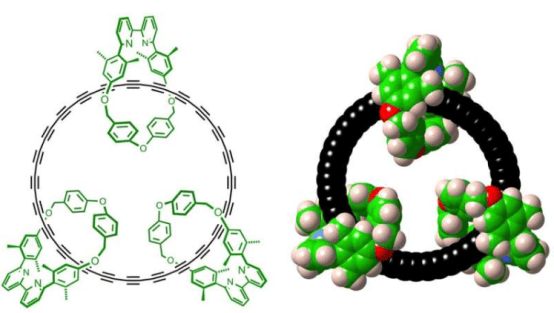
The research was carried out by Professor Harry Anderson’s team. By threading a C₄₈ carbon ring through three large macrocycles to form a rotaxane structure, the stability of the cyclocarbon molecule was significantly enhanced. Lead author Dr. Gao Yueze stated: “Obtaining stable cyclocarbons under conventional laboratory conditions is a foundational breakthrough that will greatly facilitate the study of their reactivity.”
The experiment used mild reaction conditions, resulting in a half-life of 92 hours for the C₄₈ ring in solution at 20°C. All 48 carbon atoms were confirmed to be in equivalent environments using techniques such as nuclear magnetic resonance (NMR). Professor Anderson noted: “This result achieves the goal we set in 2016, and Oxford’s advanced NMR facilities played a crucial role.”
The research lays a foundation for exploring the unique properties and application potential of carbon allotropes. The team plans to further investigate the reactivity and potential functionalities of such compounds.