
Scientists from Gubkin Russian State University of Oil and Gas have developed a set of engine oil additives that can replace previously imported equivalents, with the domestic additive extending oil service life by three times.
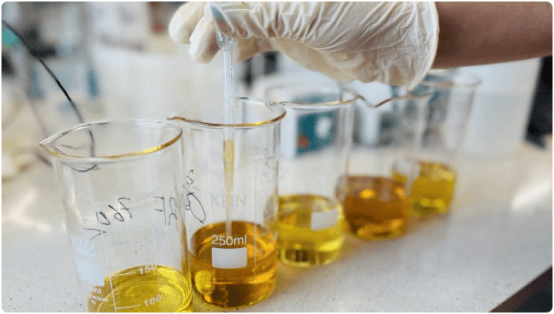
The domestic package successfully passed resource engine tests on MAN and Cummins diesel engines. The results showed that the physical and chemical properties of the oil sample using this package remained stable 2.5 to 3 times longer than comparable European and Chinese oils. Specifically, its performance only slightly changed after 50,000km of driving, while imported oils lost their original properties after 20,000km.
Anna Peskovits, head of the Youth Laboratory for Modern Functional Additives for Lubricants at Gubkin University, stated that foreign similar products perform best within 7,000 to 15,000km of driving range, while their developed product extends oil service life and reduces vehicle maintenance costs.
The packaging developed by the researchers was selected based on laboratory test results, combining additives with various functional purposes. Anna Peskovits explained that currently almost 70% of key additives are imported and are only suitable for conventional petroleum products, making it critically important to ensure domestic production independence. Nowadays, polyalphaolefin oils and hydrocracked oils are commonly used as base oils, and the additive components require diluents that improve solubility in both petroleum and synthetic environments.
In the first stage, the scientists synthesized some additives using existing technologies but with diluents that had never been used in industry before, to improve solubility, thermal stability, and colloidal stability in synthetic oils. The synthesis process used domestically produced raw materials from Russia. In the second stage, they synthesized products capable of slowing high-temperature oxidation of engine oil, preventing destruction of long polymer chains in viscosity modifiers and formation of peroxides and free radicals, thereby extending oil life.
The first industrial trial batches of the domestic additive package have been submitted to the Russian Association of Automotive Engineers for approval for use in Russia, and several Russian companies have already expressed strong interest in this development project. In the future, the researchers plan to develop additive packages for transmissions and other types of oils.