
At the American Chemical Society's Fall 2025 meeting (ACS Fall 2025), researchers Jiah Han Zou and Gang Sun from the University of California, Davis presented an innovative material called “jelly ice.” This novel cooling material, made from gelatin, is non-melting, reusable, and compostable, with significant potential to impact food supply chains and pharmaceutical transportation.
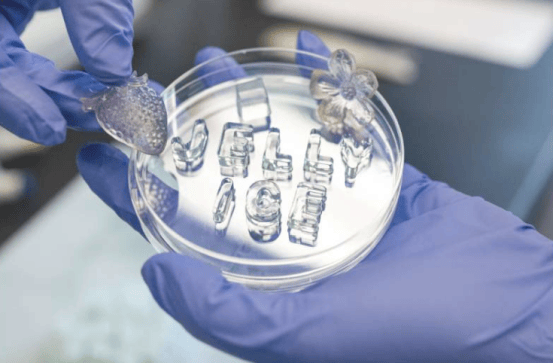
The inspiration for jelly ice came from the water-holding properties of frozen tofu. Gang Sun explained: “Frozen tofu can lock in water, but it releases it upon thawing. We modified this property using gelatin to form a stable hydrogel structure.” The long-chain protein structure of gelatin creates a microporous network that retains water within the material during phase changes, preventing leakage. Through years of optimization, Jiah Han Zou developed a one-step molding process to produce jelly ice with up to 90% water content, which can be cleaned and reused with water or diluted bleach.
Experiments show that jelly ice achieves about 80% of the cooling efficiency of regular ice and withstands multiple freeze-thaw cycles. Its texture changes with temperature: soft and moldable at room temperature, and hard like traditional ice when frozen. Jelly ice is now being produced in 1-pound (0.45kg) units with customizable shapes. Its compostable nature offers advantages over traditional gel packs or dry ice. In composting tests, degraded jelly ice even promoted tomato plant growth without generating microplastic pollution.
Although initially designed for food preservation, jelly ice shows promise for medical transport and ice production in water-scarce regions. The technology has received patent licensing, but Jiah Han Zou noted that commercialization still requires market analysis and large-scale production testing. Meanwhile, she is exploring plant-based biopolymers such as soy protein to further develop sustainable materials, including food-contact coatings and scaffolds for lab-grown meat.
“The potential of natural biopolymers is far beyond imagination,” Zou stated at the conference. “They are guiding us toward many more innovative applications.”