
American researchers are developing an innovative artificial intelligence microscope system aimed at enabling farmers and land managers worldwide to perform soil health testing more quickly, affordably, and easily. A research team from the University of Texas at San Antonio has successfully integrated low-cost optical microscopes with machine learning technology to accurately measure the quantity and presence of fungi in soil samples. This early proof-of-concept technology was unveiled on July 9 at the Goldschmidt Conference held in Prague.
The abundance and diversity of soil fungi are key indicators for assessing soil health and fertility, playing a crucial role in nutrient cycling, water retention, and plant growth. Although traditional optical microscopes have long been used to discover and identify soil microorganisms, modern detection methods such as phospholipid fatty acid analysis and DNA sequencing, while powerful, are costly and often focus on chemical composition analysis, overlooking the overall biological complexity of soil ecosystems.
Alec Graves from the College of Sciences at the University of Texas at San Antonio introduced at the conference that current biological soil analysis methods are limited, either relying on expensive laboratory equipment or requiring experts to visually identify through microscopes. Their team's new technology combines machine learning algorithms with optical microscopes to create a low-cost, low-labor-intensity, and low-expertise-requirement soil testing solution, while providing more comprehensive soil biological information.
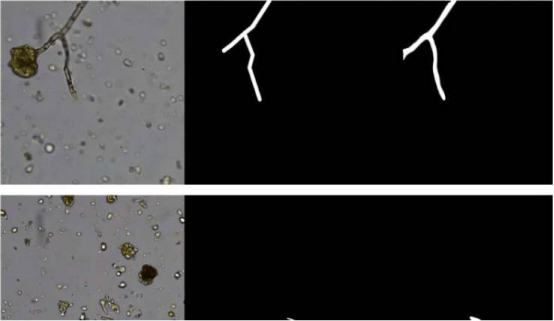
In the early development stage, the research team has built and tested a machine learning algorithm capable of detecting fungal biomass in soil samples and integrated it into custom software for labeling microscope images. The software was developed based on thousands of fungal image datasets from soils in central-south Texas and supports total magnifications of 100x and 400x, making it compatible with many affordable off-the-shelf microscopes.
Graves revealed that the technology can analyze videos of soil samples, break them down into images, and use neural networks to accurately identify and quantify fungi. At the current proof-of-concept stage, it can detect fungal hyphae in diluted samples and estimate fungal biomass.
The research team is working to integrate this technology into a mobile robotic platform that combines sample collection, microphotography, and analysis functions into one unit. They plan to complete full development and testing of the device within the next two years and prepare it for practical application.
This research is led by Professor Saugata Datta, Director of the Institute for Water Resources Sustainability and Policy at the University of Texas at San Antonio. Detailed information on the machine learning algorithm will be published in a peer-reviewed journal later this year.