
According to TASS on August 6, scientists from Tomsk State University of Architecture and Civil Engineering (TSUACE) and the Institute of Strength Physics and Materials Science of the Siberian Branch of the Russian Academy of Sciences are developing refractory products with extended service life for the Russian metallurgical industry. The university's press service told TASS that this technology will extend product lifespan and shorten maintenance intervals.
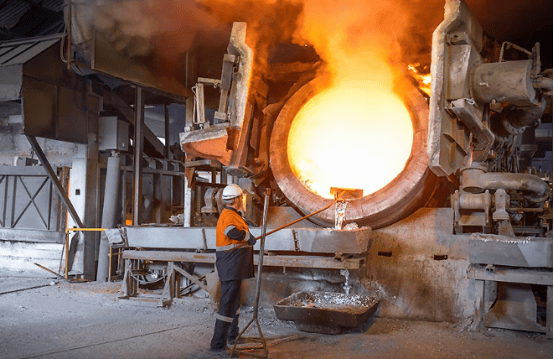
According to experts from the university, the average maintenance interval for Russian steel plants is 1 to 3 years, with the main issue being the replacement of worn and damaged ceramic linings. Ceramic linings are protective structures made of refractory materials on the inner surface of furnaces, used to prevent high temperatures, chemical effects, and wear. Scientists at TSUACE have proposed a special method to form the internal structure of refractory materials to enhance their resistance to crack initiation and propagation, as cracks significantly reduce the residual strength of the product.
Ales Buyakov, Researcher at the Laboratory of Physical Mesomechanics and Non-Destructive Testing of the Institute of Strength Physics and Materials Science of the Siberian Branch of the Russian Academy of Sciences, Doctor of Physical and Mathematical Sciences, stated: “Refractory ceramic materials are brittle, and internal cracks develop rapidly, ultimately leading to complete loss of strength and destruction. Our research aims to create complex multilayer structured composite ceramic refractory materials that, by controlling composition and internal stresses, allow the material itself to resist crack propagation and retain up to 60% of its original strength.”
It is worth noting that this new technology still requires industrial testing, but it already holds enormous application potential in the Russian industrial sector. Repairing linings in steelmaking units is highly difficult, and replacing linings causes prolonged equipment downtime from the production process. The scientists' goal is to extend the lining maintenance cycle.
Oleg Volokitin, Vice-Rector for Research at TSUACE, Doctor of Technical Sciences, said: “At TSUACE, we apply the principle of ‘composites within composites’ to create products of specific shapes and designs, while simultaneously addressing issues related to the acquisition and use of material components.”
Researchers involved in the project are also part of the strategic technology project “Chemistry and Engineering of New Construction Materials” created under the framework of TSUACE’s development program “Priority - 2030.”