
Researchers at Oak Ridge National Laboratory (ORNL) have developed a novel circuit breaker that operates hundreds of times faster than traditional breakers, paving the way for safer and more efficient growth of the U.S. power grid.
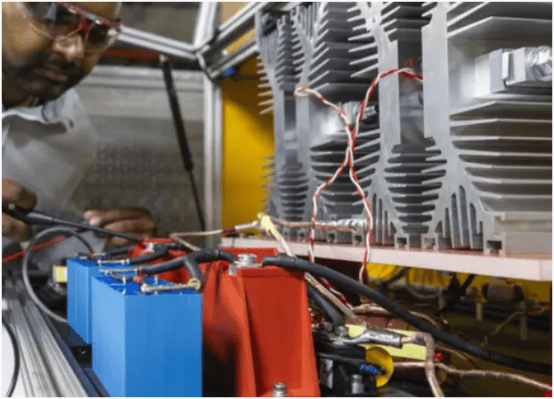
The team reports that they have created a medium-voltage circuit breaker capable of handling higher DC currents at a lower cost. The device can interrupt 1400V of current in less than 50 microseconds — a speed critical for protecting next-generation direct current (DC) power systems.
According to the press release, previous semiconductor-based breakers were prohibitively expensive, unable to compete economically with mechanical AC breakers, and failed to drive widespread adoption of DC grids. Moreover, no commercial breaker could handle DC voltages above 2000V, with most unable to manage even half that value.
This breakthrough makes large-scale, high-power DC grids practical. The ORNL team has demonstrated that the technology is scalable by connecting breakers in series. They designed and tested a series of breakers operating at voltages up to 1800V. Currently, they are working on systems capable of handling 10,000V, which will be needed for future applications such as AI data centers.
The team utilized thyristors — inexpensive and rugged semiconductors — to build the breaker. The press release explains that thyristors are low-cost, making semiconductor-based switching competitive for the first time. However, thyristors have a key limitation: they cannot be easily turned off once conducting. ORNL engineers solved this by designing a novel external circuit that forces the current to stop, enabling the technology to achieve economic competitiveness for the first time.
Lead researcher Prasad Kandula noted that the team selected a powerful, efficient, and inexpensive base technology. This speed will transform the DC power landscape. In standard alternating current (AC), current naturally drops to zero multiple times per second, giving mechanical switches a safe window to open and interrupt faults. In contrast, DC current flows continuously in one direction with no “zero-current” moment, so mechanical switches cannot stop faults quickly enough before heat buildup and fire occur.