
A research team from the University of Waterloo has developed a handheld detection device capable of quickly identifying E. coli contamination in water. The device uses microwave sensing technology, with a single test costing approximately $70, and can significantly improve water quality monitoring efficiency. The research results have been published in the journal Biosensors and Bioelectronics.
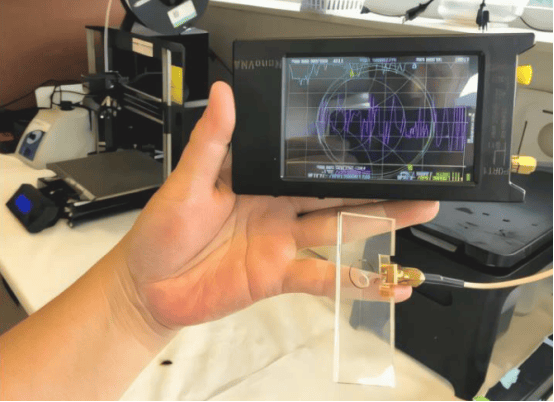
The core components of the detection device include a coin-sized gold-plated sensor and a smartphone-sized circuit board with an integrated vector network analyzer. The sensor surface is coated with specific antibodies; when it contacts a water sample containing E. coli, the antibodies bind to the bacteria, causing a change in the microwave resonance frequency. The system analyzes the degree of frequency shift to determine the bacterial concentration in real time.
Project leader Professor Carolyn Ren from the Department of Mechanical and Mechatronics Engineering at the University of Waterloo stated: "Experiments have confirmed that the device combines specificity and sensitivity, accurately distinguishing E. coli from other bacterial species. We believe this technology can have a positive impact on public health." Current conventional testing requires sending samples to a central laboratory, a process that takes several days, whereas the new device enables on-site instant detection.
The technology was initially developed during the global pandemic for COVID-19 detection and has since been adapted for water quality monitoring. In tests with water samples from storage tanks, the device requires only a few drops of sample to complete the analysis. The researchers noted that the technology has expansion potential and can be adapted to meet international standards for large-volume sample testing.
This handheld detection device is particularly suitable for routine water quality screening in water treatment plants and household environments. In regions with limited laboratory resources, the technology can effectively compensate for the shortcomings of traditional testing methods. Surveys in sub-Saharan Africa show that 71% of household water samples are contaminated with bacteria.
Professor Ren added: "Water resource regulatory standards are strict, and promoting new technologies takes time. We hope this research can drive collaboration between research institutions and the private sector to accelerate technology adoption." The research team is currently working to further improve the device's detection accuracy and expand its applications in the field of environmental monitoring.