
A research team from the Sanford Stem Cell Institute at the University of California San Diego has published a study in Nature Communications introducing a new technology called "Graphene-Mediated Optical Stimulation" (GraMOS). This technology can safely and effectively promote the development and maturation of human brain organoids. It utilizes the optoelectronic properties of graphene to convert light signals into gentle electrical stimulation, enhancing neuronal connectivity without the need for genetic modification.
Brain organoids, as three-dimensional models of the human brain, hold great value in the study of neurological diseases. However, their slow maturation has been a limiting factor. The GraMOS technology provides non-invasive stimulation through a graphene interface, mimicking the environmental inputs received by the real brain. The study shows that regular light stimulation promotes the formation of stronger neuronal connections and more advanced network organization in organoids. Functional improvements were even observed in Alzheimer's disease models.
Co-corresponding author Dr. Elena Molokanova stated: "Using graphene and light, we are able to drive neurons to form connections and mature faster without relying on traditional optogenetic tools." The technology demonstrated excellent biocompatibility, with no damage to neurons or organoid structures observed after long-term use.
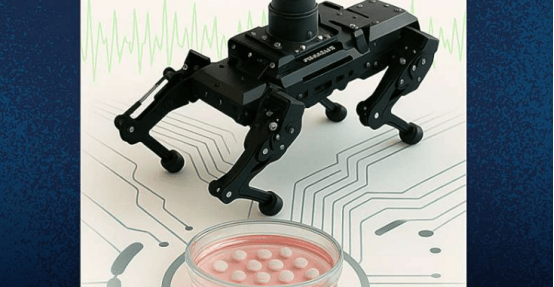
The researchers also demonstrated the integration of graphene-stimulated organoids with robotic systems. In a proof-of-concept experiment, the organoids were able to respond to robotic sensor signals within 50 milliseconds, triggering behavioral changes in the device through neural patterns. This technology provides a new tool for disease modeling, drug testing, and brain-computer interface research.