
NASA's Artemis II mission will send four astronauts on a nearly 10-day round-trip journey around the Moon. This mission will advance the agency's goal of landing astronauts in the Moon's south polar region and lay the foundation for future crewed Mars missions.
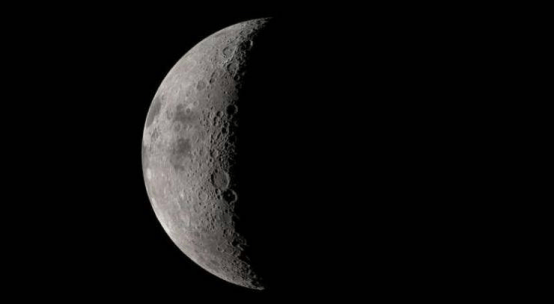
Artemis II astronauts will be the first to test NASA's Orion spacecraft in space. At the same time, they will conduct scientific investigations to provide reference for future deep space missions, including lunar science observations when the Orion spacecraft flies approximately 4,000 to 6,000 miles from the Moon's surface. From this distance, the Moon will appear about the size of a basketball within reach, providing a unique opportunity for scientific observation.
When the Orion spacecraft flies over the far side of the Moon (the side always facing away from Earth), the astronauts will use the extensive geology training they received in the classroom and in Earth locations similar to the Moon to analyze and photograph geological features on the lunar surface, such as impact craters and ancient lava flows. The astronauts will also practice describing subtle differences in the shape, texture, and color of surface features. This type of information can reveal the geological history of a region and is critical for Artemis III astronauts exploring the lunar surface.
"Artemis II provides astronauts with an opportunity to practice the lunar science skills they have mastered in training," said Kelsey Young, Artemis II Lunar Science Lead at NASA's Goddard Space Flight Center in Greenbelt, Maryland. "It is also an opportunity for scientists and engineers at mission control to collaborate in real-time operations, which will further build on the testing and simulations our team has conducted together over the years."
The four Artemis II astronauts — NASA's Reid Wiseman, Victor Glover, and Christina Koch, and Canadian Space Agency's Jeremy Hansen — may be the first humans to see portions of the Moon's far side with their own eyes, depending on the final orbit determined at launch. During the nine Apollo missions that left Earth orbit, astronauts saw portions of the Moon's far side, but not all of it, because they were limited by the illuminated areas during orbital flight.
One previously unilluminated area they may see is the Orientale Basin, a 600-mile-wide impact crater that marks the transition between the near and far sides and is sometimes partially visible on the Moon's western limb.
The astronauts may also observe flashes of light when space rocks strike the lunar surface — clues that help reveal how often the Moon is impacted — or observe dust floating along the Moon's limb, a mysterious phenomenon that scientists want to understand.
The crew's observations will help pave the way for future lunar surface science activities in the Artemis program, including Artemis III. Artemis III astronauts will investigate the terrain, rocks, and other features around the landing site. They will also collect rock samples for generations of analysis in Earth laboratories and install various instruments to study lunar properties and resources — information that is critical for future human exploration.
Cindy Evans, Artemis Geology Training and Strategic Integration Lead at NASA's Johnson Space Center, said: "Whether they are looking out the spacecraft windows or walking on the lunar surface, Artemis astronauts will be collecting clues about the ancient geological processes that shaped the Moon and the solar system on behalf of all scientists."
In addition to lunar science observations, the astronauts will collect data on the effects of the space environment on astronaut health and performance. These experiments will be managed by the Payload Mission Operations Council at NASA's Marshall Space Flight Center in Huntsville, Alabama, and closely coordinated with mission control. This data can provide reference for long-term lunar exploration and future crewed Mars missions.